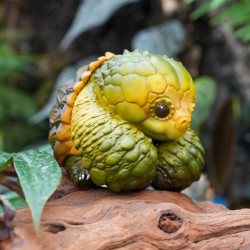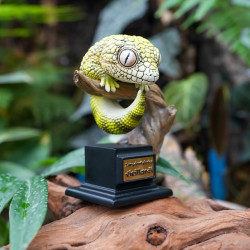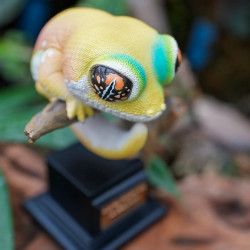
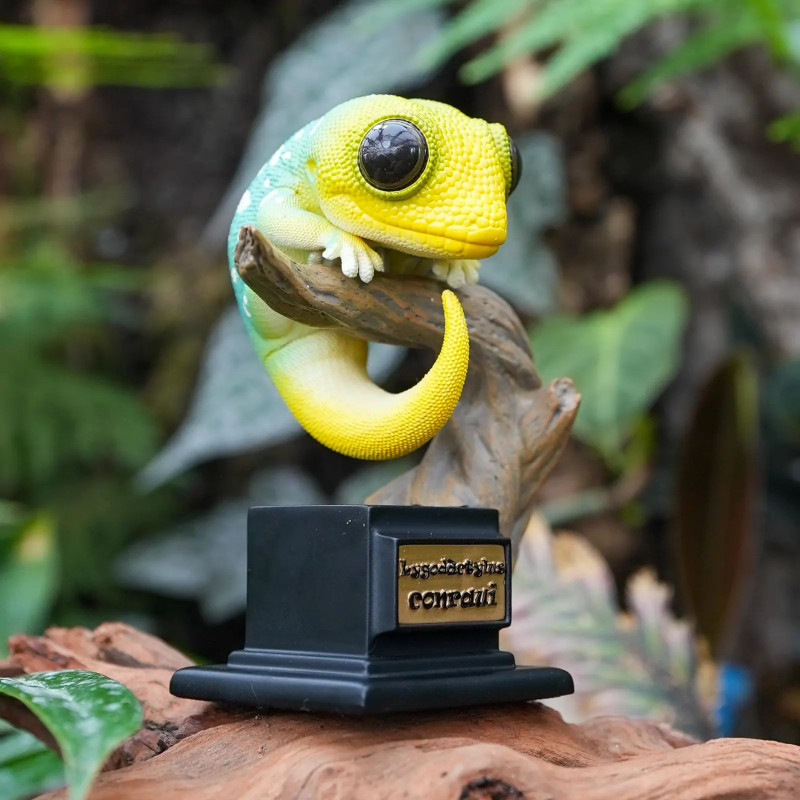

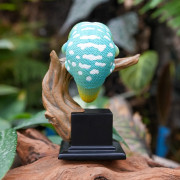
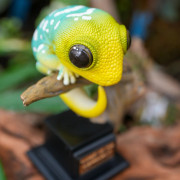
A finely cast resin figurine of the Cameroon dwarf gecko (Lygodactylus conraui). From its delicate toes to its tapering tail, the sculpture captures the slender outline of this tiny African gecko. Each piece is individually hand-painted, with subtle variations in colour and brushwork.

Security policy


Satisfaction guaranteed or your money back
 Free shipping on orders over €59
Delivery throughout Europe in 48 hours.
Among the trees of Cameroon lives a green to bluish gecko measuring just 5–6 cm, tail included. This resin figurine of the Cameroon dwarf gecko (Lygodactylus conraui) offers a chance to appreciate this tiny forest reptile up close, from the profile of its head to the outline of its delicate toes.
Fine casting gives definition to the gecko’s shape. Each figurine is then painted individually by hand. A deeper shade here or a lighter brushstroke there gives each piece a character of its own.
Lygodactylus conraui
Common name: Cameroon dwarf gecko, also known as Conrau’s dwarf gecko.
Gekkonidae
This gecko is native to West and Central Africa. In Cameroon, it lives on shrubs and trees in dense evergreen forests.
The Cameroon dwarf gecko is a day-active, tree-dwelling gecko with delicate proportions and green to bluish colouring. At around 5–6 cm long including its tail, the animal is small enough for even a slender twig to make a substantial perch.
The quality of the casting is especially apparent around the edges of the figure. Follow the line of the jaw, the outline of the feet and the taper of the tail. A three-quarter view shows both the gecko’s profile and the contours of its body.
Cast resin. The material captures the shape of the body and the finer contours of the limbs while providing a smooth base for the brushwork.
Each figurine is painted by hand, one piece at a time. The brushwork brings out the sculpted forms and adds subtle changes in tone. Colours and individual markings may vary slightly between pieces as a natural result of the hand-painted finish.
This African forest species makes a distinctive addition to a tropical reptile display. For someone who keeps dwarf geckos, a figurine of Lygodactylus conraui is a particularly thoughtful choice.
It gives you time to study an animal whose tiny size makes its features easy to miss among the leaves. Turn the piece to explore its shape from different angles, then look closer to appreciate the individual brushwork.
Set a piece of dark bark behind the figurine and turn the gecko slightly to one side. The bark suggests its forest habitat, while soft light from the side brings out the contours of the casting and the nuances of the paint.

Specific References
You might also like
A finely cast resin figurine of the Cameroon dwarf gecko (Lygodactylus conraui). From its delicate toes to its tapering tail, the sculpture captures the slender outline of this tiny African gecko. Each piece is individually hand-painted, with subtle variations in colour and brushwork.