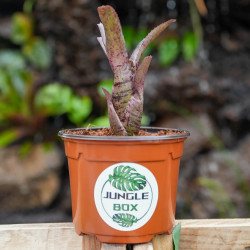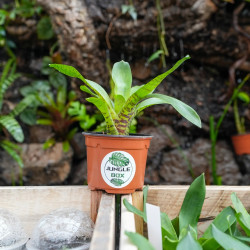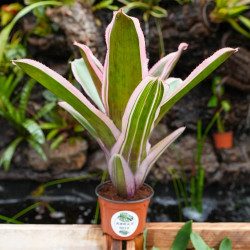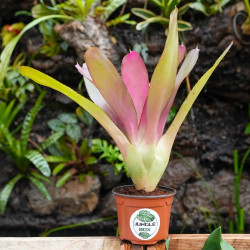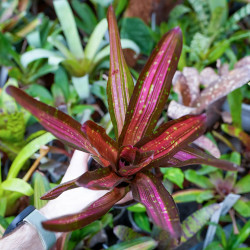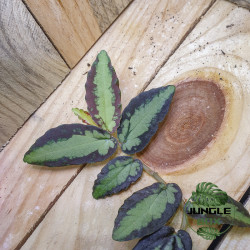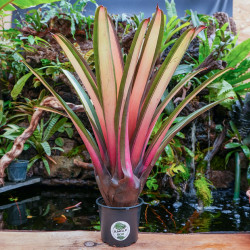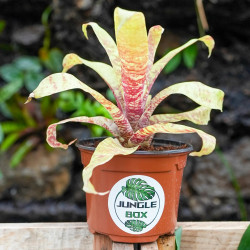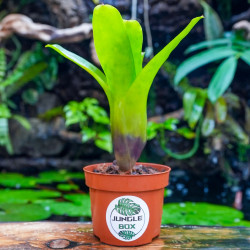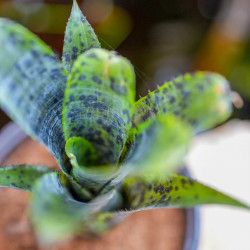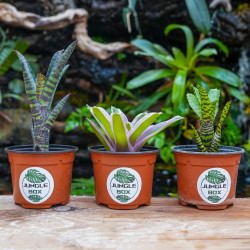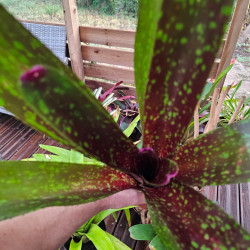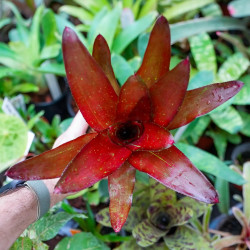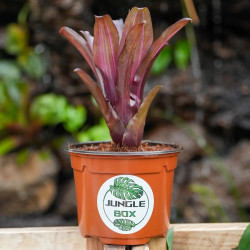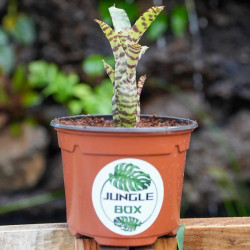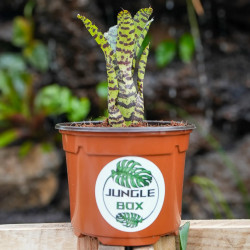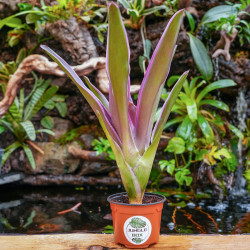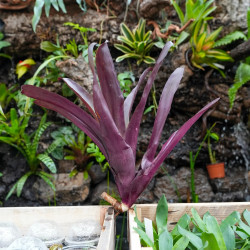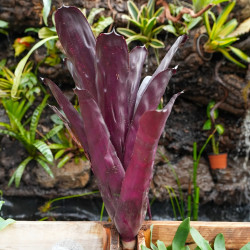
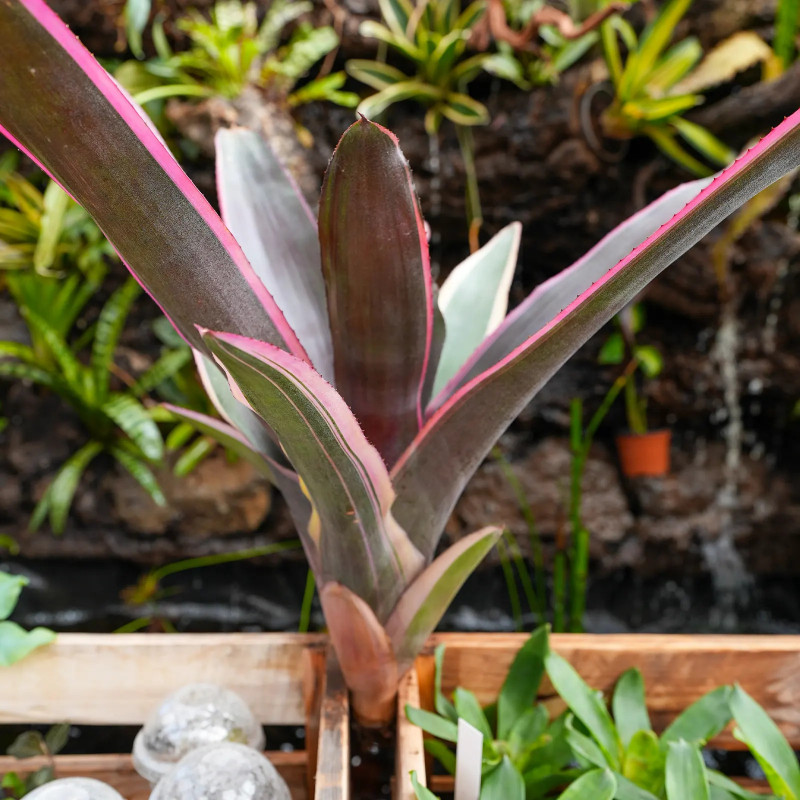
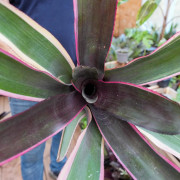
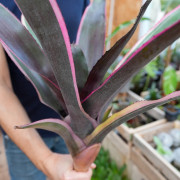
Neoregelia carcharodon var. nigra is a spectacular collector bromeliad with deep purple-red, burgundy and dark violet foliage enhanced by subtle green markings. Its large, robust and spiny rosette creates a striking contrast in tropical displays. Ideal for large terrariums, greenhouses and natural wood displays.

Security policy


Satisfaction guaranteed or your money back
 Free shipping on orders over €59
Delivery throughout Europe in 48 hours.
Neoregelia carcharodon var. nigra is a striking collector bromeliad prized for its dark foliage displaying deep purple-red, burgundy and violet tones contrasted by subtle green markings.
Its large leathery leaves, robust rosette and intense coloration give it a spectacular wild appearance. This bromeliad makes an outstanding statement plant for large tropical terrariums, greenhouses and epiphytic plant collections.
Bromeliaceae
Neoregelia
Neoregelia carcharodon var. nigra
A collector form associated with the botanical species Neoregelia carcharodon (Jacob-Makoy ex Wittm.) L.B.Sm.
The designation “nigra” refers to its particularly dark foliage coloration. Its status as a formally recognised botanical variety has not been confirmed.
Neoregelia carcharodon is native to southeastern Brazil, from Espírito Santo to Rio de Janeiro.
The species naturally grows as an epiphyte in the humid tropical environments of the Brazilian Atlantic Forest. The precise provenance of this dark-coloured form has not been reliably documented.
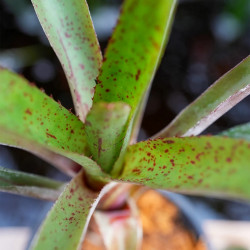
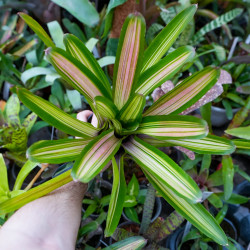
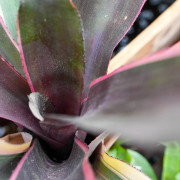
The foliage is the main attraction of this Neoregelia. Its leaves are broad, thick and leathery, with spiny margins characteristic of the carcharodon group.
The dominant coloration ranges from deep purple-red and burgundy to dark violet tones, with subtle green markings providing additional contrast.
Colour intensity naturally varies depending on light levels, plant maturity and growing conditions.
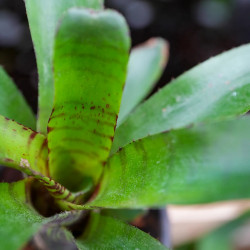
Neoregelia carcharodon var. nigra forms a large, open, robust and structured rosette capable of naturally retaining water in its centre.
Its substantial mature size requires sufficient space for the leaves to develop freely.
After flowering, the mother rosette produces offsets that ensure the continuation of the plant and gradually create a particularly decorative group.
This bromeliad appreciates bright filtered light, regular moisture and excellent airflow.
Sufficient light encourages compact growth and helps intensify the red and purple pigments of the foliage.
Avoid sudden exposure to harsh direct sunlight and permanently waterlogged substrates.
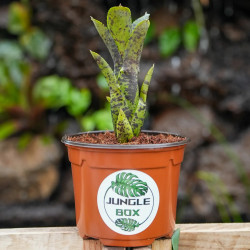
For pot cultivation, use a highly aerated and free-draining mix containing coco chips, fine bark, perlite and optionally a small amount of sphagnum moss.
The plant can also be mounted directly on large natural wood, trunks or cork supports strong enough to accommodate its mature size.
Use soft, rain or reverse-osmosis water whenever possible.
Maintain clean water in the centre of the rosette and refresh it regularly.
Water the roots or mist the plant generously when mounted on natural supports, allowing the plant base to breathe between waterings.
Recommended humidity: 60% to 85%.
High humidity should always be combined with good airflow to reduce the risk of rot.
Recommended growing temperature: 18°C to 28°C.
Protect the plant from frost and avoid prolonged cold, wet conditions.
Growth is generally moderate, depending on light levels, temperature and growing conditions.
The plant gradually develops an impressive rosette. Offsets can be left attached to the mother plant to create a particularly spectacular group.
Plant size and development may vary depending on individual plants, season and availability.
Refresh the water held in the rosette regularly, remove old or damaged leaves and maintain good airflow around the plant base.
Provide sufficient light to encourage the expression of the dark foliage pigments.
Handle the plant carefully due to the spines along its leaf margins.
Neoregelia carcharodon var. nigra stands out for its deep purple-red foliage, impressive rosette and distinctive wild character.
Its dark tones create a remarkable contrast with green plants, variegated bromeliads and tropical mosses. It is an excellent choice for collectors seeking unusual Neoregelia with a strong visual presence.

Specific References
You might also like
Neoregelia carcharodon var. nigra is a spectacular collector bromeliad with deep purple-red, burgundy and dark violet foliage enhanced by subtle green markings. Its large, robust and spiny rosette creates a striking contrast in tropical displays. Ideal for large terrariums, greenhouses and natural wood displays.