- New
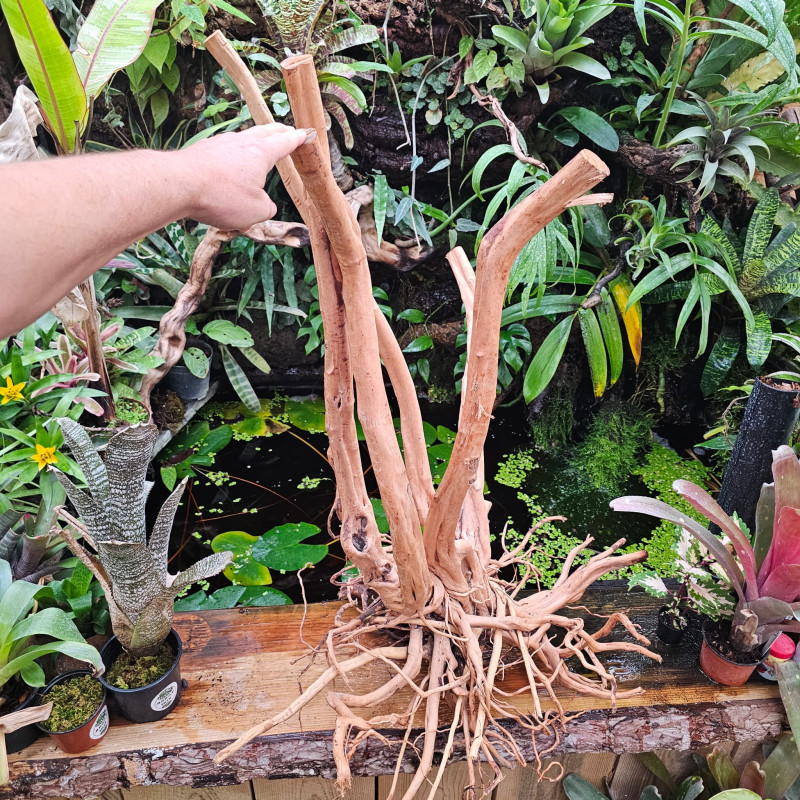
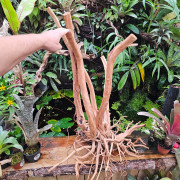
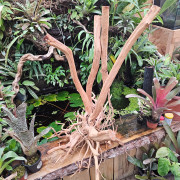
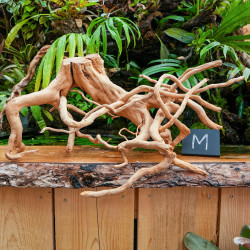
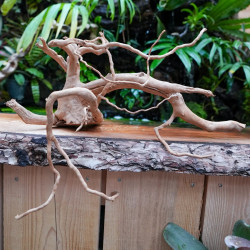
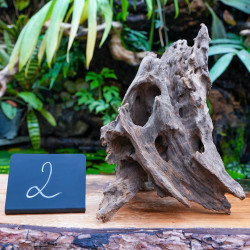
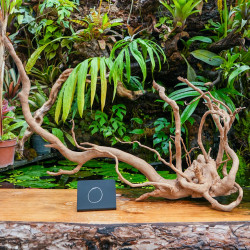
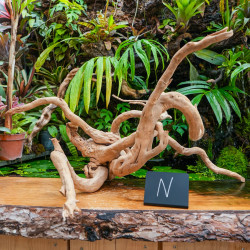
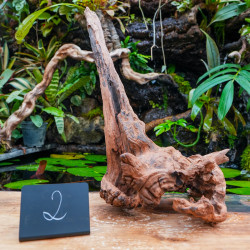
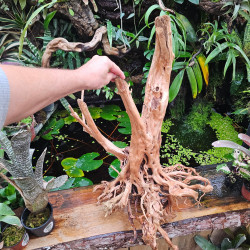
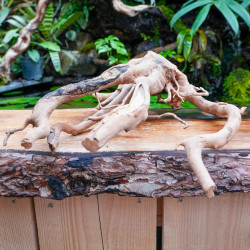
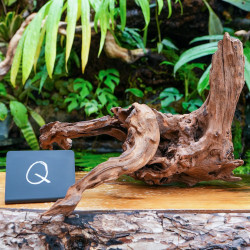
A true natural sculpture for large-scale displays: this XXL Stump Wood Root forms a substantial tree-stump structure filled with texture, cavities and branches. In aquariums, terrariums or paludariums, it can become the framework of the entire layout and support mosses, bromeliads, orchids and epiphytes. WYSIWYG: you receive the exact piece pictured.
Taille: 60/100 cm

Security policy


Satisfaction guaranteed or your money back
 Free shipping on orders over €59
Delivery throughout Europe in 48 hours.
The XXL WYSIWYG Stump Wood Root is a spectacular natural piece designed to become the focal point of an aquarium, terrarium or paludarium.
Massive, highly structured and full of natural texture, it resembles an old tree stump with irregular volumes, branches and rugged surfaces. Its XXL format makes it ideal for building large-scale hardscapes, forest scenes and impressive tropical displays.
WYSIWYG means “What You See Is What You Get”.
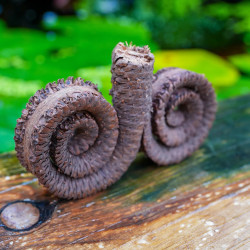
The root shown in the photographs is the exact piece you will receive. This allows you to choose your décor knowing its precise overall shape, structure, branches and character.
As this is a completely natural product, every piece is unique.
XXL format
This root is designed for large displays where natural wood is intended to become a major structural feature.
Stump Wood has a substantial tree-stump-like silhouette with irregular structures that make it easy to recreate an old trunk, eroded riverbank or tropical forest-floor effect.
Natural cavities, branches and textured surfaces create shadows and depth throughout the layout.
In a terrarium, this XXL root can form the main structural framework of the entire display.
It can be used to:
In freshwater aquariums, Stump Wood provides an excellent foundation for large natural hardscapes.
Its substantial silhouette creates strong structure and contrast between wood, stone, substrate and aquatic vegetation.
It can also support epiphytic aquatic plants such as selected Anubias, Microsorum, Bucephalandra and aquatic mosses.
A paludarium is one of the environments where an XXL root can achieve its full visual potential.
The wood can visually connect aquatic and terrestrial sections, support epiphytic plants and recreate the appearance of an old root system or fallen tree beside the water.
The natural texture provides numerous attachment points for plants using suitable thread, adhesive, sphagnum moss or plantable support material.
It is particularly suitable for:
The irregular surface greatly increases the structural complexity of a bioactive terrarium.
Cavities, shaded sections and areas in contact with the substrate can provide a range of microhabitats while making the overall layout appear significantly more natural.
Before installation, brush and rinse the root thoroughly with clean water to remove loose dust and particles.
Do not use household detergents or cleaning chemicals.
Like many pieces of dry natural wood, Stump Wood may require time to become fully waterlogged before sinking.
Depending on its size and density, the root may initially float and can be pre-soaked or temporarily secured during the first stage of installation.
Natural wood may release tannins into the water, particularly during the first weeks of immersion.
This may create an amber tint and is a natural process. Pre-soaking and regular water changes can reduce the effect when clearer water is preferred.
A light white biofilm may sometimes appear on newly submerged natural wood during the first few weeks.
This is a common temporary phenomenon and usually disappears gradually. It can also be removed manually if required.
At this scale, the root is no longer simply an accessory: it becomes the architecture of the entire display.
Its size and volume allow the composition to be organised around a single natural piece, creating immediate depth and a mature, realistic appearance.
With natural wood, shape is just as important as size. Two roots sold under the same category can have completely different silhouettes.
WYSIWYG allows you to select the exact piece that matches your project and know precisely what you will receive.
Before fixing the root permanently, test several orientations. A Stump Wood root can look completely different when positioned upright, horizontally or at an angle.
For a mature tropical effect, use its main branches as the structural lines of the layout and gradually add epiphytes, mosses, cork and forest-floor material around its base.

Specific References
You might also like
A true natural sculpture for large-scale displays: this XXL Stump Wood Root forms a substantial tree-stump structure filled with texture, cavities and branches. In aquariums, terrariums or paludariums, it can become the framework of the entire layout and support mosses, bromeliads, orchids and epiphytes. WYSIWYG: you receive the exact piece pictured.
Taille: 60/100 cm