- New
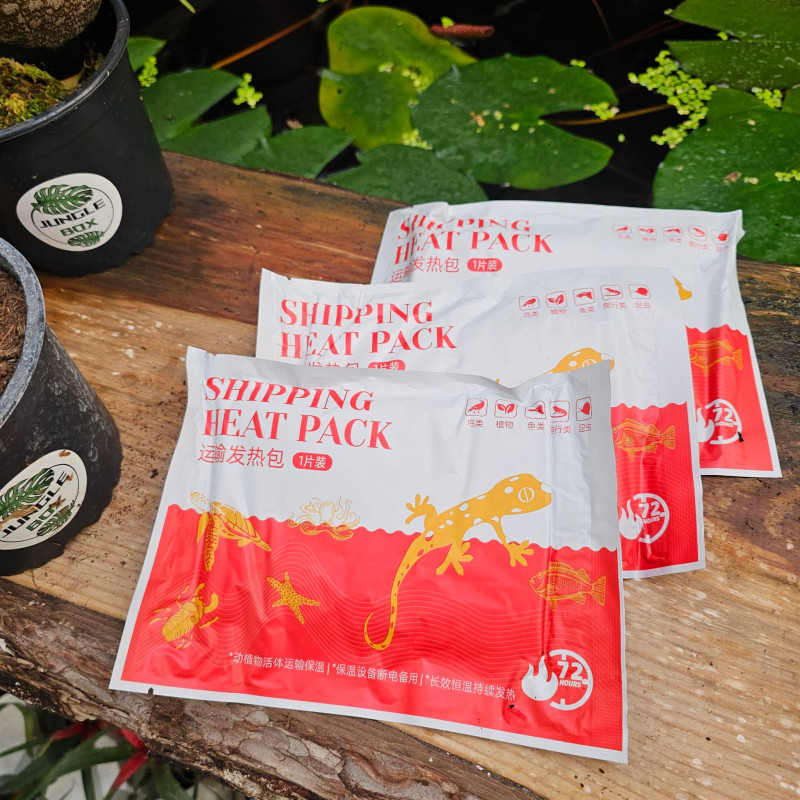
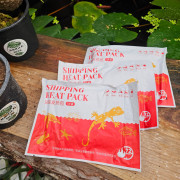
Three 72-hour warmers for cold-weather transport: this pack of 3 air-activated heat packs helps protect tropical plants and temperature-sensitive animals during winter journeys. Use inside properly insulated packaging, without direct contact with the contents, to provide gradual warmth throughout transit.

Security policy


Satisfaction guaranteed or your money back
 Free shipping on orders over €59
Delivery throughout Europe in 48 hours.
This pack of 3 × 72-hour heat packs is designed to provide an additional source of warmth when transporting plants and animals sensitive to cold temperatures.
Particularly useful during winter or longer journeys, these air-activated shipping warmers gradually produce heat for up to approximately 72 hours.
The pack contains 3 individual heat packs, allowing the number used to be adapted to parcel size, weather conditions and the temperature requirements of the plants or animals being transported.
Pack of 3 shipping heat packs – up to approximately 72 hours of heat each.
These heat packs are designed to provide additional thermal protection inside a properly insulated shipping container.
They may be used when transporting:
Each heat pack is designed to provide heat for up to approximately 72 hours.
Actual heating duration and output may vary depending on ambient temperature, parcel insulation, airflow and transport conditions.
The heat pack begins activating once its sealed outer packaging is opened and it is exposed to air.
Open the pack shortly before preparing the shipment to allow the heating reaction to begin.
A shipping heat pack does not regulate parcel temperature like a thermostatically controlled heater. Instead, it gradually provides additional warmth to help reduce sudden temperature drops during transport.
For best results, it should always be combined with suitable insulated packaging.
The appropriate number depends on:
A pack of three makes it easier to adapt thermal protection to individual transport conditions.
Position the heat pack so that warmth can circulate through the parcel without placing it directly against plants, animal containers or other heat-sensitive materials.
A layer of cardboard, kraft paper, newspaper or another suitable material can be used as a protective barrier.
Never place a heat pack directly against leaves, roots, stems or an animal container.
Direct contact may create excessive local heat and result in overheating or burns.
Shipping heat packs operate through an oxidation reaction and therefore require oxygen to continue generating heat.
Completely airtight packaging may reduce or stop heat production. Packaging should therefore be designed appropriately for both the transported contents and the heat pack.
Tropical plants can be particularly vulnerable to low temperatures during transport. A heat pack provides additional thermal protection alongside insulated packaging.
It is especially useful for winter transport of tropical plants, cuttings and young plants.
During authorised transport of cold-sensitive animals, a heat pack can help reduce major temperature fluctuations.
Always use appropriate species-specific packaging, keep the warmer away from direct contact with the animal and consider both ventilation and temperature requirements.
With up to approximately 72 hours of heating time, these warmers are particularly useful for winter transport and journeys lasting several days.
The pack of three provides several units at once and makes it easy to adapt thermal protection according to parcel size and weather conditions.
Always consider a heat pack as an addition to good parcel insulation. For tropical plants, keep it away from the foliage and use a protective layer so that the heat reaches the plants indirectly.
In very cold weather, adapt the number of heat packs to the parcel volume rather than placing a single warmer directly against the contents.
Specific References
Three 72-hour warmers for cold-weather transport: this pack of 3 air-activated heat packs helps protect tropical plants and temperature-sensitive animals during winter journeys. Use inside properly insulated packaging, without direct contact with the contents, to provide gradual warmth throughout transit.