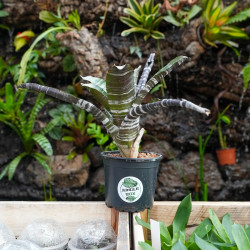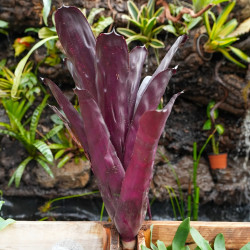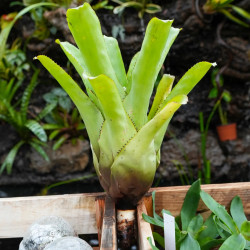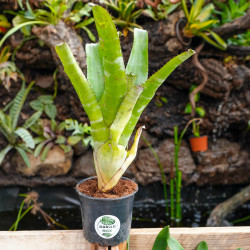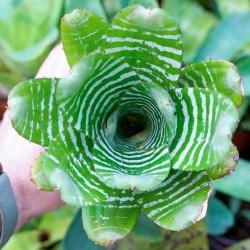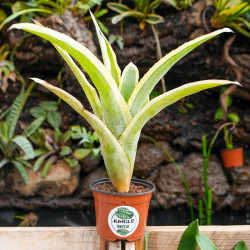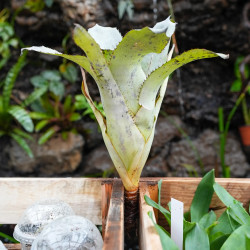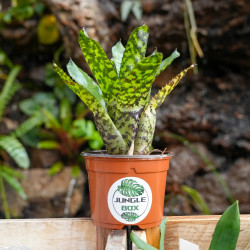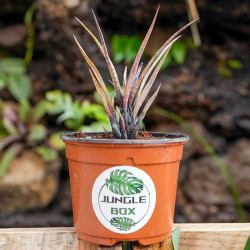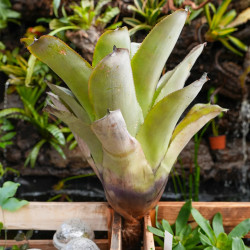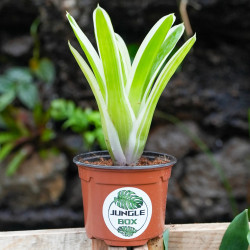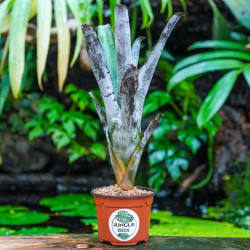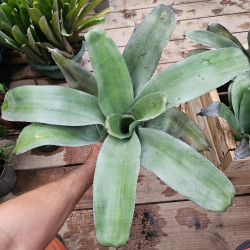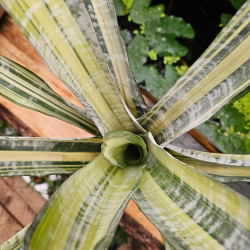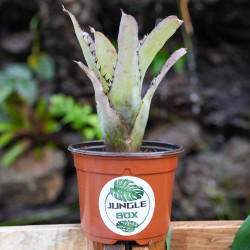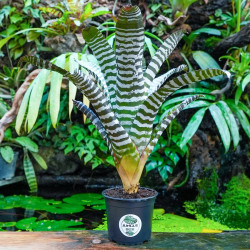
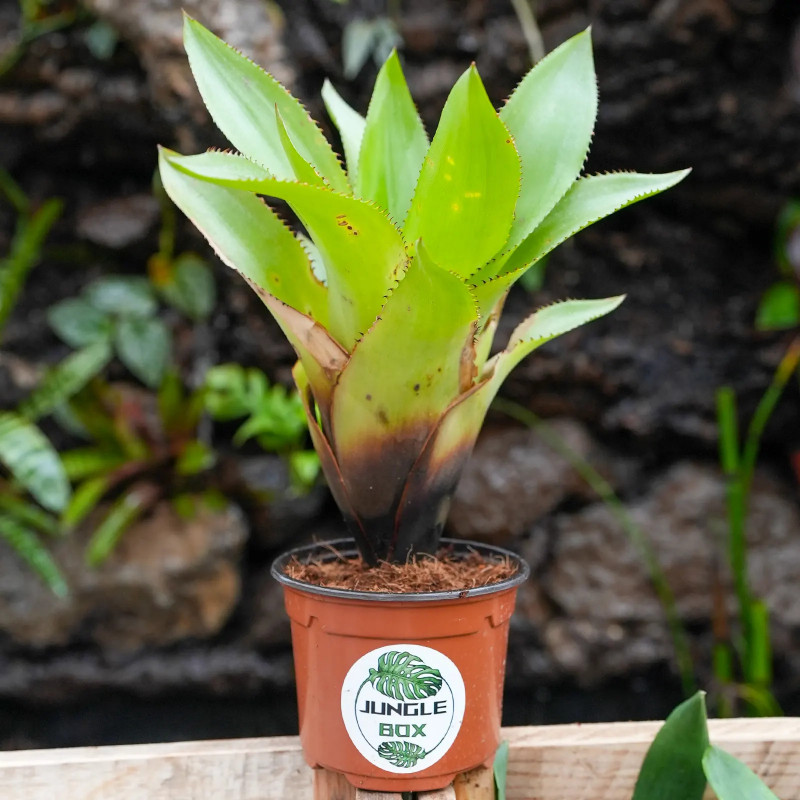
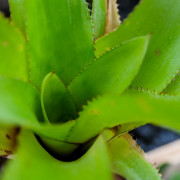
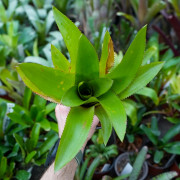
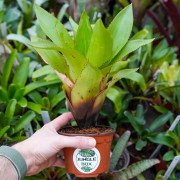
Aechmea hoppii is a large botanical bromeliad native to Colombia, Ecuador and Peru. Its epiphytic habit, long robust leaves and impressive mature size make it an excellent collector plant for large tropical terrariums, greenhouses and natural wood displays.

Security policy


Satisfaction guaranteed or your money back
 Free shipping on orders over €59
Delivery throughout Europe in 48 hours.
Aechmea hoppii is a large botanical tropical bromeliad native to northwestern South America. Naturally epiphytic, it develops an impressive rosette of long, spiny leaves and a highly decorative terminal inflorescence.
Its wild appearance, substantial growth and botanical character make it an excellent choice for large tropical terrariums, greenhouses and naturalistic displays on large roots or trunks.
Bromeliaceae
Aechmea
Aechmea hoppii (Harms) L.B.Sm.
This is an accepted botanical species, not a horticultural cultivar.
Aechmea hoppii is native to Colombia, Ecuador and Peru.
It grows mainly in humid tropical biomes, particularly as an epiphyte in dense tropical forest.
The plant develops long, robust and spiny leaves arranged in a rosette.
The foliage is generally dark green on the upper surface and paler underneath. Mature plants can develop very long leaves, giving the plant a particularly spectacular appearance.
Aechmea hoppii forms a large, upright and open rosette. Its substantial mature size makes it best suited to spacious installations.
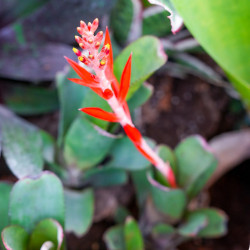
At maturity, it develops an upright terminal inflorescence. After flowering, the main rosette gradually produces offsets that continue the plant’s growth cycle.
This species appreciates bright filtered light, high humidity and good airflow.
Like many large epiphytic Aechmea, it prefers a highly aerated root zone and should not be kept in permanently saturated substrate.
For pot cultivation, use a highly aerated mix containing fine bark, coco chips, perlite and optionally a small amount of sphagnum.
Its naturally epiphytic habit also makes it suitable for mounting on substantial natural wood, trunks or other strong natural supports.
Use soft, rain or reverse-osmosis water whenever possible.
Keep a small amount of clean water in the centre of the rosette and refresh it regularly.
The roots should remain well aerated and the plant base should not be kept permanently waterlogged.
Aechmea hoppii appreciates humidity around 65% to 85%.
High humidity should always be combined with good airflow to prevent stagnant conditions around the foliage and plant base.
Ideal growing temperature: 20°C to 28°C.
Avoid prolonged low temperatures and protect the plant from frost.
Growth is moderate.
The plant gradually becomes substantial with age. After flowering, the main rosette produces offsets that ensure the continuation of the plant.
Sold as a young plant. Plant size and development may vary depending on season and availability.
Refresh the water held in the rosette regularly, remove old or damaged leaves and maintain good airflow.
When grown on natural supports, mist the roots regularly while allowing the plant base to breathe between waterings.
Aechmea hoppii stands out for its large mature size, epiphytic habit and particularly wild appearance.
It makes an excellent statement plant for large tropical terrariums and greenhouses where a true South American botanical species with strong character is desired.

Specific References
You might also like
Aechmea hoppii is a large botanical bromeliad native to Colombia, Ecuador and Peru. Its epiphytic habit, long robust leaves and impressive mature size make it an excellent collector plant for large tropical terrariums, greenhouses and natural wood displays.