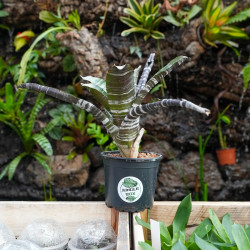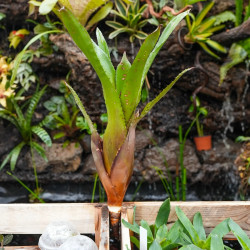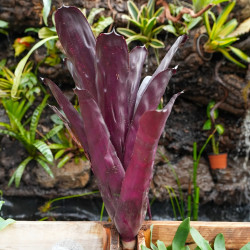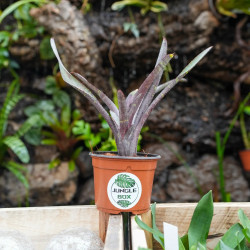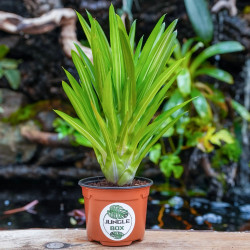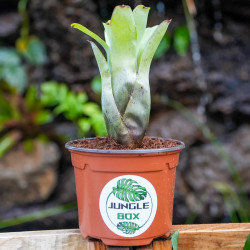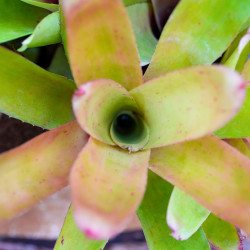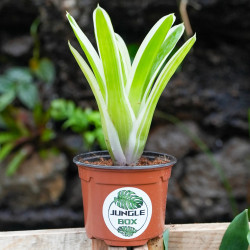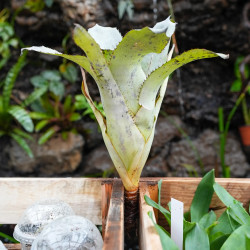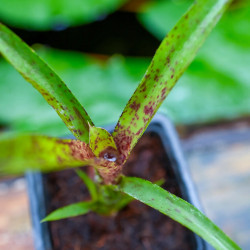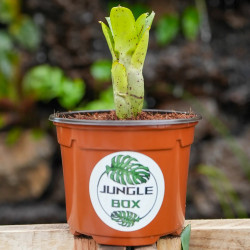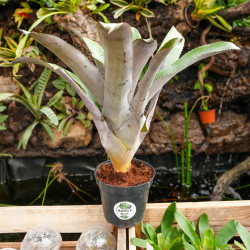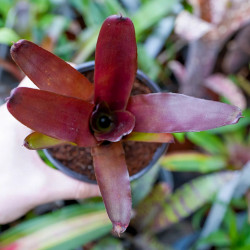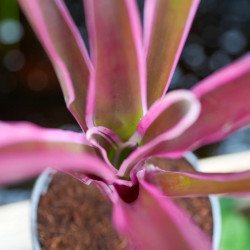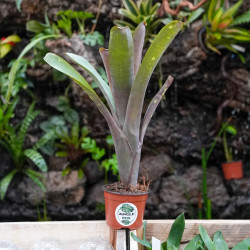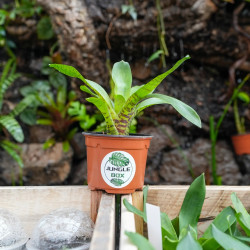
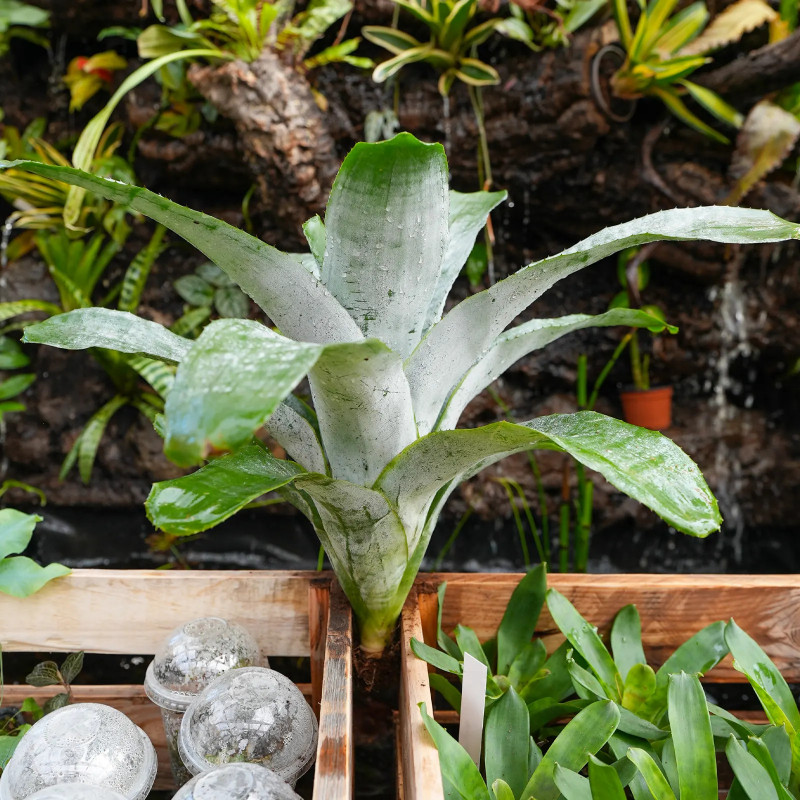
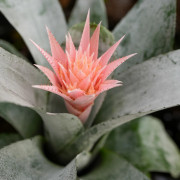
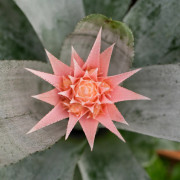
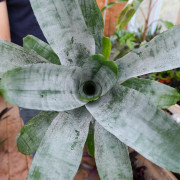
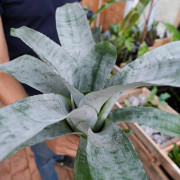
Aechmea fasciata is a magnificent botanical bromeliad native to Brazil, recognised by its silvery-green foliage decorated with pale transverse bands. Its large vase-shaped rosette and spectacular pink inflorescence with small bluish flowers make it an outstanding statement plant for large tropical terrariums, greenhouses, bromeliad collections and indoor plant displays.

Security policy


Satisfaction guaranteed or your money back
 Free shipping on orders over €59
Delivery throughout Europe in 48 hours.
Aechmea fasciata is a magnificent botanical bromeliad native to Brazil, particularly prized for its silvery-green foliage decorated with pale transverse bands and its spectacular pink inflorescence.
Its broad, arching leaves form an elegant and substantial rosette whose silvery appearance contrasts beautifully with other tropical foliage plants.
Highly decorative even outside its flowering period, this bromeliad makes an outstanding statement plant for large tropical terrariums, greenhouses, bromeliad collections and indoor plant displays.
Bromeliaceae
Aechmea
Aechmea fasciata (Lindl.) Baker
This is an accepted botanical species rather than a horticultural hybrid.
It is also commonly known as the Silver Vase Plant or Urn Plant, referring to the shape and coloration of its rosette.
Aechmea fasciata is native to southeastern Brazil, specifically the state of Rio de Janeiro.
In its natural habitat, it primarily grows epiphytically on trees in the humid tropical forests of the Brazilian Atlantic Forest, known as the Mata Atlântica.
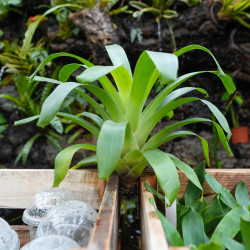
The plant develops long, broad, leathery and arching leaves with small marginal spines.
The foliage displays a beautiful grey-green to silvery coloration with white to pale grey transverse bands.
This silvery appearance is associated with trichomes, specialised structures covering the leaf surface that contribute to water absorption.
Mature leaves may reach approximately 30 to 80 cm in length, depending on individual plants and growing conditions.
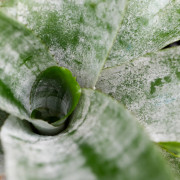
Aechmea fasciata forms a large, open vase-shaped rosette capable of naturally retaining water in its centre.
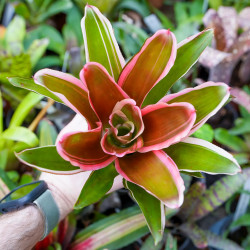
At maturity, it produces a spectacular pyramidal inflorescence composed of numerous bright pink bracts, among which small blue flowers emerge and gradually develop violet to reddish tones.
The floral bracts may remain attractive for several months.
After flowering, the mother rosette gradually declines while producing offsets that ensure the continuation of the plant.
This bromeliad appreciates bright filtered light, regular moisture and good airflow.
Relatively adaptable, it can also be grown as a houseplant in a bright room protected from harsh direct sunlight.
Avoid permanently waterlogged substrates, excessively stagnant conditions and prolonged exposure to cold temperatures.
For pot cultivation, use a highly aerated and free-draining mix containing coco chips, bark, perlite and optionally a small amount of sphagnum moss.
Its naturally epiphytic habit also makes Aechmea fasciata suitable for mounting directly on large natural wood, trunks or cork supports strong enough to accommodate its mature size.
Use soft, rain or reverse-osmosis water whenever possible to minimise mineral deposits on its beautiful silvery foliage.
Maintain clean water in the centre of the rosette and refresh it regularly.
Water the roots as well. When mounted on natural supports, mist generously, generally two to three times per week, adjusting the frequency according to ambient conditions.
Avoid keeping the plant base permanently waterlogged and reduce watering when temperatures decrease.
Recommended humidity: 50% to 80%.
This species can also adapt to the conditions of a bright indoor environment. High humidity should always be combined with good airflow.
Recommended growing temperature: 18°C to 28°C.
Protect the plant from frost, cold draughts and prolonged cold, wet conditions.
Growth is generally slow to moderate, depending on light levels, temperature and growing conditions.
Young specimens may require several years to reach maturity and produce their first inflorescence.
Offsets can be left around the mother plant to gradually create a particularly attractive group of rosettes.
A large-growing bromeliad at maturity.
Current plant size and development may vary depending on individual plants, season and availability.
Flowering at the time of delivery is not guaranteed.
Refresh the water held in the rosette regularly, remove old or damaged leaves and maintain adequate airflow around the plant.
Avoid vigorously rubbing the leaves to preserve the trichomes responsible for their silvery appearance.
Offsets can be separated once they reach approximately one-third of the mother plant's size or left attached to create a more natural-looking display.
Handle the plant carefully due to the small spines along its leaf margins.
Aechmea fasciata stands out for its magnificent silvery foliage, large architectural rosette and spectacular pink inflorescence with bluish flowers.
Its luminous foliage creates a remarkable contrast with ferns, aroids, tropical mosses and darker-coloured bromeliads.
Versatile and highly decorative, it is equally suitable for botanical collections, large tropical terrariums and indoor plant displays.
An iconic bromeliad for recreating the elegance and botanical richness of Brazilian tropical forests.

Specific References
You might also like
Aechmea fasciata is a magnificent botanical bromeliad native to Brazil, recognised by its silvery-green foliage decorated with pale transverse bands. Its large vase-shaped rosette and spectacular pink inflorescence with small bluish flowers make it an outstanding statement plant for large tropical terrariums, greenhouses, bromeliad collections and indoor plant displays.