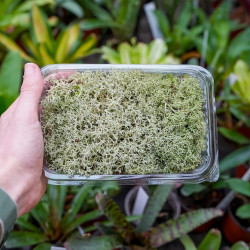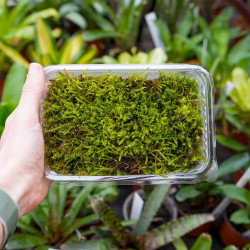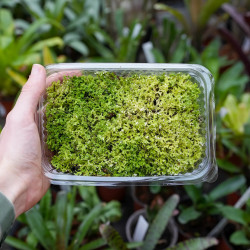
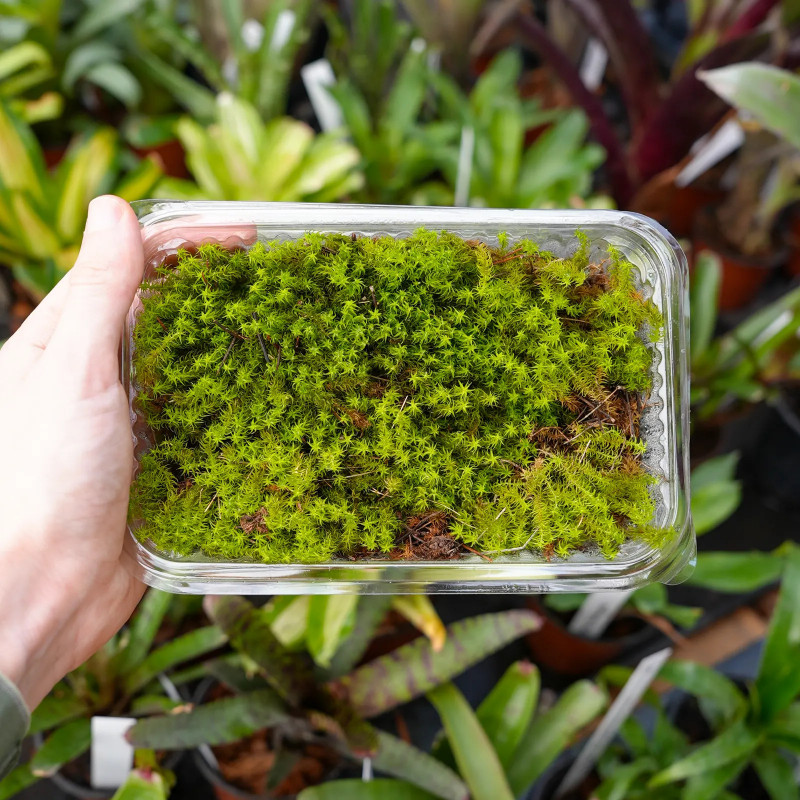
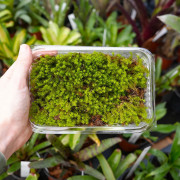
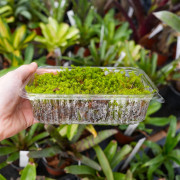
Tortula ruralis, now accepted as Syntrichia ruralis, is a robust tuft-forming moss with distinctive pale hair points and a silvery appearance when dry. Highly tolerant of changing moisture levels, it is especially suitable for open terrariums, temperate mossariums and rocky natural displays.

Security policy


Satisfaction guaranteed or your money back
 Free shipping on orders over €59
Delivery throughout Europe in 48 hours.
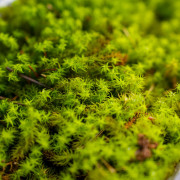
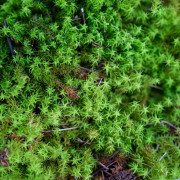
Tortula ruralis, now generally accepted as Syntrichia ruralis, is a robust moss forming small dense upright tufts. It is recognised by its narrow leaves ending in a long translucent hair point, giving the moss a slightly silvery appearance when dry.
Highly tolerant of changing moisture levels, this species is especially useful for open terrariums, temperate mossariums and natural displays where temporary drying may occur.
Pottiaceae
Syntrichia
Syntrichia ruralis (Hedw.) F.Weber & D.Mohr
Tortula ruralis is an older botanical name still widely used in trade and horticultural literature.
Syntrichia ruralis has a very wide geographical distribution and occurs in many temperate and cold environments on mineral soils, sandy ground, rocks, walls and other exposed surfaces.
The leaves are narrow and lance-shaped, arranged in small rosettes around the stems.
Each leaf ends in a long translucent white hair point, giving the moss a grey-silver appearance when dry. After rehydration it quickly becomes greener and more open.
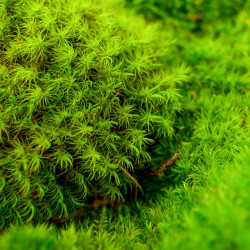
This species has an acrocarpous, upright and tuft-forming habit. It develops compact cushions rather than a flat creeping carpet.
Syntrichia ruralis appreciates moderate to relatively bright light, good airflow and a substrate allowed to dry slightly between wetting cycles.
It is particularly well known for its high desiccation tolerance, closing when dry and rapidly reactivating after rehydration.
This moss performs particularly well on mineral or lightly organic surfaces such as porous stone, sandy soil and well-drained fine substrates.
Mist or moisten regularly, then allow the surface to dry slightly between waterings.
This alternating wet-dry cycle is more appropriate than permanent saturation.
It tolerates variable humidity and does not require constantly saturated air.
Moderate humidity with occasional drier periods is generally preferable to permanently high humidity.
Syntrichia ruralis performs best under cool to temperate conditions, around 10°C to 22°C.
It can tolerate warmer periods if airflow is good, but is less suited to permanently hot terrariums.
Provide moderate to relatively bright indirect light, while avoiding excessive heat.
This moss generally tolerates stronger light than many woodland mosses.
Growth is slow to moderate.
The tufts gradually become denser rather than rapidly spreading across large surfaces.
Like all mosses, it produces neither flowers nor seeds.
It reproduces naturally by spores and can also be propagated by dividing or fragmenting established tufts.
Remove debris from the moss surface and avoid permanent waterlogging.
Tufts can be divided and repositioned to create several small natural patches.
This moss is especially interesting for its desiccation tolerance, silvery dry appearance and compact tufted habit.
It provides a different texture from classic tropical mosses and works especially well in open terrariums, rocky displays and environments with changing moisture levels.
Place it in small tufts between rocks or on slightly mineral surfaces rather than as one large uniform patch.
Allow brief drying phases between mistings: the moss will naturally close and then quickly return to a green appearance after rehydration.

Specific References
You might also like
Tortula ruralis, now accepted as Syntrichia ruralis, is a robust tuft-forming moss with distinctive pale hair points and a silvery appearance when dry. Highly tolerant of changing moisture levels, it is especially suitable for open terrariums, temperate mossariums and rocky natural displays.