- New
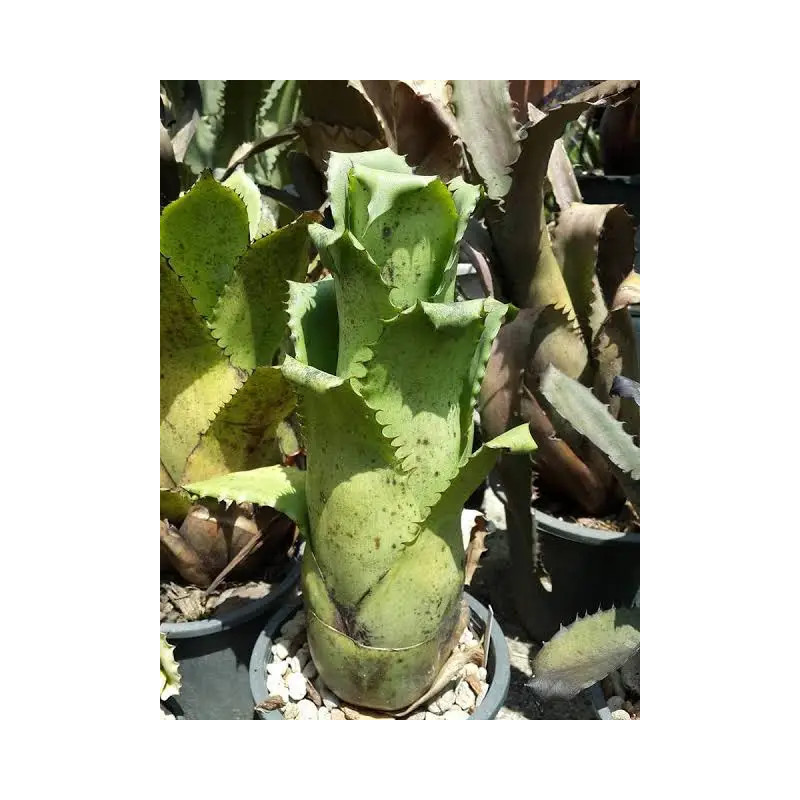
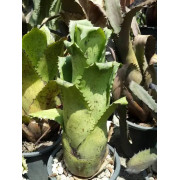
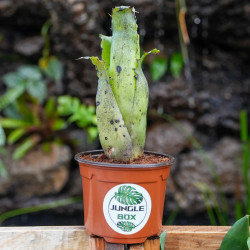
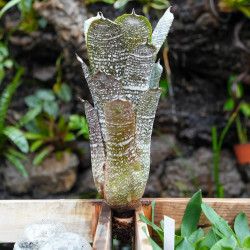
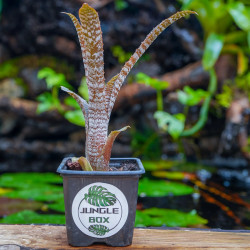
Hohenbergia magnispina is a rare botanical bromeliad from Bahia with a bottle-shaped rosette, green to reddish-purple foliage and prominent marginal spines. Ideal for large terrariums, tropical greenhouses and well-drained rock displays.

Security policy


Satisfaction guaranteed or your money back
 Free shipping on orders over €59
Delivery throughout Europe in 48 hours.
Hohenbergia magnispina is a spectacular botanical bromeliad native to Bahia, Brazil. It is distinguished by its bottle-shaped rosette, thick foliage that can develop dark green to reddish-purple tones and especially by its prominent marginal spines, one of the defining features of the species.
Its bold, sculptural and highly graphic appearance makes it an outstanding collector plant for large tropical terrariums, greenhouses, paludariums and displays requiring a bromeliad with strong visual character.
Bromeliaceae
Hohenbergia
Hohenbergia magnispina Leme
Hohenbergia magnispina is native to Bahia, Brazil. The type material was collected in the Chapada Diamantina region between Morro do Chapéu and Bonito. It naturally grows on rocky substrates within campos rupestres vegetation associated with quartzite and sandstone outcrops.
The plant develops a subtubular to narrowly ellipsoid, bottle-shaped rosette. The leaves are thick, leathery and relatively rigid.
Foliage can range from green to dark reddish-purple depending on light intensity and growing conditions. The margins carry prominent triangular spines, often curved backwards, measuring approximately 4 to 9 mm.
Hohenbergia magnispina develops a strongly upright and architectural habit. When flowering, the plant can reach approximately 90 cm in total height, mainly because of its long flower spike.
Individual leaf blades can reach approximately 18 to 40 cm long and 3 to 5 cm wide, making mature plants best suited to medium and large displays.
The species naturally grows as a saxicolous bromeliad in campos rupestres, rocky highland environments characterised by nutrient-poor substrates, strong light exposure and periods of water stress.
This species is particularly well suited to mineral, highly free-draining substrates or rock-based displays.
Its natural habitat indicates a strong preference for airy and well-drained conditions. Heavy, permanently waterlogged substrates should therefore be avoided.
Use a highly free-draining mixture containing volcanic rock, pumice, perlite, bark and only a small proportion of organic material.
The substrate can partially dry between waterings while maintaining enough moisture for steady growth.
Water regularly during active growth while allowing the growing medium to remain well aerated between applications.
Like other tank-forming bromeliads, the rosette can hold water in its centre. Soft or low-mineral water is preferable and should be refreshed regularly.
Humidity of approximately 50% to 80% is suitable when combined with excellent airflow.
Its rocky, exposed habitat makes it more tolerant of slightly drier periods than many strictly rainforest bromeliads.
Ideal growing temperature: approximately 18°C to 28°C.
Avoid prolonged cold conditions and protect the plant from frost.
Hohenbergia magnispina prefers bright to very bright light. Strong lighting helps maintain a compact rosette and generally promotes darker red to purple foliage tones.
Gradual acclimation is recommended before exposing the plant to intense direct sunlight.
Slow to moderate growth. The species gradually develops a thick, robust and highly architectural rosette.
At maturity, Hohenbergia magnispina produces a tall upright flower spike, dark reddish-purple in colour, reaching approximately 65 cm long.
The inflorescence is narrow, branched and cylindrical with pale pink bracts and compact branches, bringing the total flowering height to approximately 90 cm.
Propagation can be carried out by separating offsets once sufficiently developed or from seed for botanical collections.
Remove old or damaged leaves carefully because of the prominent marginal spines.
Gloves are recommended when repotting or handling mature specimens.
Use a very weakly dosed bromeliad fertiliser during active growth.
Avoid high fertiliser concentrations, especially in mineral substrates where salts can accumulate quickly.
Hohenbergia magnispina is a true botanical collector bromeliad valued for its Bahia origin, bottle-shaped rosette and unusually large marginal spines.
Its dark green to reddish-purple foliage and strongly structured habit make it an exceptional focal plant for tropical or rocky displays.
Grow Hohenbergia magnispina in a very bright and highly free-draining position. A display combining volcanic rock, natural roots and lower-growing plants will highlight its architectural shape.
Allow plenty of space around the plant and avoid positioning it along frequently accessed areas, as its marginal spines are particularly prominent.

Specific References
You might also like
Hohenbergia magnispina is a rare botanical bromeliad from Bahia with a bottle-shaped rosette, green to reddish-purple foliage and prominent marginal spines. Ideal for large terrariums, tropical greenhouses and well-drained rock displays.