- New


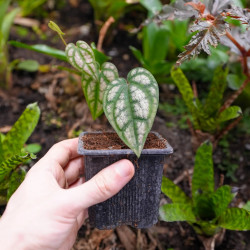
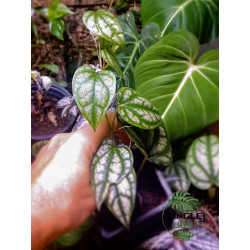
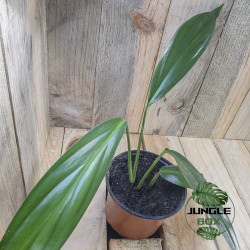
Piper parmatum is a rare botanical species native to Panama and adapted to wet tropical environments. Supplied in an 8 cm pot, it is ideal for humid tropical terrariums, emerged paludarium areas and bioactive displays.

Security policy


Satisfaction guaranteed or your money back
 Free shipping on orders over €59
Delivery throughout Europe in 48 hours.
Piper parmatum is a rare tropical species from the Piperaceae family, native to Panama. Its ornamental foliage and compact to bushy growth habit make it particularly suitable for humid tropical terrariums, paludariums and botanical plant collections.
Supplied in a Ø 8 cm pot, this young plant is an excellent size for tropical planted displays, either in the foreground or midground depending on enclosure size.
Piperaceae
Piper
Piper parmatum Dressler
Piper parmatum is an accepted botanical species described by Robert Louis Dressler in 1978.
Ø 8 cm
Piper parmatum is native to Panama, where it grows naturally in wet tropical environments.
Piper parmatum develops as a subshrub with rhizomatous growth. This growth habit allows the plant to gradually produce new shoots and form dense vegetation under suitable conditions.
Its development can easily be controlled through regular pruning when grown in terrariums.
Use a light, humus-rich and free-draining tropical substrate containing coco fibre or chips, perlite, fine bark and well-decomposed organic matter.
The growing medium should remain lightly moist while staying sufficiently aerated to prevent water stagnation around the roots and rhizome.
Keep the substrate consistently lightly moist without allowing it to remain permanently waterlogged.
Soft or low-mineral water is preferable in terrarium cultivation.
High humidity of approximately 70% to 90% is particularly suitable for this wet tropical species.
Good airflow remains important to prevent stagnant moisture around the foliage.
Ideal growing temperature: approximately 20°C to 28°C.
Avoid prolonged cold conditions and major temperature fluctuations.
Piper parmatum prefers medium to bright filtered light, similar to the conditions found in a bright tropical forest understory.
Avoid harsh direct sunlight that may scorch or dry the foliage.
Moderate growth under warm, humid conditions with consistently moist substrate.
Pruning the shoots helps maintain a compact plant and encourages branching.
Like other Piper species, Piper parmatum can produce discreet spike-like inflorescences. In terrarium cultivation, however, its main ornamental value lies in its tropical foliage and growth habit.
Propagation can be carried out by dividing rhizomatous sections or from sufficiently developed stem cuttings.
Remove old or damaged leaves and trim overly long shoots when necessary to maintain dense, balanced growth.
Avoid allowing the substrate to dry out completely for prolonged periods.
Use a very weakly dosed tropical plant fertiliser occasionally during active growth.
In bioactive terrariums, additional fertilisation requirements are generally limited.
Piper parmatum is an uncommon botanical species particularly suited to collectors of unusual tropical plants and naturalistic terrarium displays.
Its Panamanian origin and adaptation to wet tropical habitats make it especially suitable for Central American rainforest-inspired setups.
Place Piper parmatum in a humid, slightly shaded section of the terrarium alongside mosses, ferns and compact bromeliads.
Occasional pruning will help maintain a compact habit while encouraging fresh new growth.

Specific References
You might also like
Piper parmatum is a rare botanical species native to Panama and adapted to wet tropical environments. Supplied in an 8 cm pot, it is ideal for humid tropical terrariums, emerged paludarium areas and bioactive displays.