- New
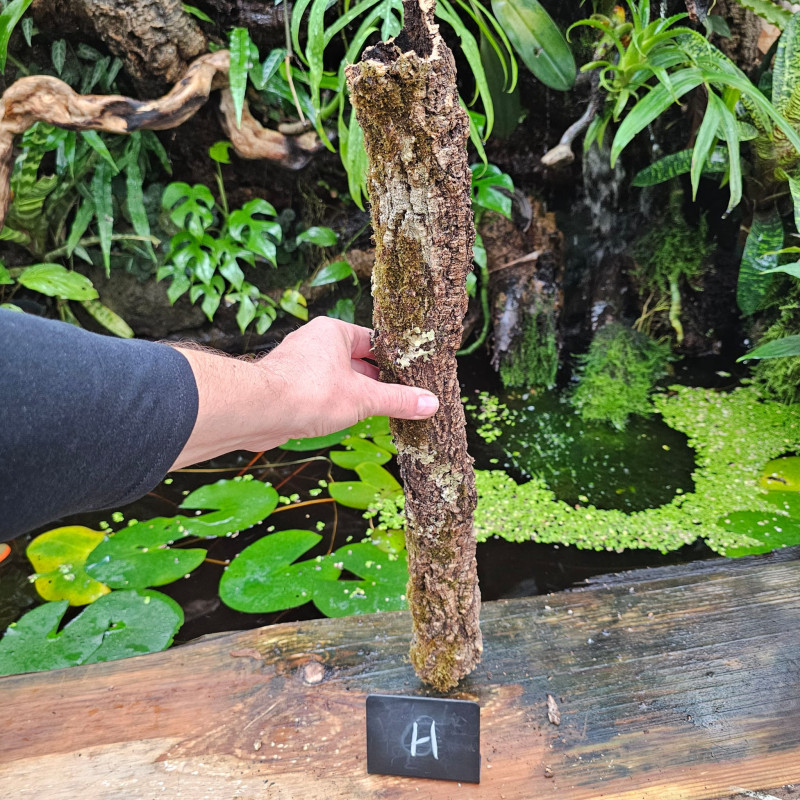
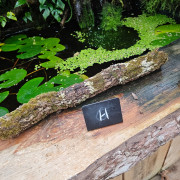
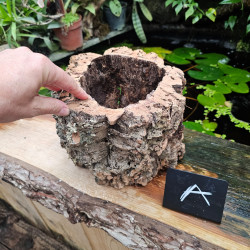
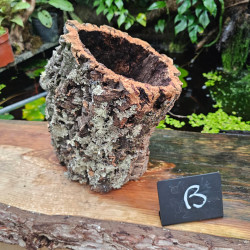
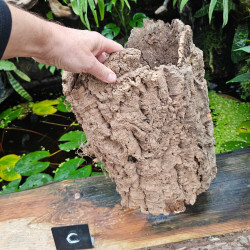
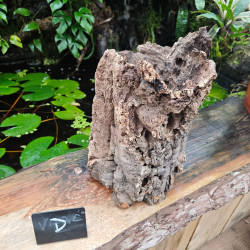
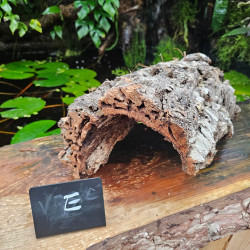
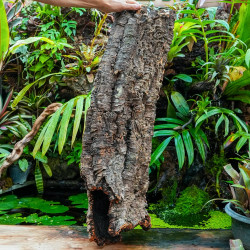
At approximately 60 cm long, Hollow Cork Branch (H) WYSIWYG becomes a substantial natural feature: climbing branch, tunnel, hide or planted support for bromeliads, orchids, mosses and climbing plants. Its hollow structure offers numerous layout possibilities. You receive the exact unique piece shown in the photographs.

Security policy


Satisfaction guaranteed or your money back
 Free shipping on orders over €59
Delivery throughout Europe in 48 hours.
Hollow Cork Branch (H) WYSIWYG 60 cm is a long unique natural cork piece selected for its hollow structure, natural texture and versatility in tropical, bioactive and arboreal terrariums. The WYSIWYG – What You See Is What You Get principle guarantees that the exact piece shown in the photographs is the one you will receive.
At approximately 60 cm long, this hollow branch can become a major structural feature within the enclosure. It can be used as a climbing branch, tunnel, hide, elevated pathway, planted support or vertical structure for epiphytic plants.
Natural cork.
Length: approximately 60 cm.
This listing corresponds to a unique piece identified as (H).
The photographs are contractual: you will receive the exact hollow branch shown, including its individual shape, opening, curvature, natural texture and irregularities.
The naturally hollow structure greatly increases the range of possible uses. It can provide an internal passage, protected refuge or tunnel while maintaining a lighter and more slender appearance than a large cork log.
Depending on its orientation, the cavity can remain visible and accessible or be partially incorporated into the layout to recreate the appearance of an old naturally hollow branch.
Natural cork develops a deeply textured, irregular and cracked surface that closely resembles an aged branch or section of tree trunk.
Its length and strong surface relief make it easy to add height, depth and natural directional lines to a terrarium.
At 60 cm long, this branch can be positioned horizontally as a pathway or climbing structure, angled to connect ground level with higher sections of the display, or installed vertically to create a substantial arboreal feature.
It can also be incorporated into planted backgrounds, combined with other roots or used as the main structural axis around which vegetation is arranged.
Its length and textured surface provide an excellent climbing and movement structure in arboreal or heavily planted terrariums.
It can connect several levels of the enclosure and increase the usable vertical space.
The hollow section can function as a tunnel or protected refuge depending on the shape and orientation of the piece.
Placed horizontally or at a slight angle, it can create a covered passage naturally integrated into the branch itself.
The branch’s length and naturally rough surface provide numerous attachment points for epiphytic and climbing plants.
It is particularly suitable for:
In humid tropical terrariums, the hollow branch can gradually become a true living structure. Mosses and epiphytic plants can be attached within cracks and cavities while climbing plants naturally use the surface for support.
Natural cork performs particularly well in humid environments when adequate ventilation is maintained.
The hollow branch greatly increases environmental complexity by adding climbing surfaces, shaded areas, cavities and pathways at different heights.
Its natural cracks and hollows can also collect moss, organic material and microfauna, gradually enhancing the living appearance of the enclosure.
The branch can be positioned horizontally, installed diagonally, secured between two surfaces or used vertically depending on the desired layout.
For elevated installation, always use a secure fixing method capable of keeping the piece completely stable.
Before installation, lightly brush the branch and rinse with clean water if required to remove loose dust and particles.
Do not use detergents, household cleaning products or chemical disinfectants.
This piece combines the length of a genuine branch with the versatility of a hollow structure. It can simultaneously provide climbing space, a covered passage, a natural hide and a planted support.
At 60 cm long, piece (H) is particularly well suited to larger terrariums and vertical layouts where it can become a major feature of the landscape.
The WYSIWYG format also allows you to choose the exact piece you will receive: its curvature, opening, cracks and overall silhouette are exactly those visible in the photographs.
In a large tropical terrarium, position the branch diagonally between the substrate and an elevated section of the display. This orientation makes full use of its climbing function, hollow cavity and extensive planted surface.
For a highly natural appearance, attach bromeliads, orchids or mosses at several points while leaving a significant amount of cork visible to preserve the graphic structure of the branch.

Specific References
You might also like
At approximately 60 cm long, Hollow Cork Branch (H) WYSIWYG becomes a substantial natural feature: climbing branch, tunnel, hide or planted support for bromeliads, orchids, mosses and climbing plants. Its hollow structure offers numerous layout possibilities. You receive the exact unique piece shown in the photographs.