- New


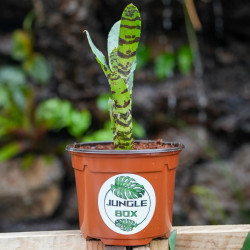
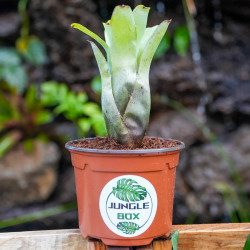
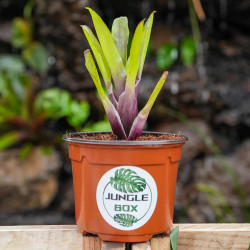
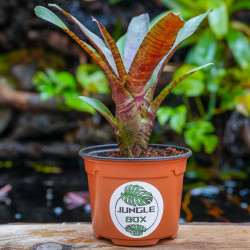
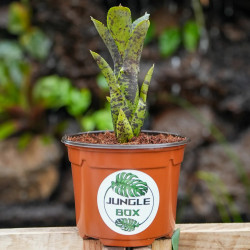
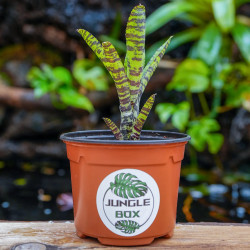
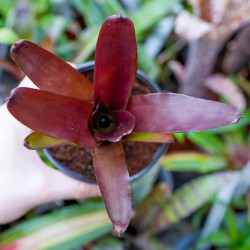
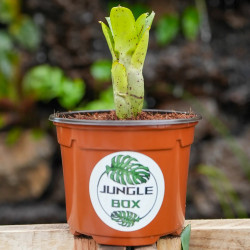
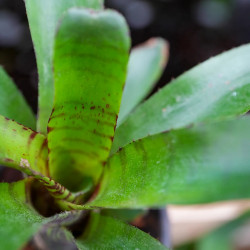
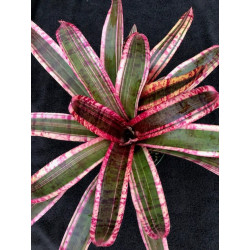
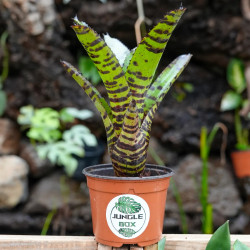
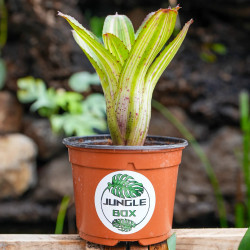
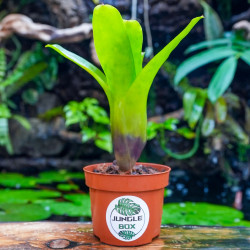
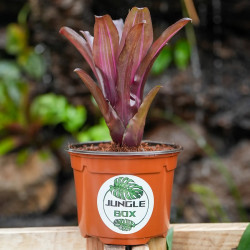
Neoregelia 'Iphigenie' is a horticultural bromeliad with green leaves edged in white and spotted with red, developing stronger pink tones under good lighting. Ideal for tropical terrariums, paludariums and epiphytic displays.

Security policy


Satisfaction guaranteed or your money back
 Free shipping on orders over €59
Delivery throughout Europe in 48 hours.
Neoregelia 'Iphigenie' is a highly ornamental horticultural bromeliad valued for its compact rosette and striking foliage. Its green leaves are edged in white and spotted with red, with pink tones becoming increasingly pronounced under strong light. :chatgpt-content-reference{index="7"}
Its relatively compact size and highly contrasting coloration make it an excellent plant for humid tropical terrariums, paludariums, bioactive setups and epiphytic displays.
Bromeliaceae
Neoregelia
Neoregelia 'Iphigenie'
'Iphigenie' is a horticultural Neoregelia cultivar. The name is recognised in horticulture and listed by the Royal Horticultural Society. :chatgpt-content-reference{index="8"}
The plant forms a regular rosette composed of relatively broad and leathery leaves. The foliage combines a green background with pale white to cream margins and red spotting or markings.
Under sufficiently strong light, the coloration can develop stronger pink and red tones. In lower light, the foliage may appear considerably greener.
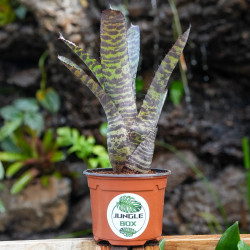
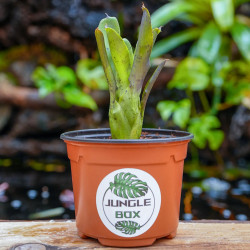
Neoregelia 'Iphigenie' forms a compact to intermediate rosette well suited to medium-sized terrariums.
Plants measuring approximately 20 to 25 cm are commonly offered in cultivation, providing a useful indication of its typical size. :chatgpt-content-reference{index="9"}
Neoregelia 'Iphigenie' can be grown in a highly draining potting mix or mounted directly onto a branch, natural root or cork panel.
When mounted, a small amount of sphagnum moss around the roots can help establishment while maintaining good aeration.
Use a very airy mixture containing fine bark, coco chips, perlite, volcanic rock and a small amount of sphagnum moss.
Avoid heavy and permanently waterlogged substrates.
Keep a small amount of soft or low-mineral water in the centre of the rosette and refresh it regularly.
When grown in a pot, the substrate should remain lightly moist while maintaining good root aeration.
Humidity of approximately 65% to 90% is particularly suitable for this Neoregelia.
Good ventilation remains essential, especially in heavily misted terrariums.
Ideal growing temperature: approximately 18°C to 26°C. Temperatures around 18 to 25°C are commonly recommended for this cultivar. :chatgpt-content-reference{index="10"}
Grow Neoregelia 'Iphigenie' under bright but filtered light.
Good light intensity encourages stronger pink and red coloration while maintaining a compact rosette. Avoid harsh direct sunlight that could scorch the foliage.
Moderate growth. Under good light, warmth and humidity, the plant gradually develops a dense rosette and produces offsets around the base.
As with other Neoregelia, flowering occurs directly in the centre of the rosette. Small tubular flowers develop inside the central cup while the inner foliage may intensify in colour.
Propagation is mainly carried out by separating offsets once they have reached a suitable size.
Refresh the water held in the centre of the rosette regularly and remove old or damaged leaves when necessary.
Maintain good airflow around the plant to avoid permanently stagnant moisture.
Use a very weakly dosed fertiliser formulated for bromeliads or epiphytic plants during active growth.
Avoid excessive fertilisation and mineral salt accumulation inside the rosette.
Neoregelia 'Iphigenie' stands out for its variegated and spotted foliage combining green, white, pink and red depending on light intensity.
Its relatively compact size and suitability for epiphytic cultivation make it an excellent bromeliad for naturalistic tropical displays.
For the strongest coloration, position Neoregelia 'Iphigenie' under bright filtered lighting.
Mounted slightly above ground level on a root or cork panel, it benefits from better airflow and its variegated foliage contrasts particularly well with green mosses and foliage plants.

Specific References
You might also like
Neoregelia 'Iphigenie' is a horticultural bromeliad with green leaves edged in white and spotted with red, developing stronger pink tones under good lighting. Ideal for tropical terrariums, paludariums and epiphytic displays.