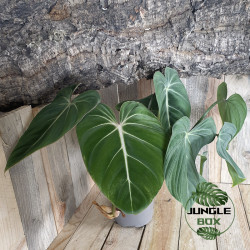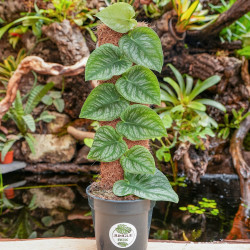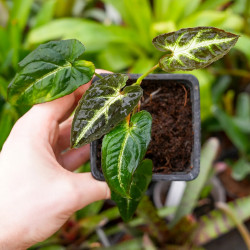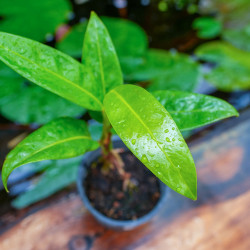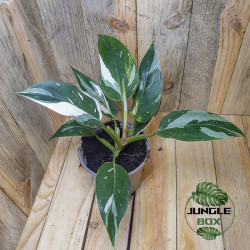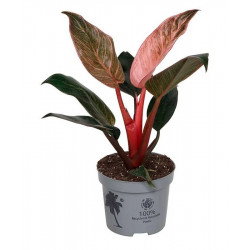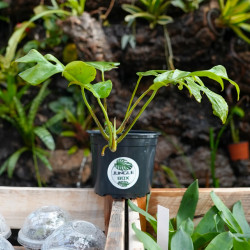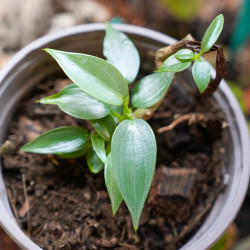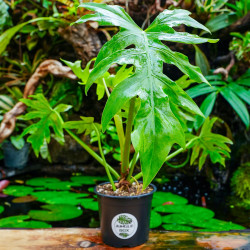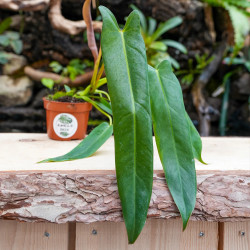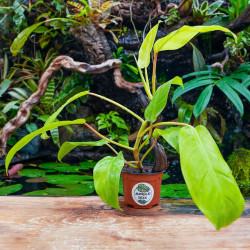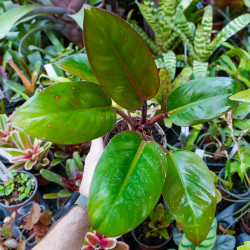
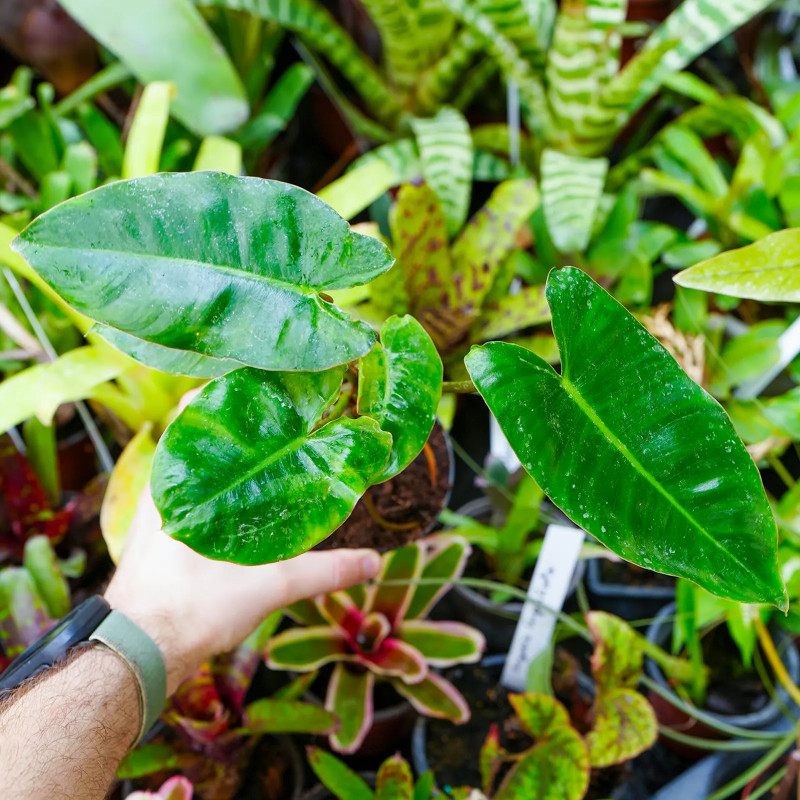
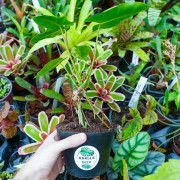
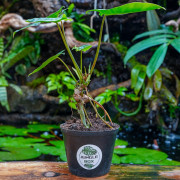
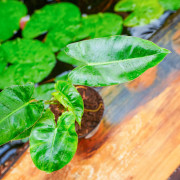
Philodendron burle-marxii is a tropical climbing plant with long, glossy green leaves, ideal for humid terrariums, paludariums, planted walls and indoor growing.

Security policy


Satisfaction guaranteed or your money back
 Free shipping on orders over €59
Delivery throughout Europe in 48 hours.
Philodendron burle-marxii is an elegant tropical epiphytic plant valued for its dense growth, rapid development and long, lance-shaped green leaves. Its flexible, glossy and slightly wavy foliage immediately creates a lush appearance in tropical terrariums, paludariums, planted walls and indoor displays.
More compact than many large climbing Philodendrons, it gradually forms abundant vegetation when grown on a branch, cork panel or moist vertical support. Relatively easy to cultivate, it is an excellent choice for quickly creating a natural tropical environment.
Araceae
Philodendron
Philodendron burle-marxii G.M.Barroso
Philodendron burle-marxii is native to Colombia, Ecuador and northern Brazil. In its natural habitat, it grows mainly as an epiphyte in humid tropical forests, developing on trunks, branches and other moisture-rich plant supports.
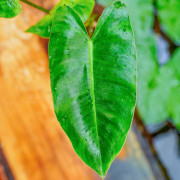
This species produces elongated, narrow and lance-shaped leaves carried on relatively slender petioles. The deep green surface may have a glossy appearance and slightly undulating edges.
The leaves are arranged harmoniously along the stems and quickly form dense vegetation. Their slender shape creates a light tropical display without occupying as much space as Philodendrons with very large foliage.
Philodendron burle-marxii has an epiphytic, creeping to climbing growth habit. Its stems produce aerial roots that can attach themselves to bark, branches, cork panels and moist supports.
Growth can be relatively rapid when the plant receives warmth, humidity and adequate light. Regular pruning can be used to maintain a compact and branching shape.
Under indoor cultivation, the stems may reach approximately 60 to 120 cm or more when provided with a suitable support. Final size depends on light, humidity, fertilisation and pruning frequency.
Its growth remains sufficiently manageable for use in medium to large tropical terrariums.
Provide bright, indirect light. Good lighting encourages dense foliage, regular growth and shorter spaces between the nodes.
Avoid intense direct sunlight, especially through glass, as it may scorch or discolour the leaves. Insufficient light generally causes elongated stems and less compact growth.
The ideal temperature range is approximately 20 to 28 °C. This tropical plant prefers warm and stable conditions.
Avoid temperatures below 15 °C, cold draughts and sudden temperature changes.
Philodendron burle-marxii prefers atmospheric humidity of approximately 60 to 85%. Higher humidity encourages aerial-root growth and supports the correct unfurling of new leaves.
Regular air circulation remains important to reduce the risk of fungal disease and rot.
Keep the substrate lightly moist during active growth while allowing the upper few centimetres to dry between waterings.
The substrate must never remain constantly waterlogged. Reduce watering slightly when temperatures and light levels decrease.
Use a highly aerated and free-draining substrate designed for epiphytic Araceae. A suitable mixture may contain:
The container must have effective drainage holes. A compact and permanently saturated mixture greatly increases the risk of root rot.
Apply a balanced tropical foliage fertiliser, diluted to approximately half the recommended strength, every two to four weeks during active growth.
Reduce feeding during winter or whenever growth slows. Excess fertiliser may cause brown leaf tips and root damage.
Repot every one to two years, preferably in spring, or whenever the roots have completely filled the container.
Select a pot only slightly larger than the previous one to prevent an excessive volume of substrate from retaining moisture for too long.
Propagation is easy using stem cuttings. Each cutting must contain at least one healthy node and should ideally include a leaf and some aerial roots.
Cuttings may be rooted in moist sphagnum moss, perlite, water or a highly aerated substrate. Warm temperatures and high humidity encourage successful rooting.
Philodendron burle-marxii is particularly suitable for medium to large tropical terrariums, paludariums, humid greenhouses and planted walls.
It may be grown on a cork panel, root, branch or in a substrate pocket incorporated into the background. Its aerial roots will gradually attach themselves to slightly moist surfaces.
Regular pruning controls its development and encourages denser growth. It is not recommended for very small enclosed terrariums where maintenance is difficult.
Occasionally wipe the foliage with a soft, damp cloth to remove dust. Remove yellow or damaged leaves using a clean and disinfected cutting tool.
The stems may be pinched or pruned to stimulate branching and maintain a compact shape.
Regularly inspect the plant for thrips, mealybugs, aphids and spider mites, particularly on emerging growth and underneath the leaves.
If an infestation is detected, isolate the plant and treat it promptly using an appropriate method.
Like most Philodendrons, this species contains calcium oxalate crystals. It must not be ingested and should be kept away from children and pets that may chew the foliage.
The sap may also irritate the skin and mucous membranes. Wearing gloves is recommended when pruning or taking cuttings.
Easy to intermediate. This species adapts readily to indoor and tropical terrarium cultivation when provided with a free-draining substrate, good humidity and sufficient indirect light.
Grow your Philodendron burle-marxii against a cork panel or along a branch kept slightly moist. Regularly prune the growing tips to stimulate branching and quickly produce dense, natural-looking vegetation.

Specific References
You might also like
Philodendron burle-marxii is a tropical climbing plant with long, glossy green leaves, ideal for humid terrariums, paludariums, planted walls and indoor growing.