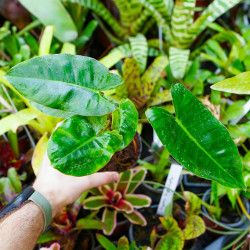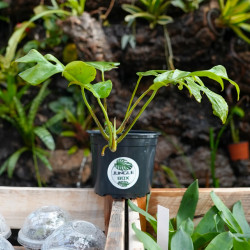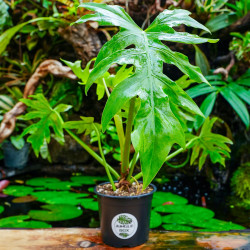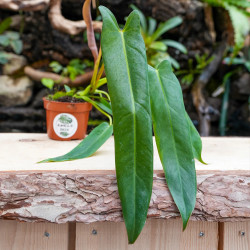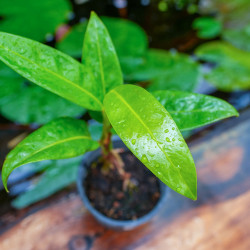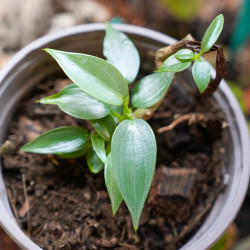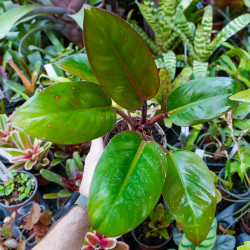
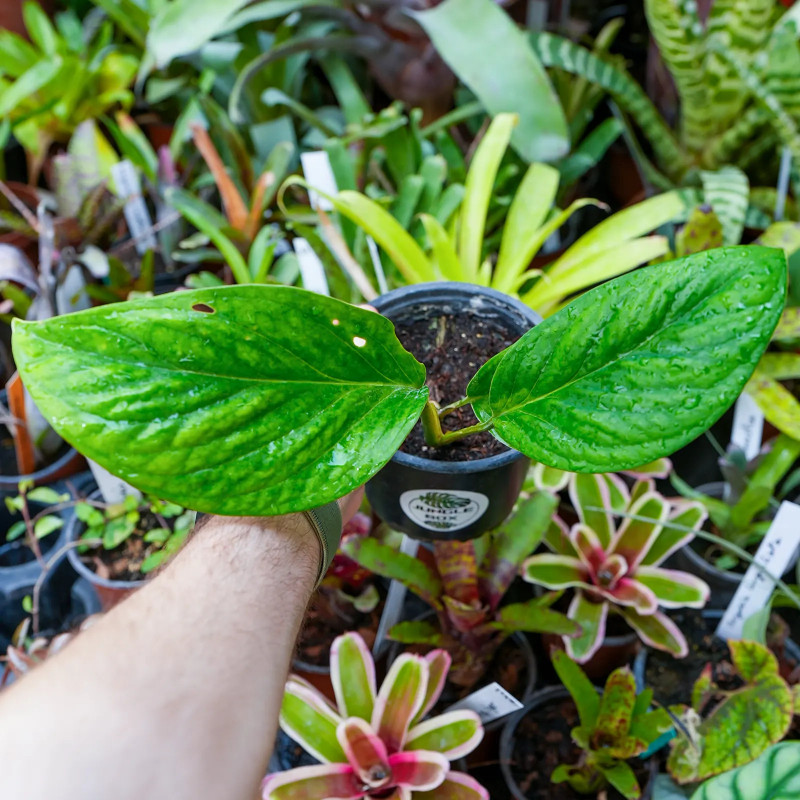
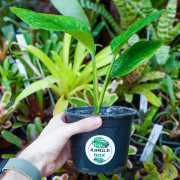
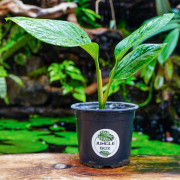
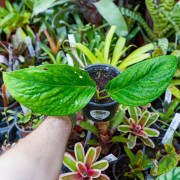
Monstera pinnatipartita is a collectible tropical climbing plant whose entire juvenile leaves become large and deeply divided as the plant matures.

Security policy


Satisfaction guaranteed or your money back
 Free shipping on orders over €59
Delivery throughout Europe in 48 hours.
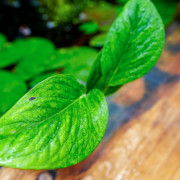
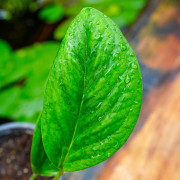
Monstera pinnatipartita is a remarkable tropical climbing plant highly valued by collectors for the spectacular transformation of its foliage. During its juvenile stage, it produces entire, oval to slightly elongated leaves with a deep green colour and glossy texture. As the plant matures and climbs on a suitable support, its leaves gradually become larger and deeply divided, creating an elegant and highly graphic appearance.
This impressive transition from juvenile to mature foliage makes Monstera pinnatipartita a particularly decorative species. It is ideal for tropical indoor cultivation, heated greenhouses, conservatories and very large humid terrariums.
Araceae
Monstera
Monstera pinnatipartita Schott
Monstera pinnatipartita is native to the humid tropical regions of Central and South America. In its natural habitat, it grows in tropical rainforests, using tree trunks as supports to gradually climb towards brighter areas of the forest canopy.
The juvenile foliage is entire, thick and glossy, with an oval to lance-shaped appearance. As the plant grows, the leaves become longer and wider and begin to develop deep lateral divisions.
On a mature, well-established plant, these divisions can extend almost to the central vein, giving the foliage a spectacular pinnate appearance. To encourage this transformation, the plant should be grown on a moss pole, coir support or moist cork panel.
This species has a naturally climbing growth habit. Its aerial roots allow it to attach itself to vertical surfaces and absorb moisture from its surroundings. Growth can be relatively fast when the plant receives warm temperatures, bright indirect light and consistent humidity.
A stable vertical support is strongly recommended to encourage the development of larger and more deeply divided leaves.
Monstera pinnatipartita thrives in bright, indirect light. Sufficient light promotes compact growth, larger leaves and the gradual development of its characteristic divisions.
Avoid intense direct sunlight, particularly through a window, as this may burn the foliage. Lightly filtered light closely reproduces the conditions found in tropical forest understories.
Water when the upper few centimetres of the substrate begin to dry. The growing medium should remain slightly moist during the active growing season without becoming permanently waterlogged.
Reduce watering moderately during winter or when temperatures decrease. Prolonged water stagnation around the roots may cause root suffocation or rot.
An ambient humidity level of approximately 60 to 80% promotes optimal growth and helps prevent dry leaf edges. However, this species can adapt to more moderate indoor humidity when acclimatised gradually.
In dry environments, using a humidifier or grouping several tropical plants together can help improve growing conditions.
The ideal temperature range is between 20 and 28°C. Avoid exposing the plant to temperatures below 15°C for extended periods, cold draughts or sudden temperature changes.
Use a light, well-draining tropical substrate rich in organic matter. A suitable mixture may include:
The substrate should retain moderate moisture while allowing excellent airflow around the roots.
Apply a balanced fertiliser for tropical plants every two to four weeks during the active growing season, using a slightly lower concentration than recommended by the manufacturer.
Reduce or stop fertilising during winter if growth slows considerably.
To obtain large, deeply divided mature foliage, install the plant against a vertical support that retains a small amount of moisture. A moss pole, cork panel, natural branch or coconut-fibre support allows the aerial roots to anchor properly.
Keep the support slightly moist to encourage rooting and the gradual increase in leaf size.
Young plants can be grown in a large tropical terrarium or well-ventilated paludarium. However, the plant will eventually need to be pruned regularly or moved once it becomes too large.
It is particularly suitable for tall tropical installations equipped with vertical backgrounds, branches or cork panels on which it can climb.
Propagation is mainly carried out through stem cuttings. Each cutting must include at least one healthy node, ideally accompanied by an aerial root.
The cutting can be placed in moist sphagnum moss, perlite, a light substrate or directly in water until it develops a sufficiently strong root system.
Clean the leaves regularly with a soft, damp cloth to remove dust and maintain efficient photosynthesis. Check the plant periodically for mealybugs, spider mites and thrips.
Guide or attach new stems to the support as they grow to maintain an attractive and balanced shape.
Like most members of the Araceae family, Monstera pinnatipartita contains calcium oxalate crystals. Ingestion may cause irritation of the mouth and mucous membranes. Keep the plant away from young children and pets likely to chew the foliage.
Intermediate. This species is relatively easy to grow when its requirements for light, warmth, drainage and humidity are respected. However, producing large mature leaves requires a suitable climbing support and favourable growing conditions.
Grow your Monstera pinnatipartita on a moss pole or large cork panel kept slightly moist. The higher the plant climbs under good lighting conditions, the larger, more mature and more deeply divided its new leaves will become.

Specific References
You might also like
Monstera pinnatipartita is a collectible tropical climbing plant whose entire juvenile leaves become large and deeply divided as the plant matures.