- New
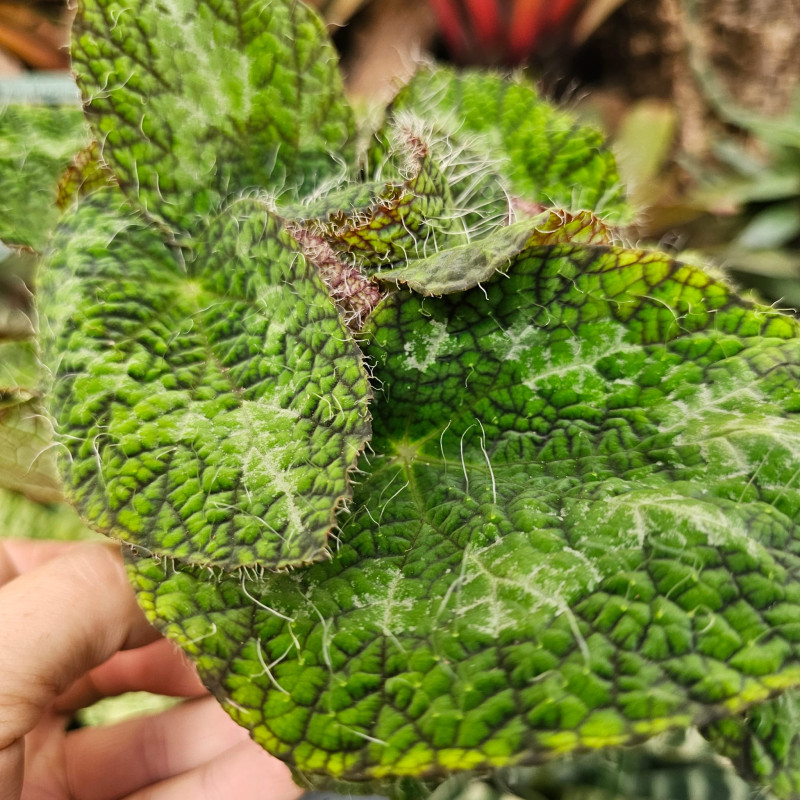
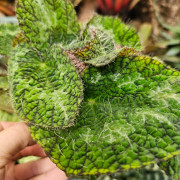
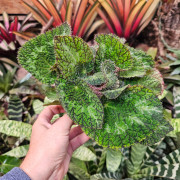
Almost like a fragment of Vietnamese forest growing in a pot, Begonia sizemoreae combines deeply textured leaves, layered greens, long white hairs and dark reddish undersides. Supplied in a 12 cm pot, it immediately adds depth, texture and character among mosses, roots and ferns in a tropical terrarium.

Security policy


Satisfaction guaranteed or your money back
 Free shipping on orders over €59
Delivery throughout Europe in 48 hours.
Begonia sizemoreae is a spectacular tropical rhizomatous Begonia prized for its deeply textured foliage, long pale hairs and striking combination of different green tones.
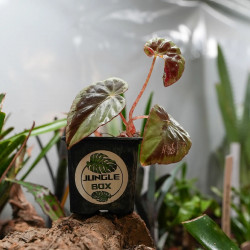
Supplied in a Ø 12 cm pot, it already offers excellent volume and makes an outstanding foreground or midground plant for humid tropical terrariums, forest-floor displays and highly naturalistic planted setups.
Begoniaceae
Begonia
Begonia sizemoreae Kiew
Ø 12 cm
Begonia sizemoreae is native to Vietnam. The species was described from material associated with the Ba Vi region west of Hanoi.
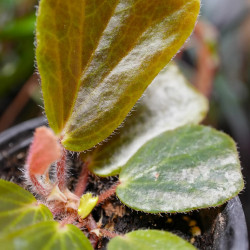
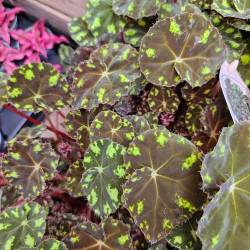
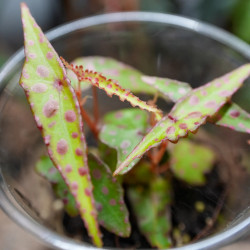
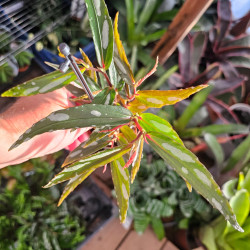
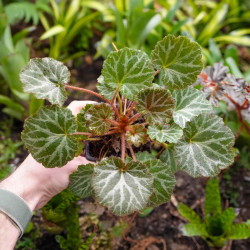
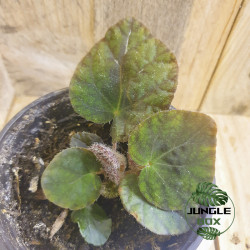
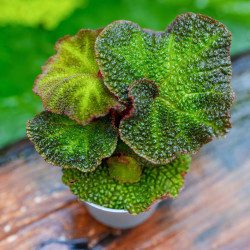
The leaves are rounded to broadly oval, asymmetrical and strongly crinkled. Several shades of green are combined across the blade, including a paler grey-green band contrasting strongly with the darker areas.
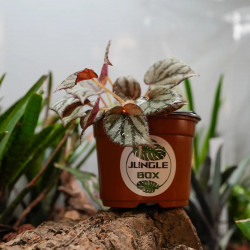
The upper surface bears scattered long white hairs, adding an exceptionally wild and textured appearance.
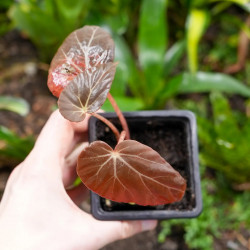
The undersides may develop dark red to purplish tones, while the petioles are also reddish and densely hairy.
This contrast between textured green upper surfaces and reddish undersides makes the plant ornamental from every angle.
Begonia sizemoreae has a compact to slightly spreading rhizomatous growth habit.
It gradually develops into a dense clump of leaves carried on hairy petioles and may eventually spread several tens of centimetres while remaining relatively low.
Use a light, humus-rich and free-draining mix containing coco fibre, perlite, fine bark and a small amount of sphagnum moss.
The substrate should retain consistent moisture while avoiding permanently saturated conditions around the rhizome.
Keep the substrate lightly moist, allowing the surface to begin drying between waterings.
Avoid both prolonged drought and stagnant excess moisture around the rhizome.
Humidity of approximately 65% to 90% is particularly suitable.
High humidity supports foliage development, but good airflow remains essential to prevent problems caused by stagnant moisture.
Ideal growing temperature: approximately 18°C to 26°C.
Avoid prolonged cold conditions and excessive heat combined with stagnant air.
Begonia sizemoreae prefers soft to medium filtered light and can tolerate fairly bright conditions when fully diffused.
Good lighting promotes compact growth and strong foliage contrast. Avoid harsh direct sunlight.
Moderate growth, spreading mainly horizontally through its rhizome.
The plant gradually forms a dense clump that can easily be controlled by division or pruning.
Begonia sizemoreae can produce delicate pink flowers held above the foliage.
Flowering is attractive, although the extraordinary textured foliage remains the main ornamental feature.
Propagation is relatively easy from whole leaves, leaf sections or rhizome divisions.
Remove old or damaged leaves regularly and avoid keeping the foliage permanently wet in heavily misted terrariums.
Maintain good airflow around the plant to reduce the risk of rot and fungal problems.
Use a very weakly dosed tropical plant fertiliser occasionally during active growth.
Feeding should remain moderate, particularly in terrariums and small substrate volumes.
Begonia sizemoreae almost looks sculpted rather than grown: crinkled leaves, pale green bands, pronounced veins, long white hairs and dark reddish undersides combine to create exceptionally rich foliage.
Supplied in a 12 cm pot, it already has enough presence to become an immediate focal point among mosses, natural roots and ferns in a tropical display.
Position it slightly away from direct misting in a bright but protected area. Its foliage looks particularly striking against dark natural wood, cork backgrounds or vivid green moss.

Specific References
You might also like
Almost like a fragment of Vietnamese forest growing in a pot, Begonia sizemoreae combines deeply textured leaves, layered greens, long white hairs and dark reddish undersides. Supplied in a 12 cm pot, it immediately adds depth, texture and character among mosses, roots and ferns in a tropical terrarium.