- New
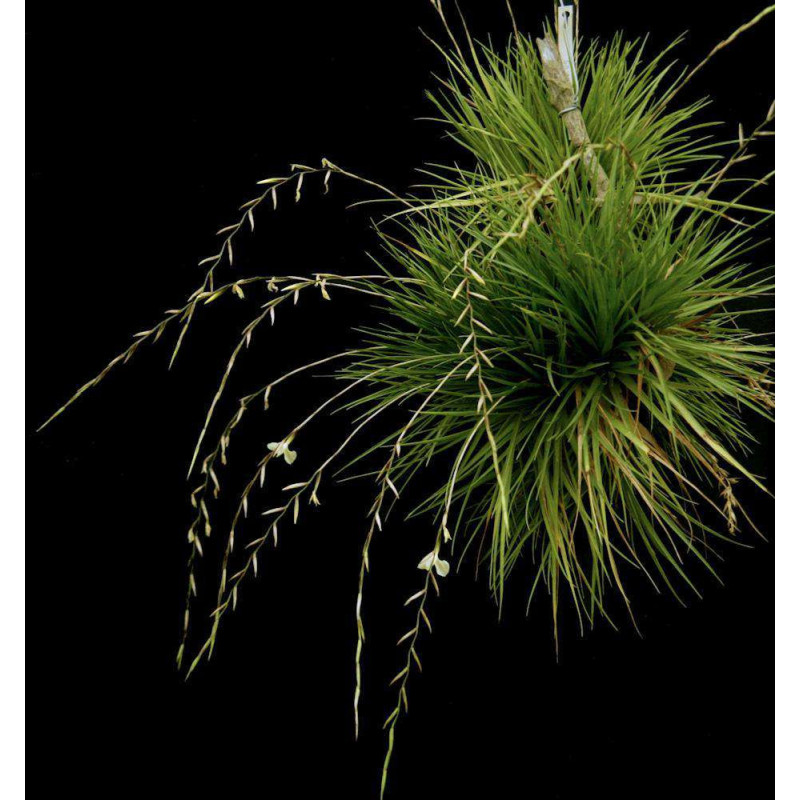
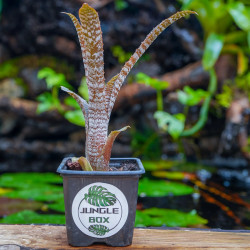
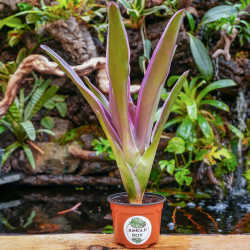
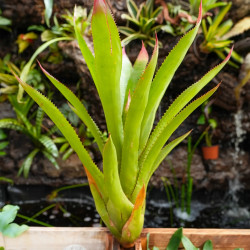
Lemeltonia dodsonii, formerly Tillandsia dodsonii, is a rare epiphytic bromeliad native to Ecuador. Its slender foliage and long, sometimes pendulous inflorescence make it an excellent collector plant for humid tropical terrariums and epiphytic displays.

Security policy


Satisfaction guaranteed or your money back
 Free shipping on orders over €59
Delivery throughout Europe in 48 hours.
Lemeltonia dodsonii is a rare epiphytic bromeliad native to Ecuador, formerly known as Tillandsia dodsonii. It is distinguished by its slender rosette, narrow foliage and unusual flowering habit, with a long inflorescence that can become pendulous.
Its natural, airy appearance makes it particularly attractive for humid tropical terrariums, paludariums, greenhouses and epiphytic displays where a more delicate bromeliad is desired.
Bromeliaceae
Lemeltonia
Lemeltonia dodsonii (L.B.Sm.) Barfuss & W.Till
Tillandsia dodsonii L.B.Sm.
Lemeltonia dodsonii is native to Ecuador, where it grows naturally as an epiphyte in wet tropical environments. The type specimen was collected in Pichincha at approximately 1100 m elevation, growing on old orange trees along the Santo Domingo–Quito road.
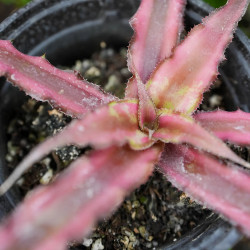
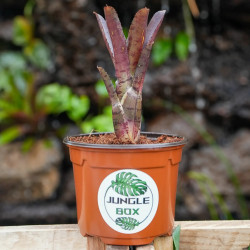
The plant develops numerous narrow leaves arranged in a slender rosette. Their lightly scaled surface gives the plant the characteristic airy appearance of many Tillandsioideae.
Mature leaves can reach around 20 cm while maintaining a relatively fine and elegant silhouette.
Lemeltonia dodsonii forms a relatively compact rosette but can produce an inflorescence considerably longer than the foliage.
A flowering specimen may reach approximately 80 cm in total height, mainly due to its elongated flowering stem.
This species is particularly suitable for mounting onto branches, natural roots or cork panels. It readily produces roots that anchor the plant onto the support.
It can also be grown in a small, highly aerated potting mix.
When mounted, a small amount of sphagnum moss can be placed around the roots to help maintain humidity without keeping the base permanently wet.
When grown in a pot, use an extremely airy mixture containing fine bark, perlite, sphagnum moss and volcanic material.
Mist or water regularly using soft or low-mineral water. The roots appreciate regular moisture while requiring excellent aeration.
Avoid permanently saturated conditions and allow good airflow between waterings.
High humidity of approximately 65% to 90% is particularly suitable.
As with many epiphytic bromeliads, high humidity should always be combined with good ventilation.
Ideal growing temperature: approximately 18°C to 26°C.
It performs particularly well in warm to mild humid conditions corresponding to its Ecuadorian wet tropical habitat.
Lemeltonia dodsonii prefers medium to bright filtered light.
It can tolerate relatively strong light when humidity and airflow are sufficient, but harsh direct sunlight through glass should be avoided.
Flowering is one of the most distinctive features of this species. It produces a long, slender inflorescence that may become pendulous and carry numerous flowers.
The flowers have white petals with a yellow centre and have been reported as fragrant.
Moderate growth. Once established, the plant can produce offsets and gradually develop into an attractive clump.
Propagation is mainly carried out by separating offsets once they are sufficiently developed.
Maintain a good balance between humidity, light and airflow. Remove dry material when necessary and avoid keeping the base permanently wet.
Use a very weakly dosed fertiliser for bromeliads or Tillandsioideae occasionally during active growth.
Avoid strong fertiliser concentrations that may cause mineral salt build-up on the leaves and roots.
Lemeltonia dodsonii is an uncommon bromeliad valued for its Ecuadorian origin, natural epiphytic habit and distinctive long pendulous inflorescence.
It is particularly suited to collectors and tropical terrariums looking for a more delicate and airy bromeliad than broad-rosetted species.
Mount it slightly above ground level on a branch or cork panel so its natural epiphytic habit can be fully appreciated and its long inflorescence has enough room to develop.
In a terrarium, choose a humid but well-ventilated position with good filtered light.

Specific References
Lemeltonia dodsonii, formerly Tillandsia dodsonii, is a rare epiphytic bromeliad native to Ecuador. Its slender foliage and long, sometimes pendulous inflorescence make it an excellent collector plant for humid tropical terrariums and epiphytic displays.