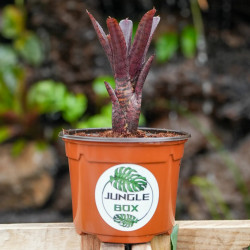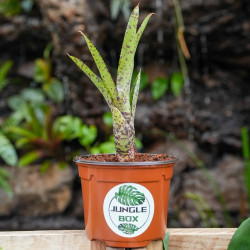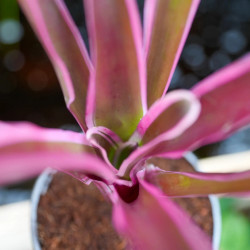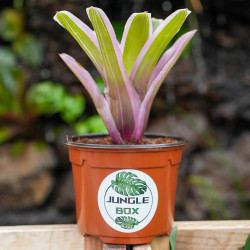
- New


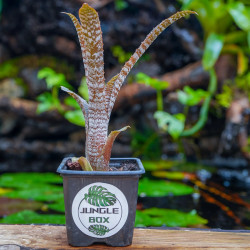
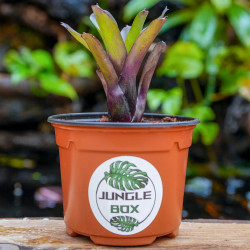
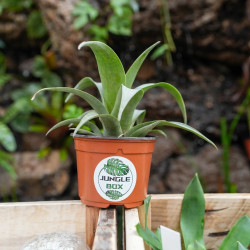
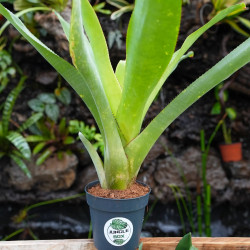
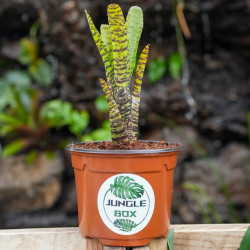
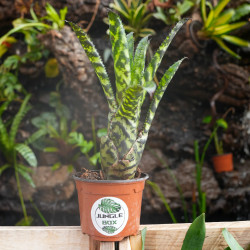
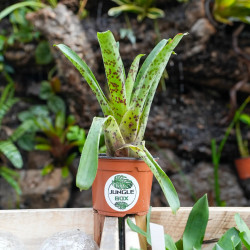
Tillandsia appenii, formerly Vriesea appenii, is a rare epiphytic bromeliad native to southwestern Ecuador and northwestern Peru. Ideal for humid tropical terrariums, paludariums and mounted epiphytic displays.

Security policy


Satisfaction guaranteed or your money back
 Free shipping on orders over €59
Delivery throughout Europe in 48 hours.
Tillandsia appenii, formerly known as Vriesea appenii, is a South American epiphytic bromeliad particularly interesting for botanical collections, humid tropical terrariums and naturalistic planted displays.
It develops an elegant rosette with elongated, relatively soft foliage and a naturally airy appearance. Its Andean origin and epiphytic growth habit make it particularly suitable for mounting on branches, roots and cork panels.
Bromeliaceae
Tillandsia
Tillandsia appenii (Rauh) J.R.Grant
Vriesea appenii Rauh
The currently accepted name is Tillandsia appenii. The species was originally described as Vriesea appenii and was transferred to the genus Tillandsia in 2004.
Tillandsia appenii is native to southwestern Ecuador and northwestern Peru. It naturally grows as an epiphyte primarily in wet tropical environments.
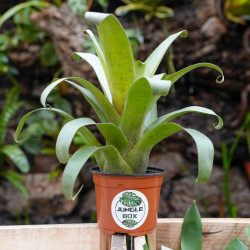
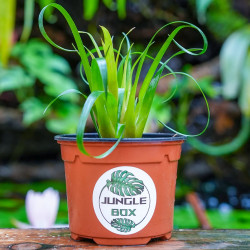
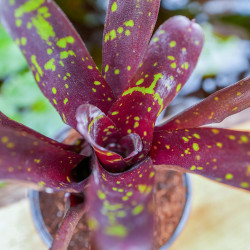
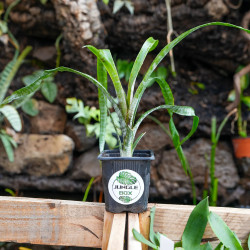
The plant develops a rosette of elongated, relatively flexible leaves arranged regularly around the centre.
Its elegant foliage gives it a lighter and more natural appearance than many large Aechmea or Neoregelia species.
Tillandsia appenii has an epiphytic habit and a relatively slender silhouette, making it particularly suitable for vertical or elevated planting.
As it matures, the plant may produce offsets around the base and gradually develop into a denser group.
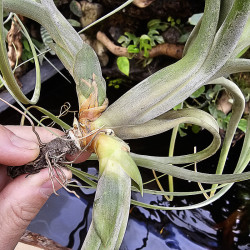
Tillandsia appenii is naturally epiphytic and is particularly well suited to mounting on branches, natural roots or cork panels.
A small amount of sphagnum moss can be placed around the roots during establishment to retain regular moisture without keeping the base permanently saturated.
When grown in a pot, use a very airy mixture containing fine bark, sphagnum moss, perlite, volcanic rock and coco chips.
Drainage and aeration are more important than nutrient richness.
Mist or water regularly using soft or low-mineral water.
The root area should remain lightly moist but never permanently waterlogged. The plant benefits from alternating periods of moisture and good aeration.
High humidity of approximately 65% to 90% is suitable under tropical cultivation.
Good air circulation remains essential to avoid stagnant moisture around the rosette.
Ideal growing temperature: approximately 18°C to 27°C.
Its wet tropical Ecuadorian and Peruvian origin suggests a preference for relatively stable temperatures without prolonged exposure to cold conditions.
Tillandsia appenii prefers medium to bright filtered light.
Good light encourages compact growth while maintaining the natural appearance of the foliage. Avoid harsh direct sunlight through glass.
Slow to moderate growth. Once established, the plant may produce several offsets and gradually form a small colony.
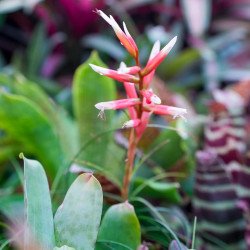
At maturity, Tillandsia appenii develops an inflorescence rising above the rosette, typical of many Tillandsioideae.
Its flowering adds further interest to a species already valued for its rarity and epiphytic habit.
Propagation is mainly carried out by separating offsets once they have reached a suitable size.
Maintain a good balance between humidity and airflow. Remove old or dry leaves once they loosen naturally.
Avoid permanently saturated mounting materials and completely stagnant environments.
Use a very weakly dosed fertiliser formulated for bromeliads or Tillandsia occasionally during active growth.
Avoid strong concentrations that may result in mineral salt build-up on the foliage and roots.
Tillandsia appenii is a true South American botanical species particularly interesting for collectors looking for less common bromeliads.
Its Ecuadorian and Peruvian origin, naturally epiphytic habit and elegant foliage make it an excellent choice for naturalistic tropical terrariums and specialised collections.
Mount Tillandsia appenii slightly above ground level on a root or cork panel to recreate its natural epiphytic growth habit.
Choose a humid but well-ventilated position with bright filtered light and no harsh direct sun.

Specific References
You might also like
Tillandsia appenii, formerly Vriesea appenii, is a rare epiphytic bromeliad native to southwestern Ecuador and northwestern Peru. Ideal for humid tropical terrariums, paludariums and mounted epiphytic displays.