- New
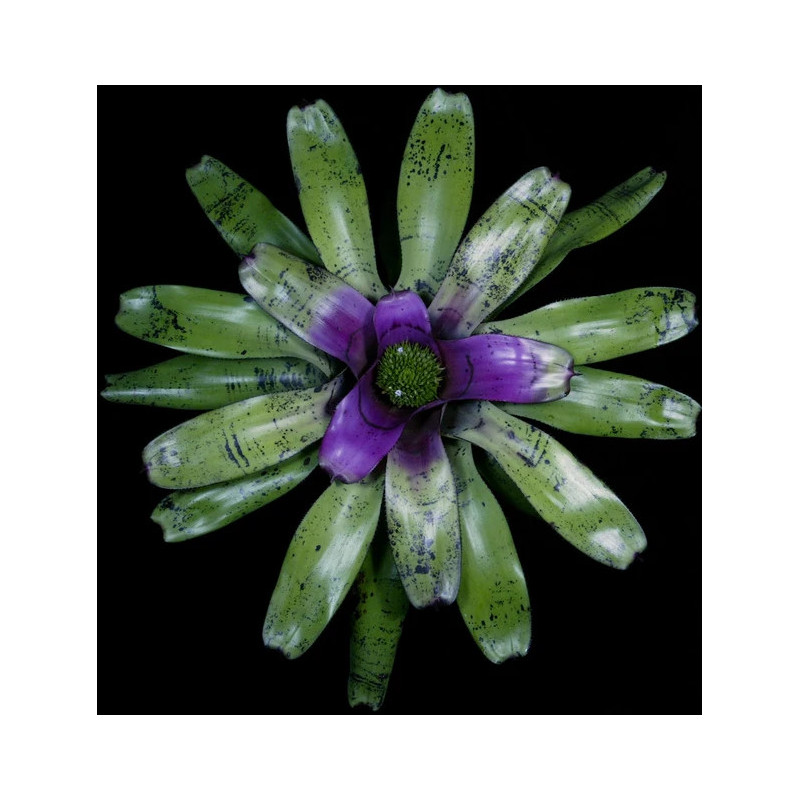
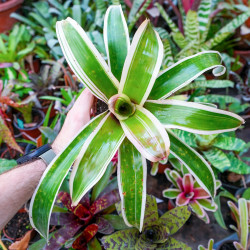
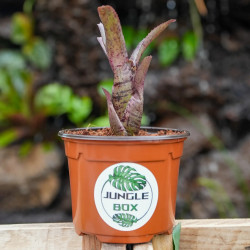
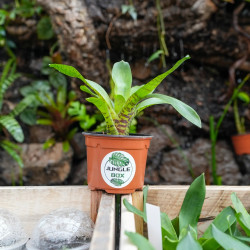
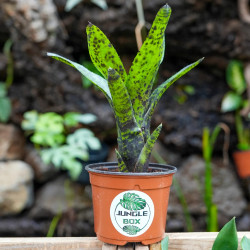
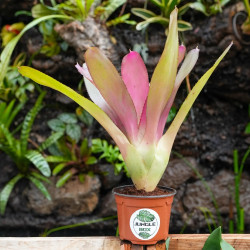
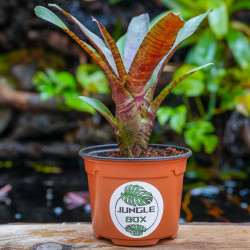
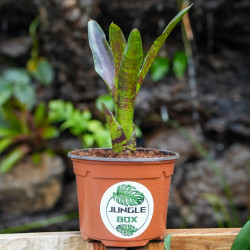
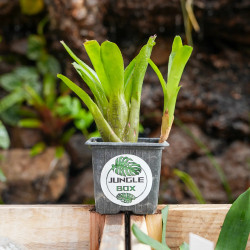
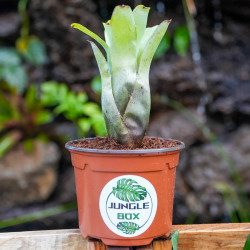
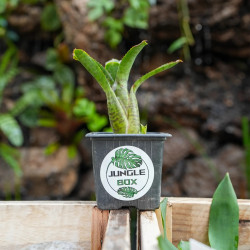
Neoregelia concentrica 'Plutonis' is a collector bromeliad with a broad rosette and deep green, bronze to dark purple foliage under strong lighting. Ideal for large tropical terrariums, paludariums and epiphytic displays.

Security policy


Satisfaction guaranteed or your money back
 Free shipping on orders over €59
Delivery throughout Europe in 48 hours.
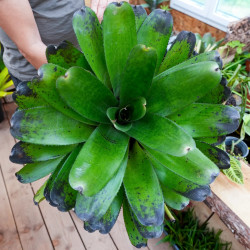
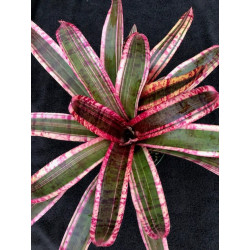
Neoregelia concentrica 'Plutonis', often sold as Neoregelia concentrica var. plutonis, is a striking collector bromeliad characterised by a broad, highly structured rosette and foliage capable of developing exceptionally dark coloration.
Depending on light intensity and growing conditions, its leaves may range from deep green to bronze, wine-red and very dark purple. Its bold architectural habit makes it an excellent structural plant for large tropical terrariums, paludariums and epiphytic displays.
Bromeliaceae
Neoregelia
Neoregelia concentrica
Neoregelia concentrica 'Plutonis'
Neoregelia concentrica var. plutonis
The name 'Plutonis' is used in cultivation for a particularly dark form of Neoregelia concentrica. It is best presented as a horticultural form or selection rather than automatically treating it as a formally recognised botanical variety.
Neoregelia concentrica is native to Brazil, where it naturally occurs in humid tropical environments and commonly grows as an epiphyte.
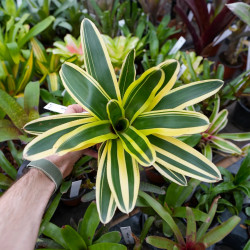
The plant forms a broad rosette composed of thick, leathery and relatively wide leaves.
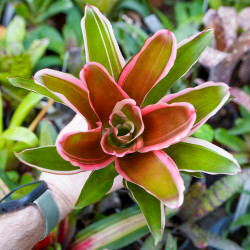
Colour is one of its main ornamental features. Under moderate light the foliage may remain deep green, while strong filtered light can encourage bronze, wine-red, purple and almost black tones.
Neoregelia concentrica 'Plutonis' has an intermediate to relatively large growth habit and gradually develops a broad spreading rosette.
It requires considerably more space than miniature Neoregelia and is best suited to medium and large displays.
Neoregelia concentrica 'Plutonis' can be mounted onto a substantial branch, natural root or sturdy cork panel.
A small amount of sphagnum moss around the roots can help establishment while keeping the base of the rosette well aerated.
When grown in a pot, use a highly aerated and free-draining mixture containing pine bark, coco chips, perlite, volcanic rock and sphagnum moss.
Avoid heavy or permanently waterlogged substrates.
Keep a small amount of soft or low-mineral water inside the central rosette and refresh it regularly.
The roots can remain lightly moist but should always benefit from excellent airflow.
Humidity of approximately 65% to 90% is suitable under tropical growing conditions.
Effective ventilation remains essential to prevent permanently stagnant moisture around the base.
Ideal growing temperature: approximately 20°C to 28°C.
Avoid prolonged cold conditions and cold draughts.
Neoregelia concentrica 'Plutonis' prefers bright to very bright filtered light.
Strong lighting is particularly beneficial for this form, generally intensifying bronze, red and purple coloration while maintaining a more compact rosette.
Moderate growth. Mature plants gradually produce offsets around the main rosette and can eventually form an impressive group.
As with other Neoregelia, small flowers emerge directly from the centre of the rosette within the central water-holding cup.
The central coloration may also intensify as the plant approaches flowering.
Propagation is mainly carried out by separating offsets once they have reached a suitable size.
Refresh the water held inside the rosette regularly and remove old or damaged leaves when necessary.
Maintain good airflow and avoid prolonged accumulation of organic debris inside the central cup.
Use a very weakly dosed bromeliad fertiliser occasionally during active growth.
Avoid high fertiliser concentrations and mineral salt accumulation inside the central rosette.
Neoregelia concentrica 'Plutonis' is particularly attractive to collectors looking for dark and highly graphic bromeliads. Its broad rosette and bronze to deep purple coloration give it exceptional visual presence.
It creates a powerful contrast with mosses, ferns and bright green tropical plants and can easily become a focal point in a planted enclosure.
Grow your Neoregelia concentrica 'Plutonis' in a very bright position protected from harsh direct sunlight to encourage the darkest coloration.
In a large terrarium, mounting it slightly elevated on a substantial root helps showcase its silhouette while improving airflow around the roots.

Specific References
You might also like
Neoregelia concentrica 'Plutonis' is a collector bromeliad with a broad rosette and deep green, bronze to dark purple foliage under strong lighting. Ideal for large tropical terrariums, paludariums and epiphytic displays.