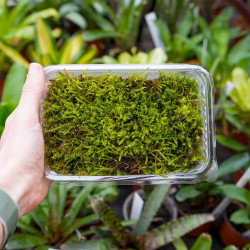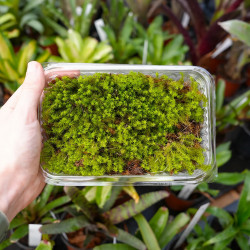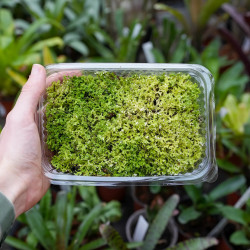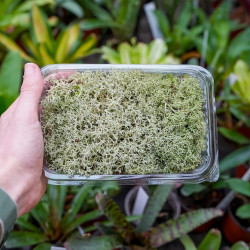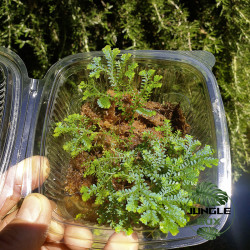
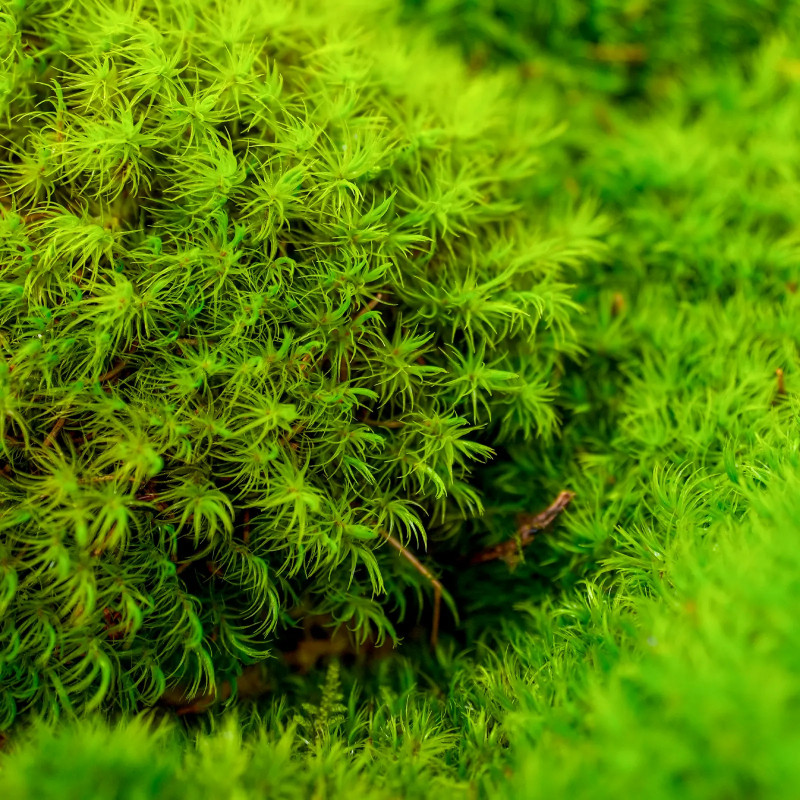
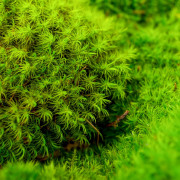
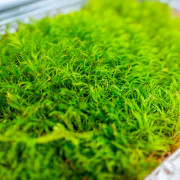
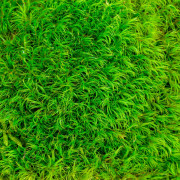
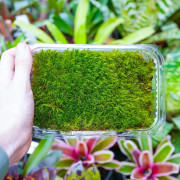
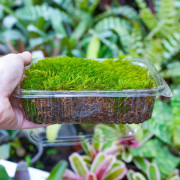
Dicranum scoparium is an upright tuft-forming moss ideal for adding height and texture to terrariums and mossariums. Its long slender leaves are often curved in the same direction, creating highly natural green cushions. It prefers shaded, humid and relatively cool conditions on a slightly humus-rich surface.

Security policy


Satisfaction guaranteed or your money back
 Free shipping on orders over €59
Delivery throughout Europe in 48 hours.
Dicranum scoparium, commonly known as Broom Fork-moss, is an acrocarpous moss forming dense upright tufts with a highly natural woodland appearance. Its long, slender leaves are often slightly curved in the same direction, giving the shoots a distinctive swept appearance.
Unlike flat carpeting mosses such as Hypnum, Dicranum scoparium produces more height and volume. It is therefore especially useful for creating raised moss patches, small green cushions and natural transitions around wood, rocks and terrarium décor.
Dicranaceae
Dicranum
Dicranum scoparium Hedw.
Dicranum scoparium has a very wide geographical distribution and occurs naturally in many temperate woodland environments.
It grows on a variety of surfaces including humus-rich soils, rocks covered with a thin organic layer, tree bases and decaying wood.
This moss forms upright green to yellow-green tufts that are thicker and more three-dimensional than typical creeping mosses.
The leaves are long, narrow and gradually tapering, often slightly sickle-shaped and commonly curved in the same direction.
Dicranum scoparium has an upright, dense and tuft-forming habit. Individual shoots gradually build compact cushions several centimetres high.
It is especially useful when height and texture are required rather than a completely flat moss carpet.
This moss appreciates low to moderate light and generally performs best in shaded or softly lit areas.
It grows particularly well on surfaces containing some humus or decomposed organic matter. In terrariums, consistent moisture is beneficial, although gentle airflow is preferable to completely stagnant conditions.
Dicranum scoparium prefers slightly organic surfaces. It performs particularly well on humus-rich substrate, moist bark with a small amount of organic matter or rocks covered with a thin layer of growing medium.
It is less suited than some carpeting mosses to completely smooth mineral surfaces without any organic material.
Keep the moss regularly moist without permanent saturation.
Fine misting with soft, rain or reverse-osmosis water is ideal. Very hard water may leave mineral deposits on the foliage.
Dicranum scoparium performs well under moderate to high humidity, approximately 60% to 85% in terrarium culture.
Surface moisture is equally important: the growing medium should remain fresh and lightly moist without becoming waterlogged.
This species performs particularly well under cool to temperate conditions.
For long-term terrarium culture, approximately 15°C to 22°C is particularly suitable. It can tolerate warmer periods but is less comfortable in permanently hot, saturated conditions.
Provide low to moderate indirect light. Although the species tolerates different light levels, it generally maintains its best appearance in shaded conditions.
Very intense light combined with insufficient moisture may cause yellowing or drying at the tips.
Growth is slow to moderate. New shoots gradually appear within the tufts, increasing their density and volume.
Controlled culture studies have shown good development around 18–20°C.
Like all mosses, Dicranum scoparium produces neither flowers nor seeds.
It reproduces naturally by spores and can also be propagated by dividing or fragmenting established tufts.
Remove dead leaves and debris that accumulate on the moss surface.
Large tufts can be gently divided and redistributed to other areas of the terrarium.
Dicranum scoparium stands out from typical carpet mosses thanks to its upright habit, volume and naturally curved foliage.
It creates realistic raised moss patches, ideal around wood, tree bases and rocks in woodland-inspired terrarium displays.
Use Dicranum scoparium to create height and texture. Several small tufts distributed through the décor generally look more natural than one large uniform patch.
Combining it with a carpeting moss such as Hypnum creates different vegetation levels and gives the terrarium a more realistic woodland appearance.

Specific References
You might also like
Dicranum scoparium is an upright tuft-forming moss ideal for adding height and texture to terrariums and mossariums. Its long slender leaves are often curved in the same direction, creating highly natural green cushions. It prefers shaded, humid and relatively cool conditions on a slightly humus-rich surface.