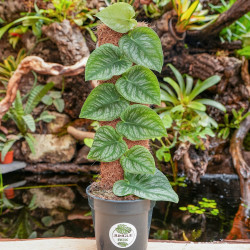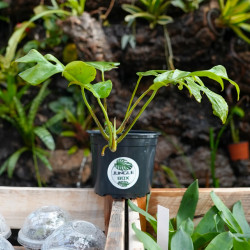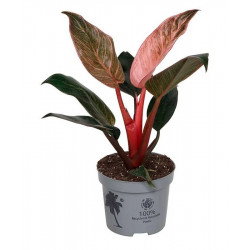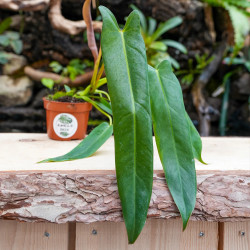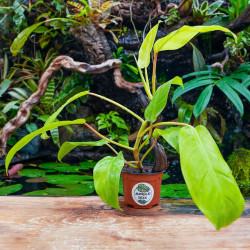
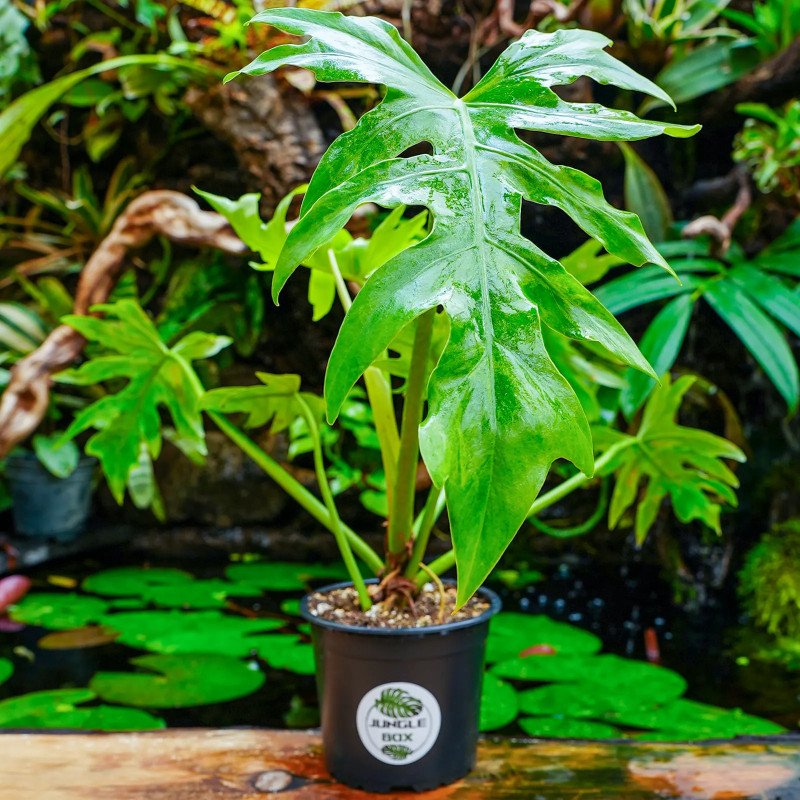
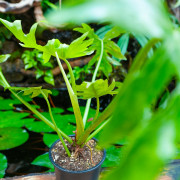
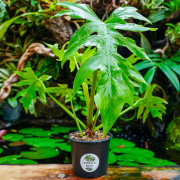
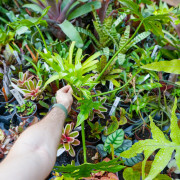
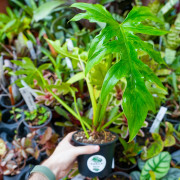
Philodendron radiatum is a spectacular tropical climbing plant valued for its large, deeply divided green leaves, ideal for growing on a support indoors, in humid greenhouses or large terrariums.

Security policy


Satisfaction guaranteed or your money back
 Free shipping on orders over €59
Delivery throughout Europe in 48 hours.
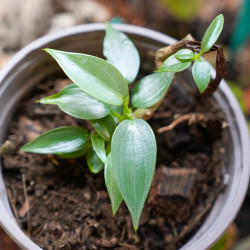
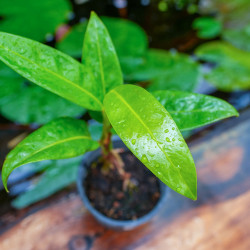
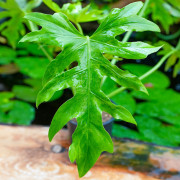
Philodendron radiatum is an impressive tropical climbing plant especially valued for its deeply divided foliage. Juvenile leaves are generally entire or only slightly lobed, but they gradually develop into large, deeply dissected leaves as the plant matures.
Its glossy, rich green and highly architectural foliage gives the plant a spectacular exotic appearance. When grown on a moss pole, cork panel or another vertical support, it forms a lush upright specimen ideal for large tropical displays, humid greenhouses, open paludariums and indoor cultivation.
Araceae
Philodendron
Philodendron radiatum Schott
Philodendron radiatum is native to tropical regions extending from Mexico to Colombia. In its natural habitat, it grows mainly in humid tropical forests, climbing trees and other vegetation to gradually reach brighter conditions.
This is a vigorous climbing species that produces aerial roots from its nodes. These roots allow the plant to attach itself to tree trunks, bark and moist natural supports.
Under cultivation, a sphagnum moss pole, cork panel, branch or other vertical structure is strongly recommended. Keeping the support slightly moist encourages aerial roots to attach and generally helps the plant produce larger, more deeply divided leaves.
The main attraction of Philodendron radiatum is the spectacular transformation of its foliage. Juvenile leaves are relatively simple, while mature leaves become deeply lobed and may develop numerous narrow divisions arranged along the central vein.
The leaves are carried on long petioles and have a slightly leathery texture. Their colour ranges from medium to dark green depending on light, nutrition and growing conditions.
In its natural environment, this species can climb for several metres. Indoors or in a greenhouse, its final size will depend on the height of its support and the quality of the growing conditions.
Mature leaves can become very impressive when the plant receives bright light, high humidity, a suitable vertical support and regular feeding.
Provide bright, indirect light. Good light encourages compact growth, larger leaves and more pronounced divisions.
Avoid intense direct sunlight, especially through glass, as it may scorch the foliage. Gentle early-morning or late-afternoon sun may be tolerated after gradual acclimatisation.
The ideal temperature range is approximately 20 to 28 °C. This tropical species prefers warm and relatively stable conditions.
Avoid temperatures below 15 °C, cold draughts, sudden temperature changes and placement directly beside drying heaters.
Philodendron radiatum performs best with atmospheric humidity of approximately 60 to 85%. Higher humidity supports proper leaf unfurling, aerial-root development and the progressive increase in leaf size.
Good air circulation remains essential to prevent stagnant conditions and reduce the risk of fungal problems.
Water when the upper few centimetres of the growing medium begin to dry. The substrate should remain lightly moist during active growth but must never remain waterlogged.
Reduce watering slightly during winter or whenever temperatures and light levels decrease. Do not allow the pot to stand permanently in water.
Use a highly aerated, free-draining mix rich in organic material. A suitable Araceae mixture may contain:
The container must have effective drainage holes. A compact or constantly saturated substrate may cause oxygen deprivation and root rot.
Apply a balanced fertiliser for tropical foliage plants, diluted to approximately half the recommended strength, every two to four weeks during active growth.
Reduce or stop feeding when growth slows. Excess fertiliser may damage the roots and cause brown leaf tips.
Repot approximately every one to two years, preferably in spring, or whenever the roots have filled the container. Select a pot only slightly larger than the previous one to reduce the risk of excess moisture.
Propagation is mainly carried out using stem cuttings. Each cutting must include at least one healthy node and should ideally also have a leaf and an aerial root.
Cuttings may be rooted in moist sphagnum moss, perlite, a very airy growing mix or water. Warm temperatures and high humidity help promote successful rooting.
This species is most suitable for large tropical terrariums, open paludariums, planted walls and humid greenhouses. Its vigorous growth and potentially large foliage make it unsuitable for most small enclosed terrariums.
It may be positioned against the rear background, attached to cork bark or trained along a large branch. Regular pruning can be used to control its size.
Occasionally wipe the foliage with a soft, slightly damp cloth to remove dust and maintain efficient light absorption. Gently secure new stems to the support until the aerial roots are able to attach naturally.
Remove yellow or damaged leaves using a clean and disinfected cutting tool.
Regularly inspect the plant for thrips, mealybugs, spider mites and aphids. Pay particular attention to emerging leaves, petioles and the undersides of the foliage.
If pests are detected, isolate the plant and treat the infestation promptly using an appropriate method.
Like most Philodendrons, this plant contains calcium oxalate crystals. It must not be ingested and should be kept away from young children and pets that may chew the foliage.
The sap may also irritate the skin and mucous membranes. Wearing gloves is recommended when pruning or taking cuttings.
Intermediate. This species grows vigorously when provided with warmth, bright indirect light, a free-draining substrate and a moist vertical support.
To encourage large and deeply divided mature leaves, grow your Philodendron radiatum on a thick sphagnum moss pole or a cork panel kept slightly moist. Combine this vertical support with bright indirect light and regular feeding during the active growing season.

Specific References
You might also like
Philodendron radiatum is a spectacular tropical climbing plant valued for its large, deeply divided green leaves, ideal for growing on a support indoors, in humid greenhouses or large terrariums.