- New
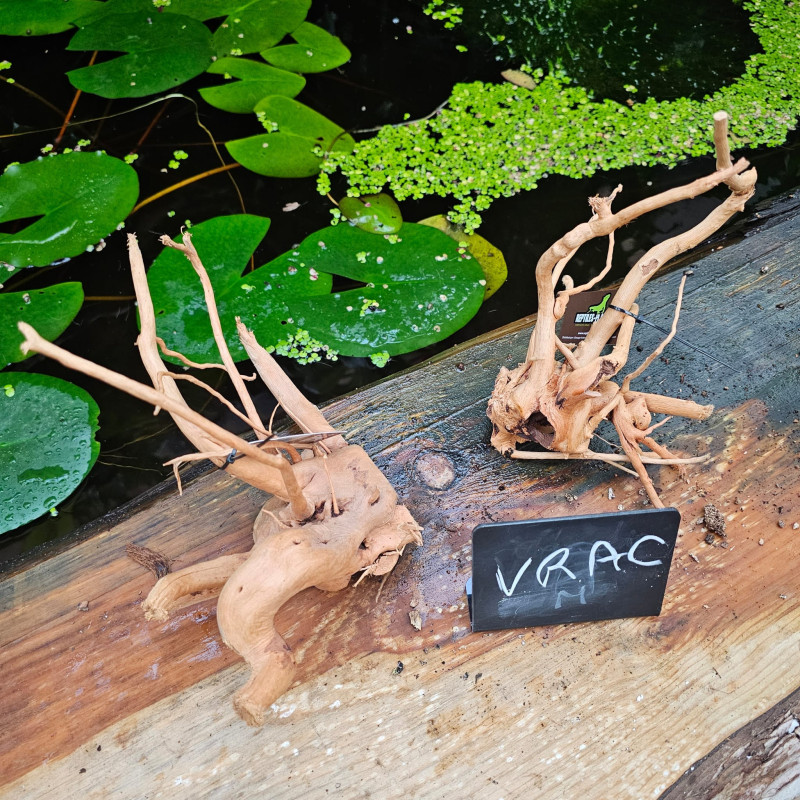
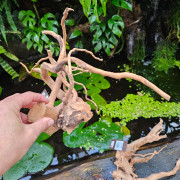
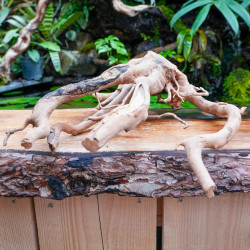
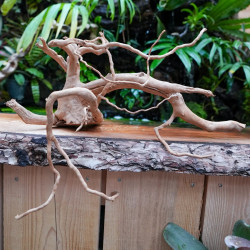
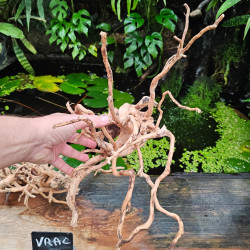
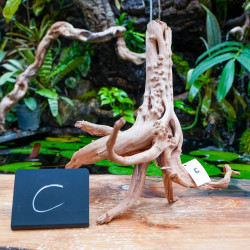
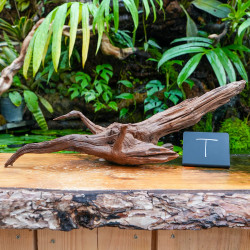
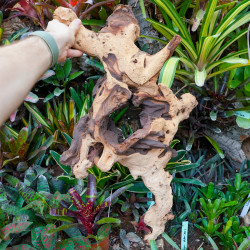
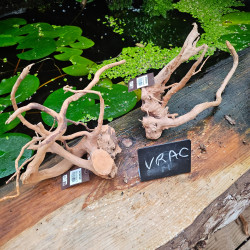
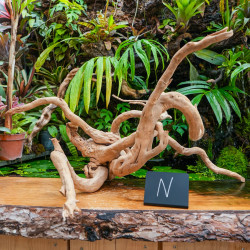
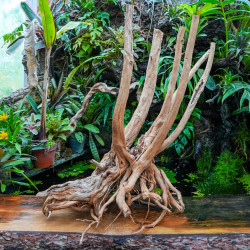
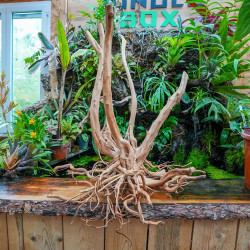
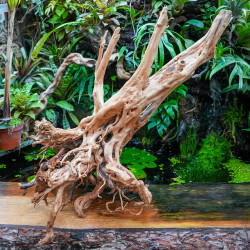
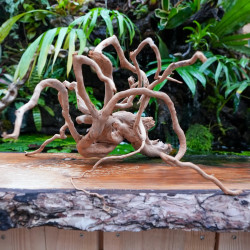
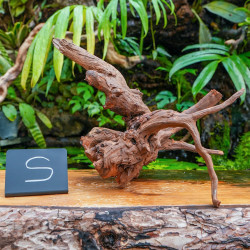
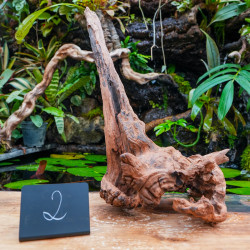
A compact root with plenty of character: the Small Spider Wood Root develops numerous fine, twisted branches that instantly create a natural structure in aquariums, terrariums and paludariums. Sold individually in bulk, every piece is unique and can be used both as natural décor and as a support for mosses and epiphytic plants.

Security policy


Satisfaction guaranteed or your money back
 Free shipping on orders over €59
Delivery throughout Europe in 48 hours.
The Small Spider Wood Root is a natural decorative root characterised by numerous fine, twisted branches. Its highly graphic structure makes it easy to create a natural and well-defined layout in aquariums, terrariums and paludariums. Sold individually in bulk, every piece is naturally unique in shape, colour, thickness and branching.
Its compact size makes it particularly suitable for small to medium displays, nano setups, forest-floor compositions or as an additional structural element alongside larger roots.
Natural Spider Wood root.
Sold individually in bulk.
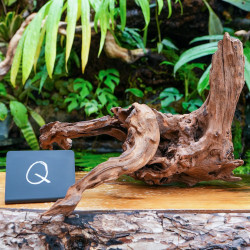
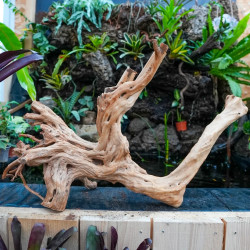
Photographs illustrate the general type of product supplied. As this is a natural material, shape, colour, thickness and branching vary from piece to piece.
Small
The Small format is particularly well suited to compact terrariums, small aquariums, nano layouts or for adding extra branches and detail to larger displays.
Spider Wood is characterised by thin, irregular and highly branched structures reminiscent of small trees or exposed root systems.
This natural form immediately adds depth, volume and a wild appearance to the layout.
In terrariums, Spider Wood can be used to structure tropical displays, provide climbing areas and support plants.
Its Small format makes it easy to position in the foreground or midground, between rocks, beneath bromeliads or at the base of planted backgrounds.
In freshwater aquariums, Spider Wood is particularly popular in aquascaping because of its natural branching structure.
It can be used alone in a small aquarium or combined with other roots and stones to build a more complex natural hardscape.
In paludariums, it can create a natural transition between terrestrial and aquatic areas.
Branches may extend above the water to support mosses and epiphytic plants while the base is integrated into substrate or stonework.
The numerous fine branches provide multiple attachment points for plants and mosses.
It is particularly suitable for:
The branched structure increases the complexity of the environment and naturally creates small shaded areas, pathways and hiding places.
When partially in contact with the substrate, it can also contribute to microhabitats for terrarium microfauna and enhance the overall natural appearance.
Before installation, brush and rinse the root thoroughly with clean water to remove loose dust and particles.
Do not use household detergents or disinfectants on the wood.
Like many pieces of dry natural wood, Spider Wood may float when first submerged.
Pre-soaking may be required until the wood gradually becomes waterlogged and sinks naturally. It can also be temporarily secured during installation.
Natural wood may release tannins into the water, especially during the first few weeks.
This can create a light amber colour and is a natural process. Pre-soaking and regular water changes can reduce the effect if required.
A light white biofilm may sometimes appear on newly submerged natural wood.
This is a common temporary phenomenon and generally disappears gradually. It can also be removed manually if necessary.
Small Spider Wood provides a surprising amount of structure from a relatively compact piece of natural wood. Its numerous branches create movement, depth and natural lines without occupying the volume of a large stump.
It is ideal for smaller displays or for adding additional branching to an existing hardscape.
Try several orientations before fixing the root permanently. The same piece can look completely different when laid flat, angled or positioned more vertically.
For an even more natural result, attach small mosses or epiphytic plants to selected branches and leave some sections exposed to maintain the characteristic Spider Wood silhouette.

Specific References
You might also like
A compact root with plenty of character: the Small Spider Wood Root develops numerous fine, twisted branches that instantly create a natural structure in aquariums, terrariums and paludariums. Sold individually in bulk, every piece is unique and can be used both as natural décor and as a support for mosses and epiphytic plants.