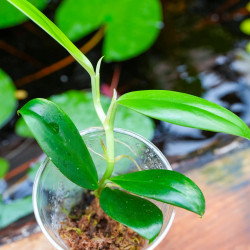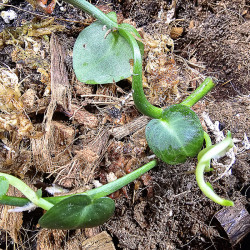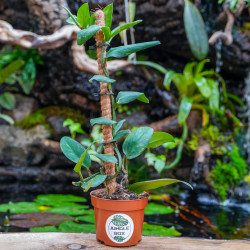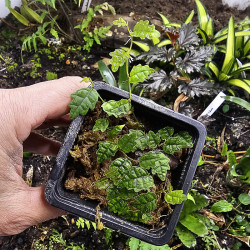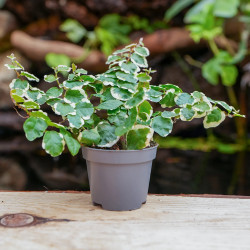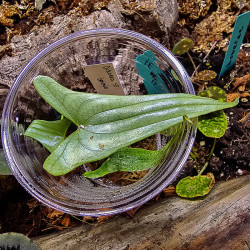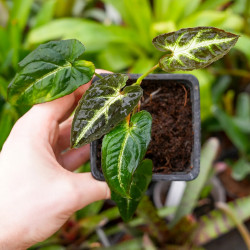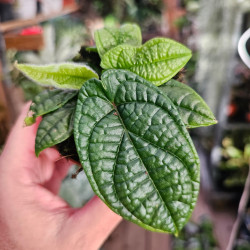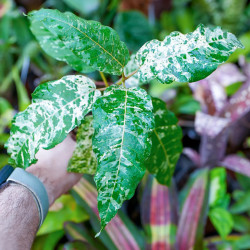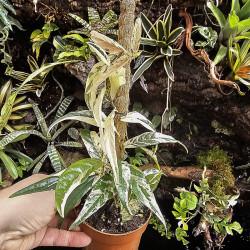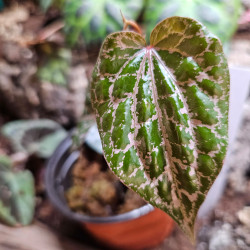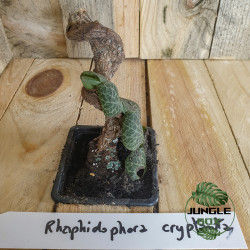
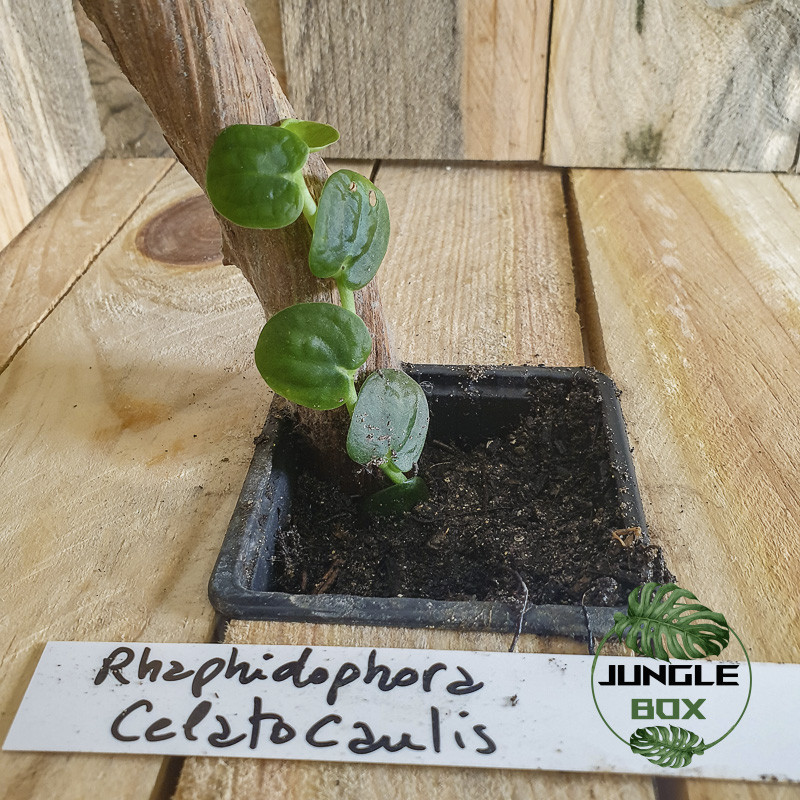
A highly graphic Rhaphidophora for planting vertical terrarium surfaces. Rhaphidophora celatocaulis develops dark green leaves that naturally press against wood, cork and backgrounds as it climbs. Its compact shingling habit quickly creates a true tropical vine effect in humid terrariums.

Security policy


Satisfaction guaranteed or your money back
 Free shipping on orders over €59
Delivery throughout Europe in 48 hours.
Rhaphidophora celatocaulis, currently treated botanically as Rhaphidophora korthalsii, is a tropical climbing aroid particularly well suited to humid terrariums and vertical planted displays.
Its characteristic “shingling” growth habit is one of its main attractions: juvenile leaves remain pressed closely against the support as the plant climbs natural wood, cork panels or suitable backgrounds, creating a highly natural and graphic effect.
Araceae
Rhaphidophora
Rhaphidophora korthalsii Schott
Common horticultural name: Rhaphidophora celatocaulis.
Rhaphidophora korthalsii has a broad natural range from the eastern Himalayas and peninsular Thailand through Malesia, New Guinea and parts of the western Pacific.
In nature it grows as a climbing vine in wet tropical forests, using tree trunks and other vertical surfaces to reach brighter areas.
Juvenile foliage is generally dark green, thick and closely pressed against the support, with rounded to slightly elongated leaves depending on growing conditions.
As the plant matures and climbs successfully, it can gradually produce larger and more developed leaves.
This plant has a strongly climbing and adhesive habit. Its aerial roots allow it to attach tightly to humid surfaces and grow vertically.
Without a suitable support, the plant may remain more compact or develop less regular stems. On flat wood, cork or planted backgrounds, it expresses its characteristic shingling habit particularly well.
Rhaphidophora celatocaulis appreciates indirect to bright filtered light, high humidity and a very airy substrate that remains consistently lightly moist.
It performs particularly well in terrariums and humid greenhouse conditions where aerial roots can readily attach to available surfaces.
Its compact shingling habit makes it particularly useful for planting vertical areas without immediately creating excessive volume.
Use a highly aerated aroid substrate containing coco humus, fine bark, coco chips, perlite and optionally a small amount of sphagnum.
Aerial roots can also be encouraged by placing lightly moist sphagnum around the climbing surface.
Keep the substrate lightly moist without permanent saturation.
Use soft, low-mineral water whenever possible and avoid allowing the root system to dry out completely during active growth.
Rhaphidophora celatocaulis appreciates high humidity, ideally around 70% to 90%.
Higher humidity strongly encourages aerial root attachment and helps the plant maintain its characteristic climbing habit.
Ideal growing temperature: 20°C to 28°C.
The plant tolerates slightly cooler conditions, but growth is more consistent under warm and stable temperatures.
Growth is moderate to fast under warm and humid conditions.
Stems can quickly progress over their support and may require regular pruning in smaller terrariums.
Sold as a young plant. Plant size and development may vary depending on season and availability.
Regularly guide new shoots onto the desired support and keep the surface slightly humid to encourage aerial root attachment.
Trim long stems when necessary and remove old or damaged leaves.
This Rhaphidophora is particularly attractive for its distinctive shingling habit, with leaves closely pressed against the climbing surface.
It gradually transforms natural wood, cork or backgrounds into living planted surfaces while maintaining a fine and natural appearance.

Specific References
You might also like
A highly graphic Rhaphidophora for planting vertical terrarium surfaces. Rhaphidophora celatocaulis develops dark green leaves that naturally press against wood, cork and backgrounds as it climbs. Its compact shingling habit quickly creates a true tropical vine effect in humid terrariums.