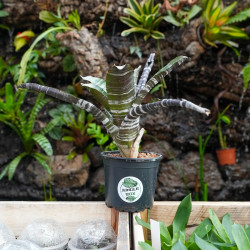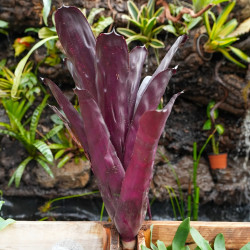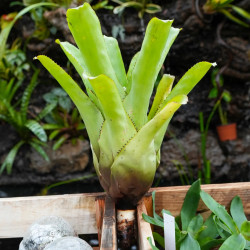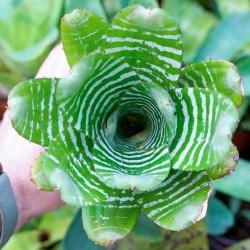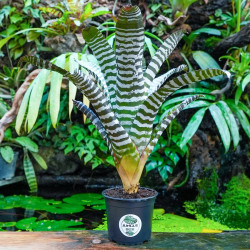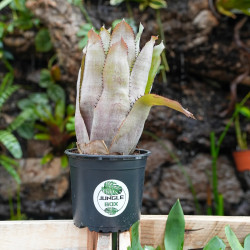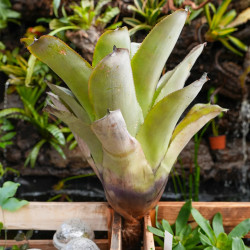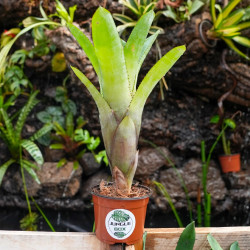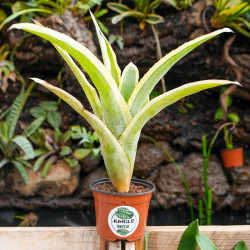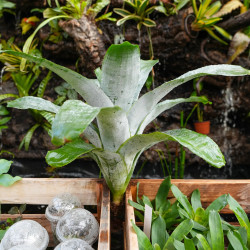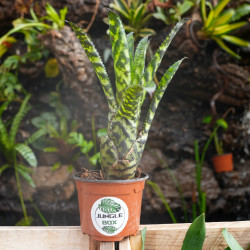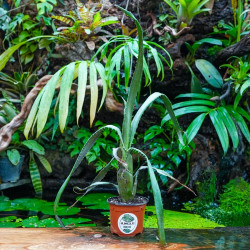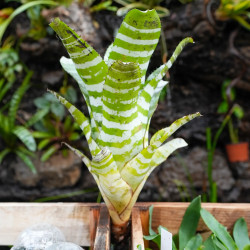
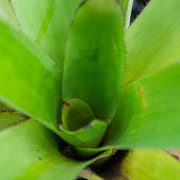
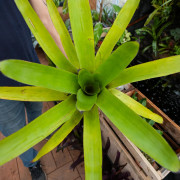
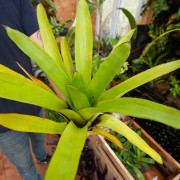
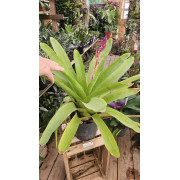
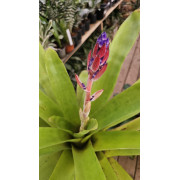
Aechmea fendleri is a beautiful botanical bromeliad native to Venezuela and Trinidad and Tobago. Its large rosette of elongated green leaves and spectacular branched inflorescence displaying reddish, mauve and bluish tones make it an outstanding collector plant for large tropical terrariums, greenhouses and epiphytic displays on natural wood or trunks.

Security policy


Satisfaction guaranteed or your money back
 Free shipping on orders over €59
Delivery throughout Europe in 48 hours.
Aechmea fendleri is a beautiful botanical bromeliad native to northern South America and neighbouring Caribbean islands. It stands out for its elongated green foliage, large structured rosette and remarkable branched inflorescence displaying reddish, mauve and bluish tones.
Its wild appearance and substantial growth make it an outstanding statement plant for large tropical terrariums, greenhouses, botanical bromeliad collections and epiphytic displays on natural wood or trunks.
Bromeliaceae
Aechmea
Aechmea fendleri André ex Mez
This is an accepted botanical species, described in 1896, rather than a horticultural hybrid.
Aechmea fendleri is native to Venezuela, the Venezuelan Antilles and Trinidad and Tobago.
It primarily inhabits humid tropical biomes, where it may grow epiphytically on trees or terrestrially under suitable conditions.
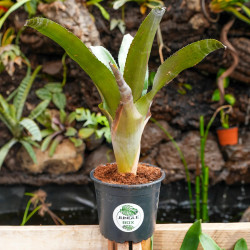
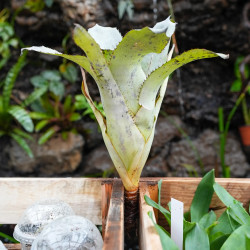
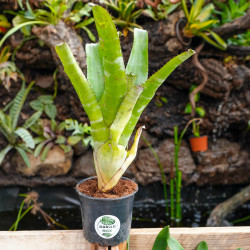
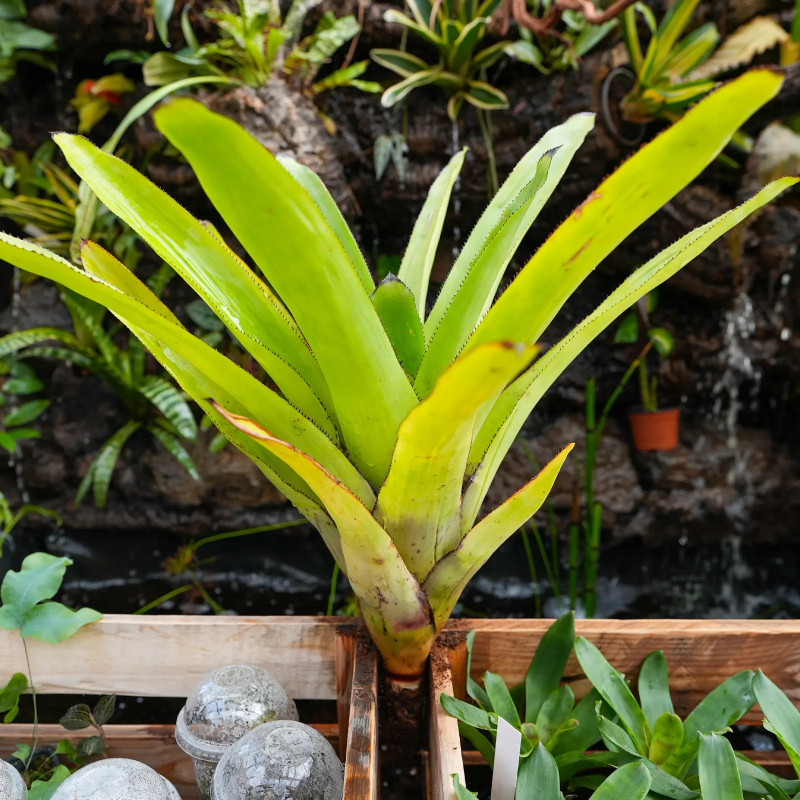
The plant develops long, linear and relatively broad leaves arranged around the centre of the rosette.
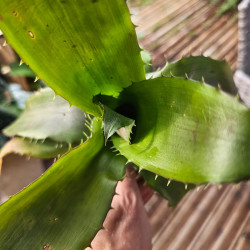
The foliage displays a relatively uniform green coloration, with small brownish spines along the leaf margins.
Mature specimens may develop particularly long leaves, with some botanical descriptions reporting lengths of up to approximately 90 cm.
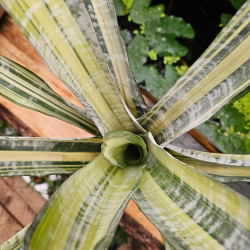
Aechmea fendleri forms a large structured tank-forming rosette capable of naturally retaining water in its centre.
At maturity, it produces a spectacular upright and branched inflorescence. Its reddish flower stalk, mauve to violet bracts and small bluish flowers create an elegant contrast with the green foliage.
After flowering, the mother rosette produces offsets that ensure the continuation of the plant and gradually develop into an attractive natural group.
This bromeliad appreciates bright filtered light, regular moisture and excellent airflow.
It performs particularly well in warm, humid tropical conditions, provided that its root system receives adequate aeration.
Avoid harsh direct sunlight, permanently waterlogged substrates and excessively stagnant conditions.
For pot cultivation, use a highly aerated and free-draining mix containing coco chips, fine bark, perlite and optionally a small amount of sphagnum moss.
Its naturally epiphytic habit also makes Aechmea fendleri suitable for mounting directly on large natural wood, trunks or cork supports strong enough to accommodate its mature size.
Use soft, rain or reverse-osmosis water whenever possible.
Maintain clean water in the centre of the rosette and refresh it regularly.
Water the roots as well. When mounted on natural supports, mist generously, generally two to three times per week, adjusting the frequency according to ambient conditions.
Avoid keeping the plant base permanently waterlogged.
Recommended humidity: 60% to 85%.
High humidity should always be combined with good airflow to reduce the risk of rot.
Recommended growing temperature: 18°C to 28°C.
Protect the plant from frost and avoid prolonged cold, wet conditions.
Growth is generally moderate, depending on light levels, temperature and growing conditions.
The plant gradually develops an impressive rosette. Offsets can be left attached to the mother plant to create a particularly spectacular group.
A large-growing bromeliad at maturity.
Current plant size and development may vary depending on individual plants, season and availability.
Refresh the water held in the rosette regularly, remove old or damaged leaves and maintain adequate airflow around the plant.
Offsets can be separated once sufficiently developed or left attached to the mother plant to create a more natural-looking display.
Handle the plant carefully due to the small spines along its leaf margins.
Aechmea fendleri stands out for its botanical species status, substantial growth and spectacular reddish, mauve and bluish inflorescence.
Its green foliage adds natural character to tropical planted displays, while its inflorescence becomes a striking focal point during flowering.
A beautiful bromeliad for collectors seeking authentic botanical species and enthusiasts wishing to recreate the lush atmosphere of tropical forests.

Specific References
You might also like
Aechmea fendleri is a beautiful botanical bromeliad native to Venezuela and Trinidad and Tobago. Its large rosette of elongated green leaves and spectacular branched inflorescence displaying reddish, mauve and bluish tones make it an outstanding collector plant for large tropical terrariums, greenhouses and epiphytic displays on natural wood or trunks.