- New


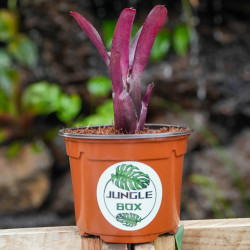
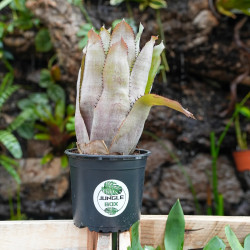
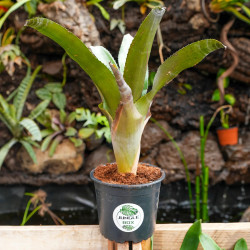
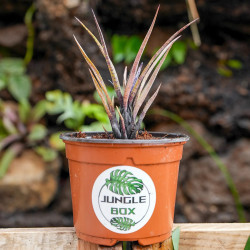
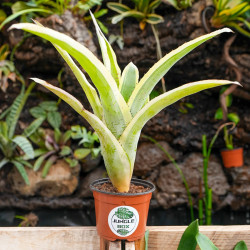
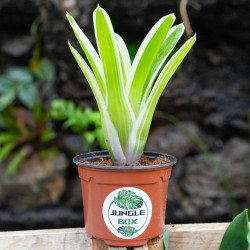
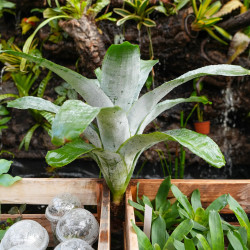
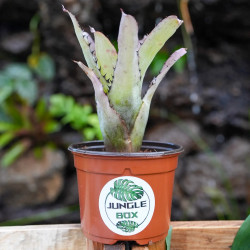
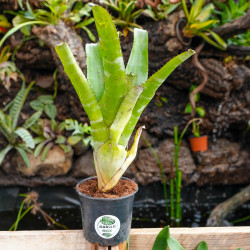
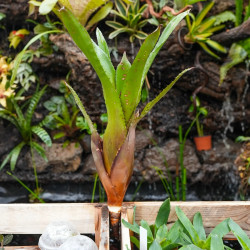
Aechmea bracteata 'Red' is a large epiphytic bromeliad native from Mexico to northwestern Venezuela, valued for its robust rosette and spectacular red inflorescence. Ideal for large terrariums, paludariums and tropical greenhouses.

Security policy


Satisfaction guaranteed or your money back
 Free shipping on orders over €59
Delivery throughout Europe in 48 hours.
Aechmea bracteata 'Red' is a striking tropical bromeliad valued for its robust rosette, elongated foliage and especially its spectacular bright red inflorescence. It creates a strong visual focal point in large terrariums, paludariums, tropical greenhouses and Bromeliaceae collections.
The botanical species Aechmea bracteata is naturally distributed from Mexico to northwestern Venezuela and grows primarily as an epiphyte in seasonally dry tropical environments.
Bromeliaceae
Aechmea
Aechmea bracteata 'Red'
Aechmea bracteata is native from Mexico to northwestern Venezuela, including Belize, Costa Rica, Guatemala, Honduras, Nicaragua, Panama and Colombia. It primarily grows as an epiphyte in its natural habitat.
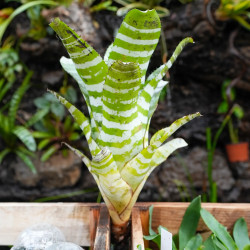
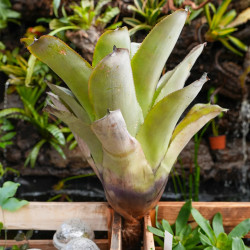
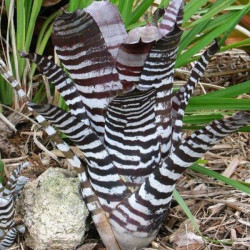
The plant develops a large rosette of long, leathery and slightly arching leaves. The leaf margins may bear small spines, a characteristic commonly found in the genus Aechmea.
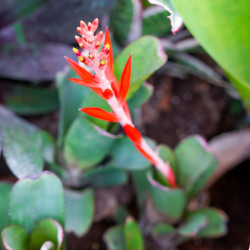
The foliage is generally green to deep green, while the main ornamental feature appears during flowering with the development of vivid red bracts.
Aechmea bracteata has an intermediate to large growth habit. Its rosette can become broad and highly structural, making it best suited to spacious displays.
Over time, it can produce offsets around the mother plant and gradually form a dense clump.
Aechmea bracteata can be mounted onto a large branch, root or cork structure. Its naturally epiphytic growth habit makes it particularly suitable for elevated tropical displays.
Provide a secure attachment, as mature plants can become relatively heavy.
When grown in a pot, use a highly aerated and free-draining mix containing pine bark, coco chips, perlite, volcanic rock and a small amount of organic material.
Avoid heavy or permanently waterlogged substrates.
Keep a small amount of soft or low-mineral water inside the central rosette and refresh it regularly.
The substrate should remain lightly moist while maintaining excellent drainage.
Humidity of approximately 55% to 80% works well under cultivation when combined with good ventilation.
Because the species naturally occurs in seasonally dry tropical habitats, it generally benefits from good airflow and periodic drying rather than permanently saturated conditions.
Ideal growing temperature: approximately 20°C to 30°C.
Avoid prolonged exposure to cold conditions and protect the plant from frost.
Aechmea bracteata 'Red' prefers bright to very bright filtered light.
Good light levels encourage compact growth and more intense inflorescence coloration.
Moderate growth. Once established, the plant gradually develops a large robust rosette and can produce several offsets.
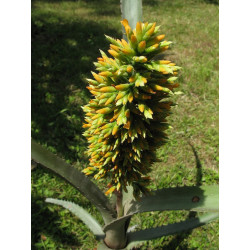
Flowering is one of the main attractions of this species. It produces a tall, branched inflorescence surrounded by striking bright red bracts.
After flowering, the main rosette gradually declines while offsets continue the plant.
Propagation is mainly carried out by separating offsets once they have reached a suitable size.
Remove old or damaged leaves at the base and refresh the water held inside the rosette regularly.
Maintain good airflow around the plant, especially in heavily humidified enclosures.
Use a weakly dosed fertiliser formulated for bromeliads or tropical plants during active growth.
Avoid excessive fertilisation and mineral salt build-up inside the central rosette.
Aechmea bracteata 'Red' combines a large structural rosette, natural epiphytic growth and a particularly spectacular red flowering display.
It is an excellent background or focal plant for large tropical setups where volume, height and colour are required.
Place your Aechmea bracteata 'Red' in a bright, well-ventilated position with enough room around the rosette.
In a large terrarium, mounting it onto a substantial root or slightly elevated structure highlights its natural growth habit while leaving sufficient space for the future inflorescence.

Specific References
You might also like
Aechmea bracteata 'Red' is a large epiphytic bromeliad native from Mexico to northwestern Venezuela, valued for its robust rosette and spectacular red inflorescence. Ideal for large terrariums, paludariums and tropical greenhouses.