- New
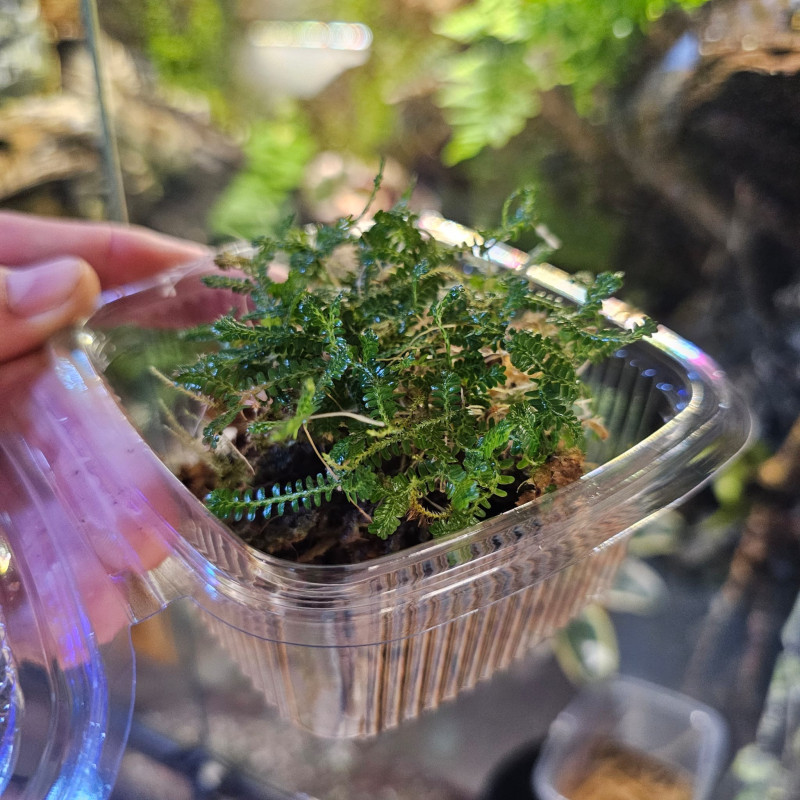
A compact Selaginella ideal for creating a true tropical forest-floor effect. Selaginella obtusa develops very fine, dense foliage along creeping stems that gradually cover the foreground. Native to Mauritius and Réunion, it is particularly well suited to humid terrariums, nano setups and planted areas around natural wood or rocks.

Security policy


Satisfaction guaranteed or your money back
 Free shipping on orders over €59
Delivery throughout Europe in 48 hours.
Selaginella obtusa is a small tropical lycophyte with a low creeping habit, particularly well suited to creating a natural forest-floor effect in humid terrariums. Its very fine, dense and delicately branched foliage provides a light texture that contrasts beautifully with broader-leaved Begonia, Fittonia, ferns and aroids.
Thanks to its ground-covering habit and strong preference for humid conditions, it is an excellent choice for foreground planting around natural wood, rocks and other tropical plants.
Selaginellaceae
Selaginella
Selaginella obtusa (P.Beauv.) Spring
Selaginella obtusa is native to the Mascarene Islands, specifically Mauritius and Réunion.
It mainly occurs in wet tropical environments and may be found in a range of habitats including humid forests, rocky areas, lava formations and other moist natural sites.
The foliage consists of very small scale-like leaves arranged along fine, highly branched stems. Together they create a dense miniature forest-like texture particularly suited to naturalistic terrariums.
Its fine green foliage adds depth and softness to planted displays without visually overwhelming neighbouring plants.
This plant has a low, creeping and ground-covering habit. Its stems gradually branch and spread across the substrate, forming a dense green carpet.
Its horizontal growth makes it particularly suitable for foreground planting in small and medium tropical terrariums.
Selaginella obtusa appreciates indirect or subdued light, high humidity and a light substrate kept consistently moist.
It does not tolerate prolonged drying well. The growing medium should therefore remain lightly moist while staying sufficiently aerated to prevent permanent water saturation.
Thanks to its creeping habit and high humidity requirements, Selaginella obtusa is particularly well suited to densely planted terrariums where it can create a natural tropical forest-floor effect.
Use a light, humus-rich and free-draining substrate containing coco humus, coco fibre, sphagnum, fine bark and perlite.
The growing medium should retain regular moisture while remaining sufficiently aerated.
Keep the substrate consistently lightly moist with regular watering using low-mineral water.
Avoid both prolonged drying and stagnant water. Dry conditions may quickly cause the delicate foliage to turn brown.
Selaginella obtusa appreciates high humidity, ideally around 70% to 95%.
Stable atmospheric humidity helps maintain dense and flexible foliage.
Ideal growing temperature: 18°C to 26°C.
Avoid prolonged low temperatures and hot, dry draughts.
Growth is moderate to fast under warm, humid conditions with indirect light.
The plant remains low but gradually spreads sideways through extensive branching.
Sold as a young plant. Plant size and development may vary depending on season and availability.
Trim growing tips when the plant becomes too dense or begins to cover neighbouring species.
Remove dry or damaged sections and maintain sufficient airflow in very humid terrariums.
Selaginella obtusa is particularly attractive for its creeping habit, extremely fine foliage and natural tropical forest-floor appearance.
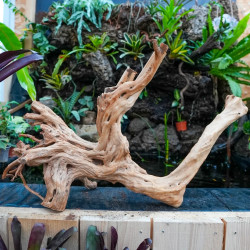
It is an excellent choice for foreground planting, around natural wood or humid rocks, where it creates a smooth transition between different elements of the display.
Specific References
A compact Selaginella ideal for creating a true tropical forest-floor effect. Selaginella obtusa develops very fine, dense foliage along creeping stems that gradually cover the foreground. Native to Mauritius and Réunion, it is particularly well suited to humid terrariums, nano setups and planted areas around natural wood or rocks.