- New


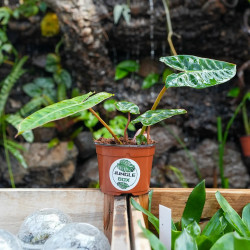
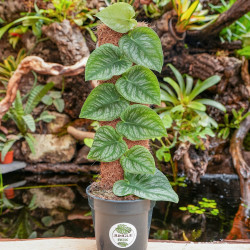
A Philodendron unlike any other: Philodendron tortum develops deeply dissected leaves formed from long, narrow segments, giving it an almost sculptural appearance. Supplied in a 6 cm pot, this young climber truly comes into its own on roots and vertical supports, where its foliage gradually becomes larger and more dramatic.

Security policy


Satisfaction guaranteed or your money back
 Free shipping on orders over €59
Delivery throughout Europe in 48 hours.
Philodendron tortum is an unusual tropical climbing aroid prized for its highly dissected foliage composed of long, narrow lobes. Its light, almost skeletal appearance makes it completely different from the broad-leaved form of many other Philodendrons.
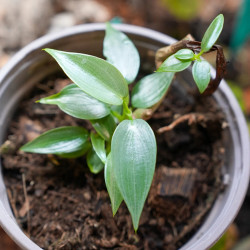
Supplied in a Ø 6 cm pot, this young plant is ideal for establishing on natural roots, cork panels, moss poles or vertical backgrounds in spacious tropical terrariums and paludariums.
Araceae
Philodendron
Philodendron tortum M.L.Soares & Mayo
Ø 6 cm
Philodendron tortum is native to wet tropical forests from northern Brazil to Bolivia.
It naturally grows as a climbing vine, ascending tree trunks with the help of adventitious roots.
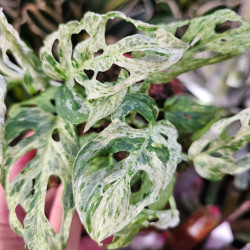
The foliage is the defining feature of Philodendron tortum. Mature leaves are deeply divided into numerous long, narrow lobes, giving the plant a highly graphic and airy appearance.
Juvenile leaves are less developed but become progressively longer and more deeply divided as the plant matures.
Philodendron tortum has a naturally climbing growth habit. It develops sturdy stems and aerial roots that allow it to attach to trunks, roots and vertical supports.
Vertical cultivation generally encourages larger and much more deeply dissected foliage.
Grow the plant against a natural root, cork panel, moss pole, Hygrolon or another vertical structure capable of retaining slight moisture.
A stable support encourages aerial root attachment and helps the plant develop mature foliage.
Use a highly aerated and free-draining aroid mix containing coco chips, bark, perlite, sphagnum moss and light organic material.
The growing medium should retain light moisture while allowing plenty of air around the roots.
Water when the upper layer of substrate begins to dry slightly.
Avoid stagnant water and permanently saturated growing media.
Humidity of approximately 65% to 90% is particularly suitable.
Higher humidity supports aerial root development but should always be combined with adequate airflow.
Ideal growing temperature: approximately 20°C to 28°C.
Avoid prolonged cold conditions and cool draughts.
Philodendron tortum prefers medium to bright filtered light.
Good lighting promotes compact growth and strongly dissected foliage. Avoid harsh direct sunlight that may damage the leaves.
Moderate to fast growth under warm, humid conditions with an appropriate vertical support.
Its growth can easily be trained or controlled by pruning.
Mature Philodendron tortum can produce typical aroid inflorescences consisting of a spathe surrounding a spadix.
In cultivation, however, its main ornamental feature is the exceptionally dissected foliage.
Propagation is mainly carried out from stem cuttings containing at least one node and ideally an aerial root.
Train new growth onto its support and prune overly long stems when necessary.
Remove old or damaged foliage to maintain a neat and balanced appearance.
Use a low-strength tropical plant or aroid fertiliser during active growth.
Avoid excessive feeding, especially in small substrate volumes.
Philodendron tortum looks unlike a conventional Philodendron: its deeply dissected leaves form fine, narrow segments that give the plant a light, almost sculptural silhouette.
Trained up a vertical root, it gradually becomes a striking focal point while allowing light to pass through to plants below.
Provide a vertical support while the plant is still young. A natural root or slightly humid cork panel will encourage aerial root attachment and help the plant produce larger, more strongly dissected mature foliage.
Like many Araceae, Philodendron tortum contains calcium oxalate crystals. The sap may be irritating and the plant should not be ingested.

Specific References
You might also like
A Philodendron unlike any other: Philodendron tortum develops deeply dissected leaves formed from long, narrow segments, giving it an almost sculptural appearance. Supplied in a 6 cm pot, this young climber truly comes into its own on roots and vertical supports, where its foliage gradually becomes larger and more dramatic.