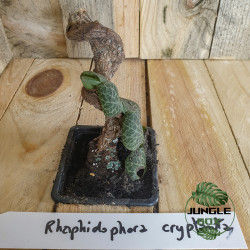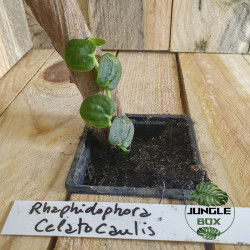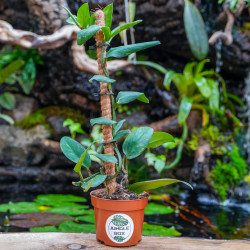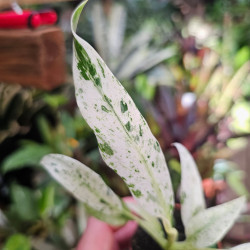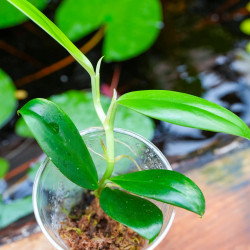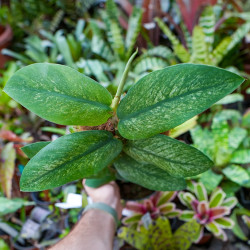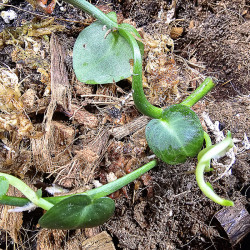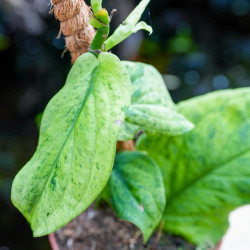
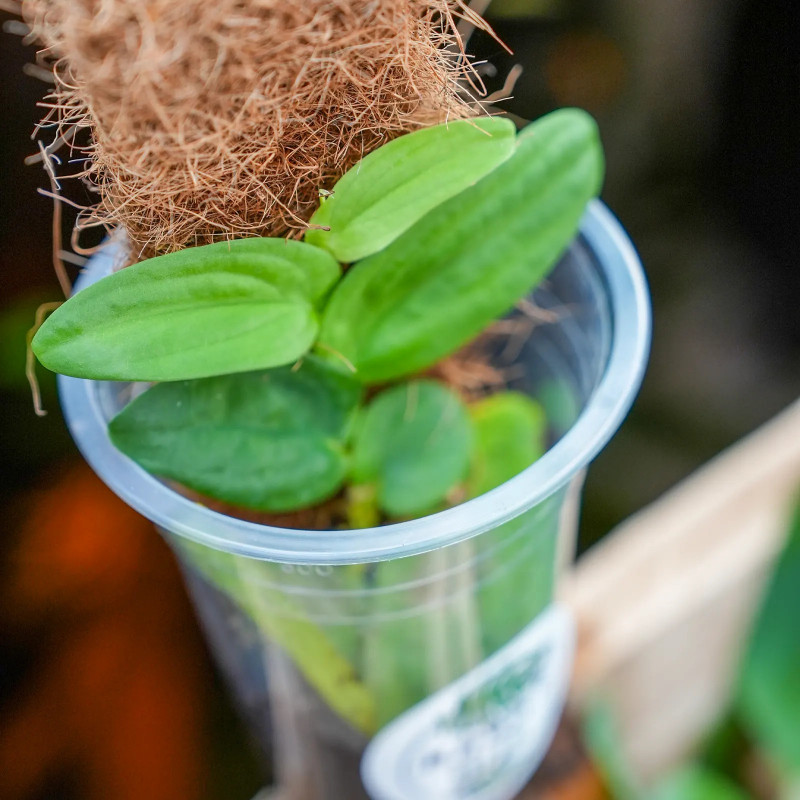
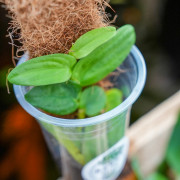
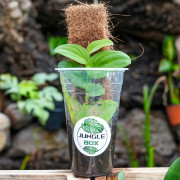
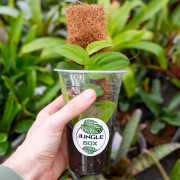
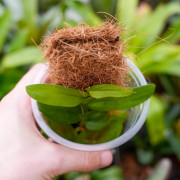
A spectacular Rhaphidophora with two very different growth stages. Juvenile Rhaphidophora korthalsii develops overlapping green leaves pressed tightly against wood, cork and planted backgrounds, creating a striking shingling effect. As it matures, it can produce much larger, deeply divided leaves. An excellent plant for vertical tropical terrarium displays.

Security policy


Satisfaction guaranteed or your money back
 Free shipping on orders over €59
Delivery throughout Europe in 48 hours.
Rhaphidophora korthalsii is a spectacular tropical climbing aroid, particularly valued for the dramatic change in its foliage as it matures. Juvenile plants develop green leaves pressed tightly against their support and overlapping like roof tiles. As the plant matures and climbs freely, the leaves become much larger and deeply divided.
This highly graphic growth habit makes it an excellent choice for humid tropical terrariums, paludariums, greenhouses and vertical planted displays on natural wood, trunks and cork panels.
Araceae
Rhaphidophora
Rhaphidophora korthalsii Schott
Rhaphidophora korthalsii has a broad natural distribution across tropical Asia and the western Pacific, from southern Thailand and Sumatra through Borneo and the Philippines to New Guinea and several western Pacific islands.
It naturally grows in humid tropical forests from lowland to montane environments, climbing trees, rocks and cliffs.
The juvenile foliage is one of the main attractions of the species. Leaves are green, oval to slightly elongated and pressed tightly against the support, with a characteristic overlapping arrangement.
As the plant matures and receives a suitable climbing support, its leaves become significantly larger and deeply divided into segments.
Rhaphidophora korthalsii has a climbing, adhesive and lianescent habit. Its aerial roots allow it to attach firmly to trunks, natural wood, cork panels and other vertical supports.
The juvenile stage remains relatively flat against the surface, allowing vertical areas to be planted without immediately taking up excessive space.
Rhaphidophora korthalsii appreciates indirect to bright filtered light, warm humid conditions and a highly aerated substrate.
A vertical support is strongly recommended so that the plant can express its natural growth habit. Natural wood, cork or a lightly humid planted background are ideal.
Its juvenile shingling habit makes it possible to quickly create a natural planted surface while regular pruning helps maintain compact growth in smaller enclosures.
Use a highly aerated aroid substrate containing coco humus, coco chips, fine bark, perlite and optionally sphagnum.
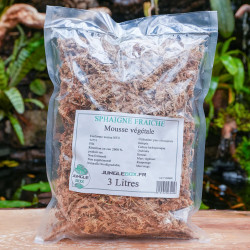
Aerial roots can also be encouraged by placing lightly moist sphagnum around the climbing surface.
Keep the substrate lightly moist without permanent saturation.
Use soft, low-mineral water whenever possible. Lightly moistening the climbing support also encourages aerial root development.
Rhaphidophora korthalsii appreciates humidity of approximately 70% to 90%.
Higher humidity encourages aerial root attachment and helps maintain the characteristic juvenile shingling foliage.
Ideal growing temperature: 20°C to 28°C.
Avoid prolonged low temperatures and cold or dry draughts.
Growth is moderate to fast under warm, humid and well-lit conditions.
The plant can quickly cover its support. Regular pruning in smaller terrariums helps maintain compact growth and preserve the juvenile shingling stage for longer.
Sold as a young plant. Plant size and development may vary depending on season and availability.
Guide new shoots onto the desired support and keep the surface lightly humid to encourage aerial root attachment.
Trim overly long stems and remove old or damaged leaves when necessary.
Rhaphidophora korthalsii is particularly attractive for its juvenile shingling growth habit, with leaves appearing to mould themselves against the climbing surface.
It gradually transforms natural wood, cork or planted backgrounds into living green surfaces while offering a dramatic foliage transformation as the plant matures.

Specific References
You might also like
A spectacular Rhaphidophora with two very different growth stages. Juvenile Rhaphidophora korthalsii develops overlapping green leaves pressed tightly against wood, cork and planted backgrounds, creating a striking shingling effect. As it matures, it can produce much larger, deeply divided leaves. An excellent plant for vertical tropical terrarium displays.