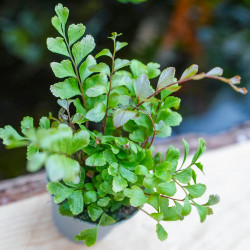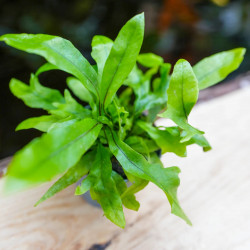
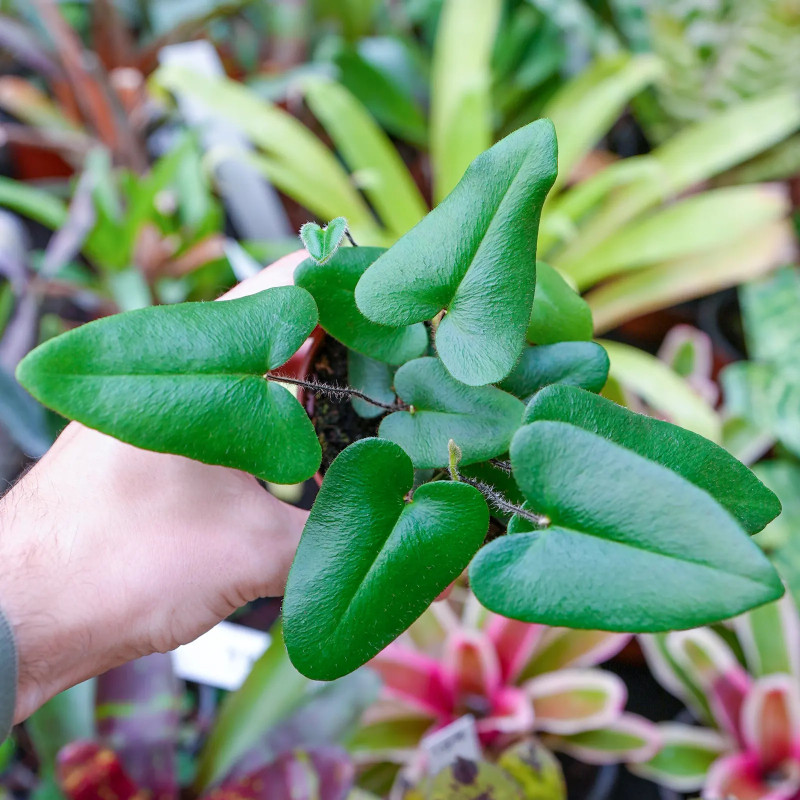
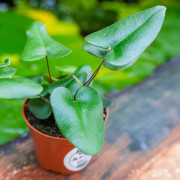
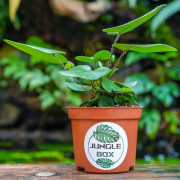
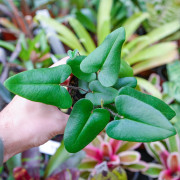
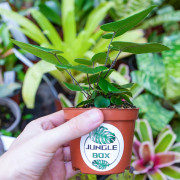
Compact tropical fern with distinctive heart-shaped fronds, ideal for humid terrariums, paludariums and planted displays.

Security policy


Satisfaction guaranteed or your money back
 Free shipping on orders over €59
Delivery throughout Europe in 48 hours.
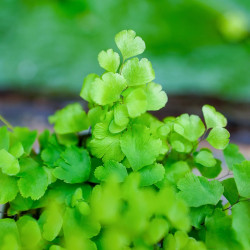
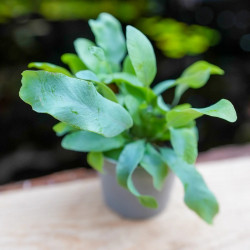
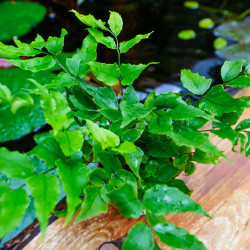
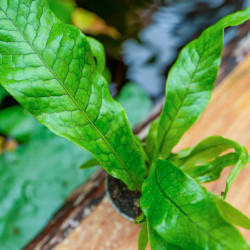
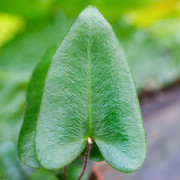
Hemionitis arifolia is a small, distinctive and highly decorative tropical fern, valued for its heart-shaped to arrow-shaped fronds with a pronounced tip. Its glossy green foliage, compact habit and graphic appearance make it an excellent choice for humid tropical terrariums, paludariums, planted displays and small high-humidity environments.
Pteridaceae
Hemionitis
Hemionitis arifolia
Hemionitis arifolia is native to tropical regions of Asia, particularly India and Southeast Asia. It naturally grows in warm, shaded and humid environments, often on humus-rich soils or in rocky areas that retain regular moisture.
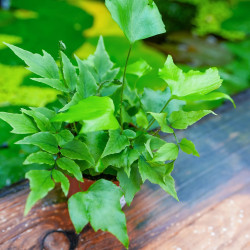
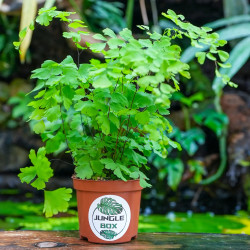
The main ornamental feature of Hemionitis arifolia is its sterile fronds, which are heart-shaped to arrow-shaped and carried on slender dark petioles. Their deep to glossy green colour contrasts elegantly with the plant's delicate structure.
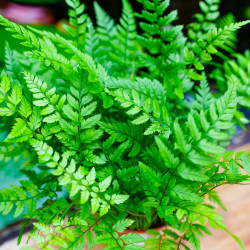
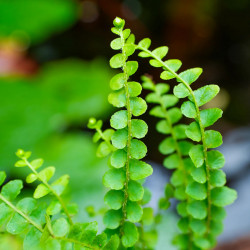
Fertile fronds may be more elongated and slightly different in shape from the sterile fronds, adding further visual interest as the plant matures.
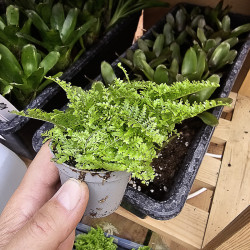
This fern develops a compact clumping habit. Its growth remains relatively contained, making it particularly well suited to small and medium-sized terrariums.
At maturity, Hemionitis arifolia generally reaches approximately 15 to 25 cm in height, depending on growing conditions.
Hemionitis arifolia prefers moderate to bright indirect light, high humidity and a lightweight substrate that remains consistently moist. It performs particularly well in stable tropical environments without direct sunlight.
Avoid complete drying of the substrate as well as permanently waterlogged conditions around the roots.
Hemionitis arifolia is particularly attractive in humid tropical terrariums, where its compact size allows it to be used in the foreground or mid-ground.
It combines very well with mosses, Selaginella, small Begonia and other compact ferns.
Use a lightweight, rich and well-draining substrate composed, for example, of coco fibre, organic matter, fine bark, perlite or volcanic rock and a small proportion of sphagnum moss.
The mixture should retain sufficient moisture while maintaining good airflow around the root system.
Keep the substrate slightly moist at all times using soft or low-limescale water. Hemionitis arifolia does not tolerate prolonged drought well.
However, avoid stagnant water and use a well-draining substrate.
This fern appreciates high humidity, ideally between 70% and 90%.
Consistent atmospheric humidity encourages healthy new fronds and helps prevent the edges from drying out. Good ventilation remains important in terrariums.
Ideal growing temperature: approximately 20°C to 26°C. Avoid prolonged temperatures below 16°C and cold draughts.
Slow to moderate growth. The plant gradually forms a small, dense and compact clump.
Its limited size is a major advantage in planted terrariums where a decorative fern is required without rapid or invasive growth.
The plant is supplied in the pot size and format indicated in the product specifications. Plant height, number of fronds and foliage shape may vary slightly depending on the individual plant, season and shipment.
Remove old, dry or damaged fronds using clean and disinfected tools. Maintain consistent substrate moisture and avoid sudden changes in temperature or humidity.
Apply a balanced fertiliser for ferns or green plants at a low concentration approximately once a month during the growing period.
Avoid excessive feeding, especially in terrariums where mineral salts can quickly accumulate in the substrate.
Propagation is mainly carried out from spores. Division may also be possible on a sufficiently mature clump, provided that each section retains a healthy part of the root system.
Hemionitis arifolia is not generally considered a highly toxic plant. Nevertheless, ingestion should be avoided and compatibility should always be checked with the animal species housed in the terrarium.
Hemionitis arifolia is an original tropical fern that immediately stands out thanks to its distinctive heart-shaped fronds. Its compact size, glossy foliage and excellent adaptation to warm and humid conditions make it particularly suitable for planted terrariums.
Place your Hemionitis arifolia in a lightly shaded area of the terrarium, on a fresh and well-draining substrate. High humidity combined with good air circulation will help maintain dense and healthy foliage.
Combine it with mosses, Selaginella, small ferns, Fittonia or Begonia to create a dense and natural tropical foreground.

Specific References
You might also like
Compact tropical fern with distinctive heart-shaped fronds, ideal for humid terrariums, paludariums and planted displays.