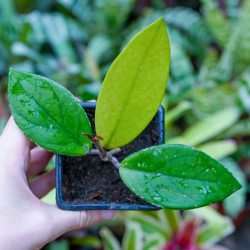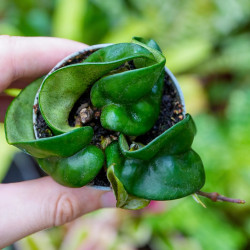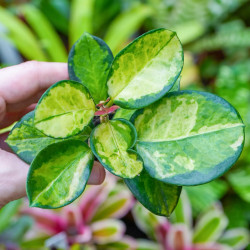
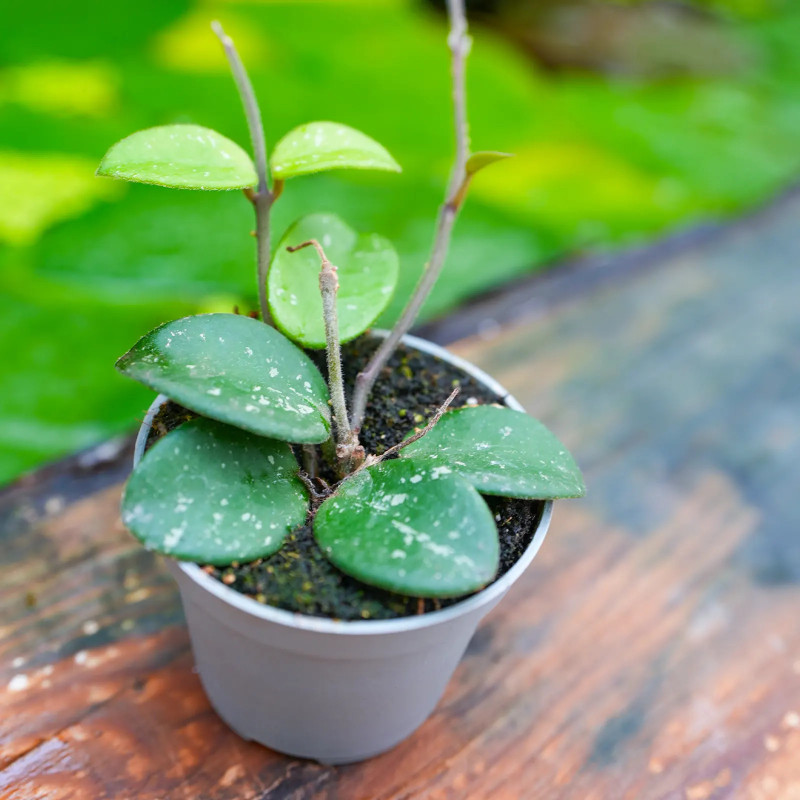
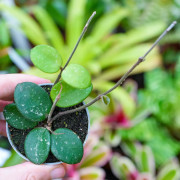
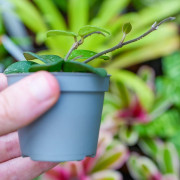
Hoya ‘Mathilde Splash’ is a compact and decorative Hoya with small dark green leaves splashed with silver, ideal for hanging baskets, climbing supports or bright, well-ventilated tropical terrariums.

Security policy


Satisfaction guaranteed or your money back
 Free shipping on orders over €59
Delivery throughout Europe in 48 hours.
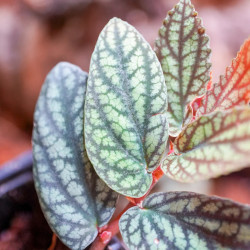
Hoya ‘Mathilde Splash’ is a collectible tropical Hoya particularly appreciated for its compact growth, small rounded leaves and attractive silver-splashed foliage. Its fleshy green leaves are irregularly marked with silvery speckles, giving the plant a bright and highly decorative appearance. Its naturally trailing or climbing habit makes it ideal for hanging pots, supports, tropical greenhouses and bright indoor collections.
Apocynaceae
Hoya
Hoya ‘Mathilde Splash’ – hybrid of Hoya carnosa × Hoya serpens
Hoya ‘Mathilde Splash’ is a cultivated horticultural hybrid derived from two Asian Hoya species: Hoya carnosa and Hoya serpens. It therefore does not occur naturally in the wild. Its parent species originate from humid subtropical and tropical regions of Asia, where Hoyas commonly grow as epiphytic or climbing plants on trees and rocky supports.
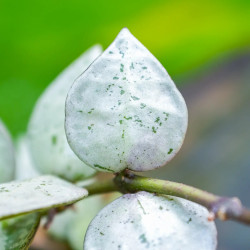
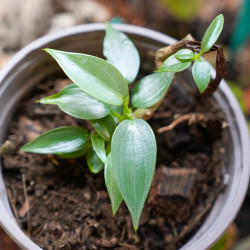
The foliage of Hoya ‘Mathilde Splash’ consists of small, thick and slightly succulent leaves, generally rounded to oval in shape. The deep green surface is irregularly covered with silver splashes and speckles, whose intensity may vary depending on the individual plant and growing conditions.
The contrast between the dark green foliage and metallic silver markings makes this cultivar particularly attractive even when it is not flowering.
When mature and grown under suitable conditions, Hoya ‘Mathilde Splash’ can produce spherical umbels composed of numerous small star-shaped flowers. The flowers are generally creamy white to pale pink with a deeper pink or reddish central crown.
The flowers may also release a pleasant fragrance, especially during the evening or in warm growing conditions.
This Hoya has a naturally trailing and climbing growth habit. Its flexible stems can cascade from a hanging pot or be trained onto a hoop, trellis, branch or cork support.
Its relatively compact foliage makes it particularly suitable for smaller growing spaces compared with many larger-leaved Hoya species.
Hoya ‘Mathilde Splash’ prefers bright indirect light, warm temperatures and an airy, well-draining substrate. Good light encourages compact growth, attractive silver markings and future flowering.
Avoid prolonged intense direct sunlight, particularly behind glass during the hottest hours of the day, as this may scorch the foliage.
Hoya ‘Mathilde Splash’ can be used in a bright tropical terrarium or paludarium provided that air circulation is sufficient and the substrate does not remain permanently waterlogged. Its climbing habit makes it ideal for decorating cork panels, branches and natural supports.
Use a highly aerated and fast-draining substrate composed of pine bark, coco chips, perlite, sphagnum moss and a small proportion of organic matter. The mixture should retain a little moisture while allowing excellent oxygenation around the roots.
An epiphytic plant or specialised Hoya substrate is particularly suitable for this cultivar.
Water moderately and allow the substrate to dry partially between waterings. The slightly succulent foliage allows the plant to tolerate short periods of dryness better than constant excess moisture.
Always avoid leaving stagnant water around the roots, as prolonged waterlogging may lead to root rot.
Hoya ‘Mathilde Splash’ appreciates a humidity level of approximately 55% to 80%. Moderate to high humidity promotes healthy growth, aerial-root formation and proper development of new leaves.
Good ventilation remains essential, particularly in terrariums and enclosed growing environments.
Ideal growing temperature: 18°C to 28°C. Avoid prolonged exposure to temperatures below approximately 15°C, as well as cold draughts and sudden temperature changes.
Growth is moderate. Its flexible stems can gradually extend beyond 60 to 100 cm under favourable conditions, especially when trained onto a suitable support.
Regular pruning can be used to maintain a more compact and bushy appearance.
The plant is supplied in the format and pot diameter indicated in the product specifications. Its size, number of stems, leaf density and level of silver splash may vary depending on the season and current stock.
Remove damaged or yellowing leaves using clean and disinfected tools. Long stems may be guided around a support or lightly pruned to encourage branching.
Avoid removing old flower spurs after flowering, as Hoyas can bloom repeatedly from the same peduncle.
Apply a balanced fertiliser for tropical or flowering plants every three to four weeks during the active growing season. Use a moderate concentration to avoid excessive mineral salt accumulation around the roots.
A slightly higher potassium content may be beneficial once the plant is mature and actively preparing to flower.
Propagation is mainly carried out through stem cuttings. Each cutting should contain at least one or two healthy nodes. Cuttings may be rooted in sphagnum moss, perlite, water or a very airy Hoya substrate.
Warm temperatures, bright indirect light and moderate humidity generally promote rapid rooting.
Hoya species produce a milky latex sap that may cause irritation in sensitive individuals. Although Hoyas are generally considered less problematic than many Aroids, ingestion should be avoided and the plant should be kept away from animals or young children likely to chew the foliage.
Hoya ‘Mathilde Splash’ is an excellent choice for collectors looking for a compact, decorative and relatively easy-to-grow Hoya. Its small rounded leaves, abundant silver splashes and attractive star-shaped flowers make it ornamental throughout the year.
Its manageable growth habit also makes it suitable for hanging displays, tropical plant walls, bright terrariums and small indoor collections.
Place your Hoya ‘Mathilde Splash’ in bright indirect light and allow the substrate to dry slightly between waterings. For a particularly decorative result, train the stems around a small hoop, cork branch or natural support.
Once flower peduncles appear, do not remove them after flowering: the plant can produce new flower clusters from the same peduncles during subsequent blooming cycles.

Specific References
You might also like
Hoya ‘Mathilde Splash’ is a compact and decorative Hoya with small dark green leaves splashed with silver, ideal for hanging baskets, climbing supports or bright, well-ventilated tropical terrariums.