- New

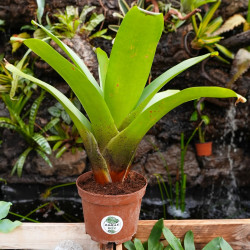
Large Brazilian bromeliad with an architectural rosette and foliage that can develop bronze, wine-red and purple tones. Ideal for large terrariums, tropical greenhouses and collector displays.

Security policy


Satisfaction guaranteed or your money back
 Free shipping on orders over €59
Delivery throughout Europe in 48 hours.
Alcantarea vinicolor is a spectacular large-growing bromeliad prized for its impressive rosette, broad rigid leaves and deep colour tones ranging from green to bronze, dark red and purple depending on light levels and growing conditions.
Its highly architectural silhouette makes it an outstanding feature plant for large tropical greenhouses, conservatories, protected patios, large planted terrariums and Bromeliaceae collections. With age, it develops into a striking and highly structured rosette.
Bromeliaceae
Alcantarea
Alcantarea vinicolor
Alcantarea vinicolor is native to Brazil, like the other members of the genus Alcantarea. These bromeliads naturally occur on rocky slopes, granite outcrops and open to semi-open areas where they benefit from strong light, good airflow and rapid drainage after rainfall.
The foliage is the main ornamental feature of this species. The long, broad leaves are arranged in a large rosette and have a firm, leathery texture.
Depending on light exposure, the plant may develop shades ranging from deep green to bronze, wine-red and purple. Strong light generally encourages more intense colouring and a more compact rosette.
Alcantarea vinicolor develops a large upright to widely spreading rosette. Its growth is highly architectural and becomes increasingly impressive with age.
At maturity, the plant can develop a substantial spread and should therefore be given enough space for the leaves to expand naturally.
This bromeliad prefers bright to very bright light. It can tolerate some direct sunlight when gradually acclimated, which can also help intensify the foliage colour.
It appreciates good air circulation and a very free-draining substrate. Unlike many understory bromeliads, Alcantarea vinicolor performs particularly well in brighter and more open conditions.
Because of its large final size, Alcantarea vinicolor is mainly suited to spacious enclosures and planted displays where its natural architecture can fully develop.
Use a very airy and well-draining substrate made, for example, from pine bark, coco chips or fibre, volcanic rock, perlite or pumice, with only a small proportion of organic matter.
The substrate should never remain compact or permanently waterlogged.
Water regularly during active growth while allowing the substrate to remain well aerated between waterings.
As with many rosette-forming bromeliads, the plant can hold water in its central cup. Soft or low-limescale water is preferable, and the water in the rosette should be refreshed regularly to avoid prolonged stagnation.
Alcantarea vinicolor appreciates medium to high humidity, ideally around 50% to 80%, combined with good ventilation.
A permanently saturated and poorly ventilated atmosphere is less suitable than a humid but airy environment.
Ideal growing temperature: approximately 18°C to 28°C.
Avoid prolonged exposure to low temperatures and protect the plant from frost. A moderate difference between daytime and nighttime temperatures can be beneficial.
Moderate growth. Alcantarea vinicolor gradually builds a large and impressive rosette and becomes increasingly ornamental with age.
Its growth is generally slower than that of many common tropical foliage plants, but its final size can be substantial.
At maturity, Alcantarea species can produce a spectacular tall flower spike rising well above the rosette.
As with many bromeliads, the main rosette is monocarpic: after flowering, it gradually declines while potentially producing offsets that continue the plant.
The plant is supplied in the format indicated in the product specifications. Rosette diameter, leaf length and colour intensity may vary depending on age, season, light levels and shipment.
Remove old or damaged leaves at the base using clean tools. Regularly check that water does not remain excessively stagnant in the substrate.
To maintain strong coloration, grow the plant in a bright position and avoid overly shaded conditions, which can cause the foliage to become greener.
Apply a weakly dosed fertiliser for bromeliads or tropical plants approximately every three to four weeks during the growing season.
Avoid excessive concentrations and mineral salt build-up in either the substrate or the central rosette.
Propagation can be carried out from seed or by separating offsets once they are sufficiently developed and have established their own root system.
Alcantarea vinicolor is a highly distinctive collector bromeliad valued for its large size, architectural habit and deep foliage tones that can develop into dark red and purple shades.
It is an excellent choice for bromeliad enthusiasts, large tropical displays and planted installations requiring a strong structural focal point.
Place your Alcantarea vinicolor in a very bright and well-ventilated position. Gradual acclimation to stronger light will help produce a more compact rosette and enhance the characteristic wine-red tones.
Allow plenty of space around the plant from the beginning: this species is best used as a focal specimen rather than a filler plant.

Specific References
Large Brazilian bromeliad with an architectural rosette and foliage that can develop bronze, wine-red and purple tones. Ideal for large terrariums, tropical greenhouses and collector displays.