- New
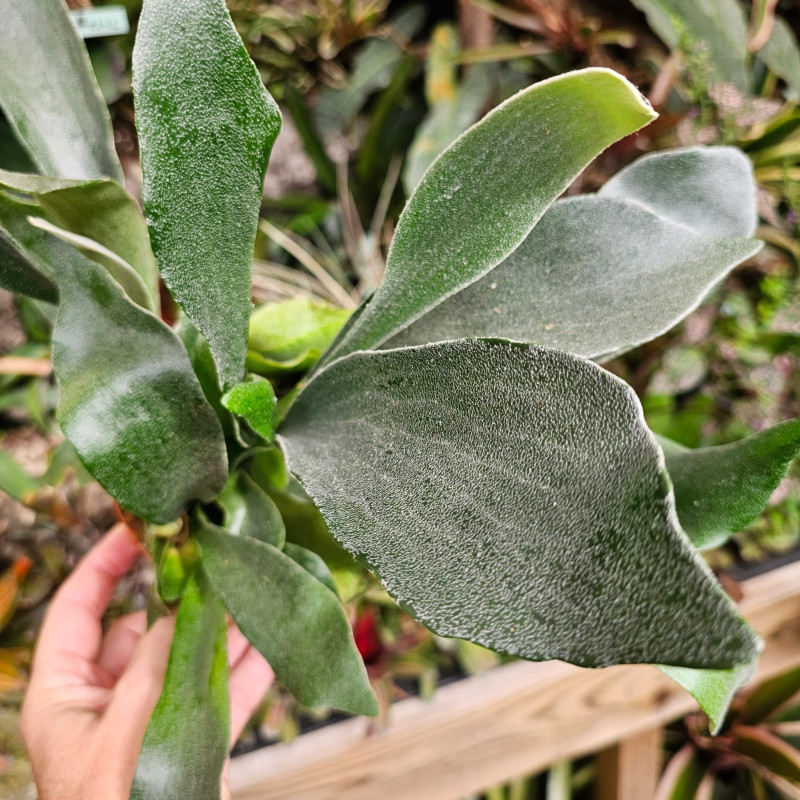
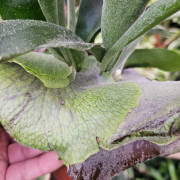
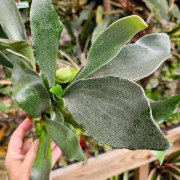
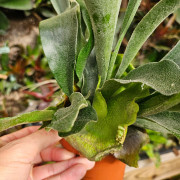
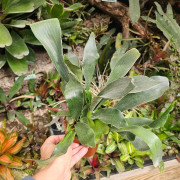
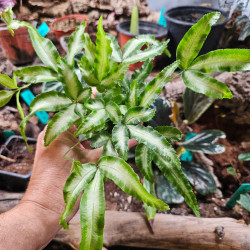
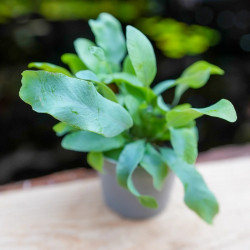
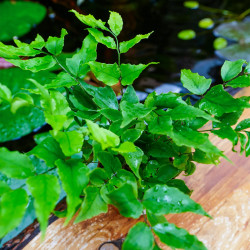
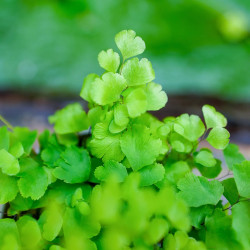
A true canopy fern: Platycerium bifurcatum develops long branching antler-shaped fronds while its basal shield fronds gradually wrap around the support. Mounted on natural roots or cork, it brings vegetation into the upper levels of a terrarium and instantly creates the impression of a mature tropical forest.

Security policy


Satisfaction guaranteed or your money back
 Free shipping on orders over €59
Delivery throughout Europe in 48 hours.
Platycerium bifurcatum, commonly known as the Staghorn Fern, is a spectacular epiphytic fern recognised by its long green fronds that repeatedly divide into antler-like segments.
Highly architectural, it is especially well suited to mounted cultivation on cork, natural roots, planted panels and vertical backgrounds. In spacious tropical terrariums, paludariums and greenhouses, it instantly creates the atmosphere of a humid forest canopy.
Polypodiaceae
Platycerium
Platycerium bifurcatum (Cav.) C.Chr.
Staghorn Fern
Platycerium bifurcatum is native to eastern Australia and several islands of the south-western Pacific, including New Caledonia, Lord Howe Island and Norfolk Island.
In nature it grows as an epiphyte attached to tree trunks and branches.
Platycerium bifurcatum produces two distinctly different types of fronds.
The basal fronds are rounded and press closely against the support, gradually forming a protective shield around the rhizome while trapping moisture and organic debris.
The fertile fronds are longer and eventually divide into multiple antler-like segments.
Basal fronds naturally turn brown as they age. This is a normal part of the plant's development and does not indicate poor health.
They should generally be left in place because they continue to protect the rhizome and root system.
Platycerium bifurcatum has a naturally epiphytic growth habit and gradually develops a mass of fronds around its support.
Mature specimens can become substantial, producing numerous bifurcated fronds and an impressive cascading silhouette.
This species is particularly well suited to mounting directly onto cork panels, natural roots or vertical structures.
The rhizome can be positioned in a small amount of sphagnum moss or fibrous substrate secured against the support before gradually being covered by the developing basal fronds.
When grown in a container, use an extremely aerated mix containing sphagnum moss, bark, coco chips and perlite.
The roots should never remain in dense or permanently waterlogged substrate.
Allow the growing medium or mounting material to begin drying slightly between waterings.
Mounted plants can be thoroughly soaked before being allowed to drain and partially dry again.
Avoid keeping the centre of the plant permanently saturated.
Humidity of approximately 60% to 85% is particularly suitable.
High humidity should always be combined with good airflow, especially in enclosed terrariums.
Ideal growing temperature: approximately 18°C to 28°C.
Platycerium bifurcatum is relatively tolerant but prolonged cold conditions are best avoided.
This fern prefers medium to bright filtered light.
Good lighting encourages compact, strongly divided fronds. Avoid harsh direct sunlight through glass.
Moderate growth. Under suitable conditions the plant gradually produces new basal shields followed by long fertile antler-like fronds.
Like all ferns, Platycerium bifurcatum does not produce flowers or seeds. It reproduces naturally through spores.
Mature plants may also produce offsets that can be separated for vegetative propagation.
Do not automatically remove basal fronds when they turn brown, as this is a natural process and they continue to protect the rhizome.
Only remove fertile fronds once they are completely dead or damaged.
Use a very dilute tropical or epiphytic plant fertiliser during active growth.
Light regular feeding is preferable to concentrated fertilisation.
With its dramatic antler-shaped fronds, Platycerium bifurcatum can transform a simple root or cork background into a convincing tropical forest feature.
Its epiphytic growth allows you to plant the upper levels of a terrarium while leaving valuable floor space available for Begonia, Fittonia, mosses and smaller ferns.
For the most natural effect, mount your Platycerium on a substantial cork panel or natural root with a small pocket of sphagnum around the rhizome. Position it high in a bright, well-ventilated area so the antler-shaped fronds can hang freely.

Specific References
You might also like
A true canopy fern: Platycerium bifurcatum develops long branching antler-shaped fronds while its basal shield fronds gradually wrap around the support. Mounted on natural roots or cork, it brings vegetation into the upper levels of a terrarium and instantly creates the impression of a mature tropical forest.