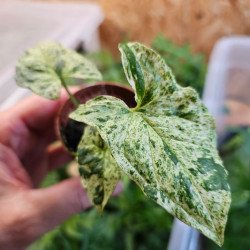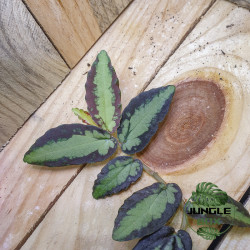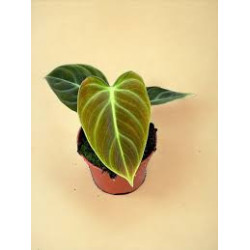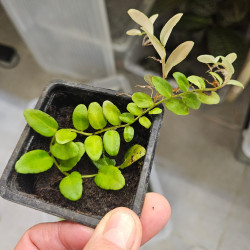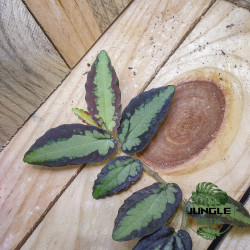
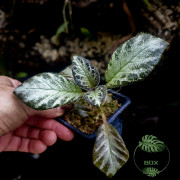
Episcia cupreata, the flame violet, pairs velvety, sometimes copper-toned leaves with small flowers that are often orange-red. Its runners form soft ground cover in a tropical terrarium or trail over the edge of a hanging pot. In a paludarium, choose a well-drained bank away from splashing water.

Security policy


Satisfaction guaranteed or your money back
 Free shipping on orders over €59
Delivery throughout Europe in 48 hours.
Episcia cupreata, commonly known as the flame violet, pairs velvety foliage with small trumpet-shaped flowers, often in shades of orange-red. Its rosettes spread across the foreground of a tropical terrarium. Set the plant on a raised ledge and its runners will trail over the edge, displaying the young rosettes against the background.
Gesneriaceae, the African violet family.
Episcia
Episcia cupreata (Hook.) Hanst.
Its native range extends from Nicaragua to northern Brazil, through humid tropical regions of Central and South America.
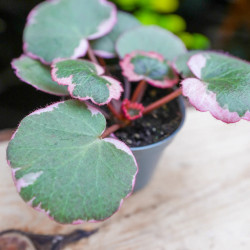
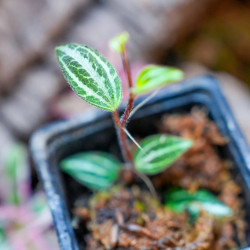
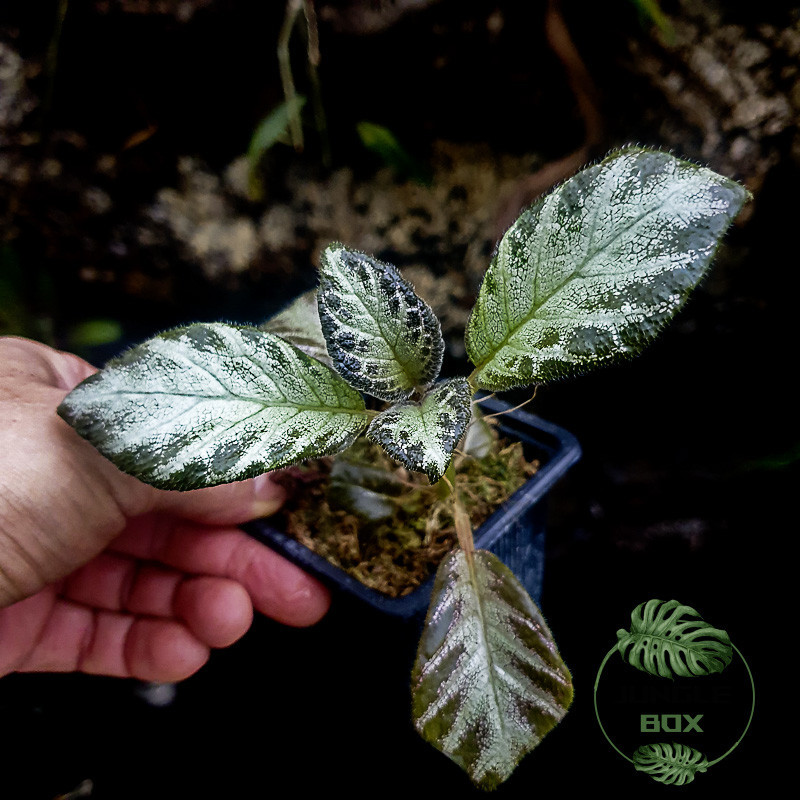
The oval leaves have a velvety, gently quilted surface. A paler midrib often picks out the texture of each leaf. Colours vary with the form grown and can include green, bronze and copper tones, sometimes with silvery highlights.
Slender runners carry young rosettes away from the parent plant. Where they touch the growing medium, the rosettes can take root and gradually form a patch of ground cover. At the edge of a pot or planted bank, the runners hang freely.
Choose a warm position with bright, indirect light. Indoors, a window with a sheer curtain works well. In a terrarium, choose a spot that receives light from above and sits outside the direct spray of misting nozzles.
Use a light African violet mix or fine coconut coir blended with perlite. The mix should retain a little moisture between waterings while allowing excess water to drain freely.
Water at the base with room-temperature water when the surface starts to dry. Empty the saucer after watering a potted plant. In a terrarium, check the growing medium beneath the leaves before watering again.
Flame violets enjoy humid air. Keep the velvety foliage out of direct misting spray and position the plant where condensation from the lid will not drip onto the rosette.
Aim for steady warmth, with around 22–25 °C as a practical growing range. Keep the plant away from cold windowpanes and draughts in winter.
Growth is mainly outward. The plant’s spread depends on how many young rosettes take root, so it can be grown as a small clump, a patch of ground cover or a trailing plant.
Pot diameter: [to be confirmed]. Approximate plant spread at dispatch: [to be confirmed].
Remove damaged leaves and trim runners when they reach neighbouring plants. To fill a gap in the planting, rest a young rosette on the growing medium and let it root before cutting its runner from the parent plant.
Its textured leaves bring detail to the foreground, with an extra touch of colour when the plant flowers. JungleBox tip: plant it at the edge of a slightly raised pocket to enjoy the leaf markings from above and the trailing rosettes from the front.

Specific References
You might also like
Episcia cupreata, the flame violet, pairs velvety, sometimes copper-toned leaves with small flowers that are often orange-red. Its runners form soft ground cover in a tropical terrarium or trail over the edge of a hanging pot. In a paludarium, choose a well-drained bank away from splashing water.