- New
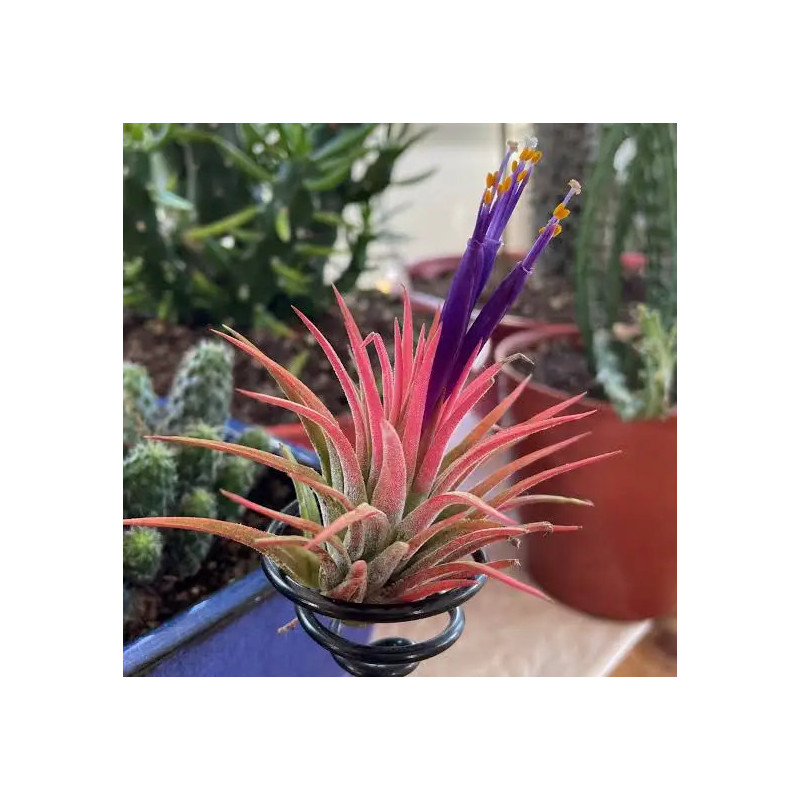
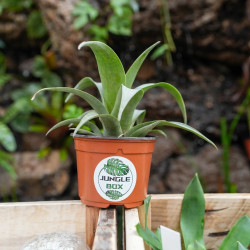
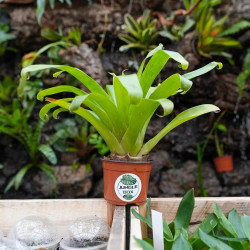
Tillandsia ionantha is a compact soilless epiphytic bromeliad with silvery foliage that can turn red or pink when flowering. Ideal for well-ventilated terrariums, nano terrariums and epiphytic displays.

Security policy


Satisfaction guaranteed or your money back
 Free shipping on orders over €59
Delivery throughout Europe in 48 hours.
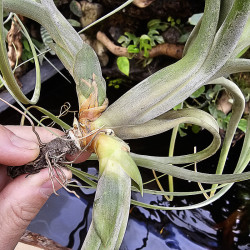
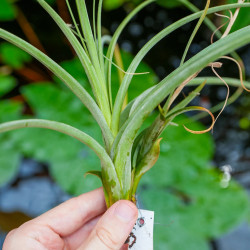
Tillandsia ionantha is a compact epiphytic bromeliad highly valued for its easy cultivation, small size and striking colour changes at flowering time. Its fine silver-green foliage can develop vivid red, pink or orange tones as the plant reaches maturity.
As a true air plant, it does not require conventional substrate and can easily be mounted onto branches, roots, cork panels and other natural supports. It is particularly well suited to well-ventilated tropical terrariums, epiphytic displays and compact planted layouts.
Bromeliaceae
Tillandsia
Tillandsia ionantha
Tillandsia ionantha is native to Mexico and Central America. It naturally grows as an epiphyte on branches and trunks, and sometimes on rocky supports, in bright and well-ventilated environments with regular wet and dry cycles.
The plant forms a compact rosette of narrow, rigid leaves covered with silvery trichomes that absorb moisture and nutrients directly from the air and water.
As flowering approaches, the central leaves may develop intense red, pink or orange coloration, creating a striking contrast with the silver-green foliage.
Tillandsia ionantha remains a compact species, making it particularly suitable for displays where space is limited.
After flowering, the plant usually produces offsets around its base. These may be left attached to gradually form a small colony or separated once sufficiently developed.
Like many Tillandsia species, this plant does not need conventional growing substrate.
It can be mounted directly onto:
Avoid burying the base in constantly moist substrate, as this can encourage rot.
Tillandsia ionantha appreciates humid conditions but should be able to dry quickly after each misting.
Mist regularly with soft, low-mineral or reverse-osmosis water. Frequency depends on temperature, humidity and airflow.
After watering, the plant should be able to dry completely within a few hours. Permanent moisture inside the rosette may lead to rot.
Humidity of approximately 50% to 80% is suitable, provided there is good air circulation.
In very humid terrariums, ventilation is essential.
Ideal growing temperature: approximately 18°C to 28°C.
Avoid prolonged cold conditions and constantly wet environments.
Tillandsia ionantha prefers bright to very bright filtered light.
Good light encourages compact growth and helps develop the characteristic red or pink coloration around flowering time.
Slow to moderate growth. Its small size makes it easy to integrate into compact epiphytic arrangements or onto thin branches.
At maturity, Tillandsia ionantha can produce small tubular flowers, usually violet to purple, contrasting strongly with the red or pink central leaves.
After flowering, the mother plant gradually produces offsets that continue the colony.
Propagation is mainly carried out by separating offsets produced after flowering.
It is generally best to wait until they reach at least one-third to one-half the size of the mother plant before separation.
The key to successful cultivation is maintaining the right balance between humidity, watering and ventilation.
Remove dry basal leaves gently once they loosen naturally.
A very weakly dosed fertiliser formulated for bromeliads or Tillandsia can be used occasionally during active growth.
Avoid over-fertilisation and overly concentrated products that may damage the trichomes and plant tissue.
Tillandsia ionantha is one of the most versatile air plants for tropical displays. Its compact size, soilless growth habit and spectacular colour changes make it suitable for a wide range of planted projects.
It is ideal for adding a natural epiphytic touch to roots, branches and vertical backgrounds.
Mount your Tillandsia ionantha slightly above ground level on a branch or root in a bright and well-ventilated position.
The most important point is to avoid permanent moisture: after misting, excess water should drain away and the plant should dry relatively quickly.

Specific References
You might also like
Tillandsia ionantha is a compact soilless epiphytic bromeliad with silvery foliage that can turn red or pink when flowering. Ideal for well-ventilated terrariums, nano terrariums and epiphytic displays.