- New
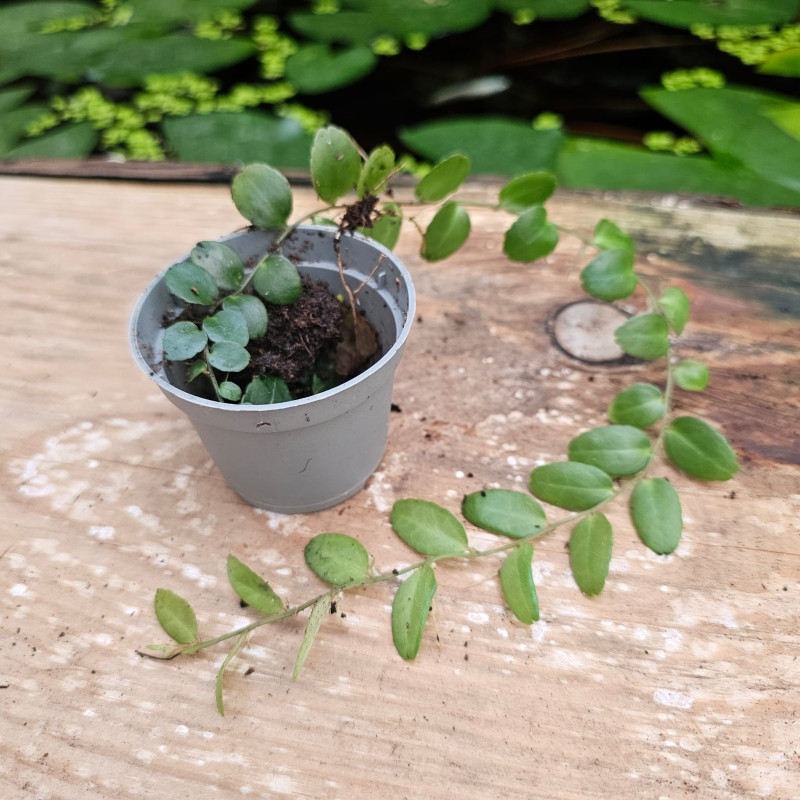
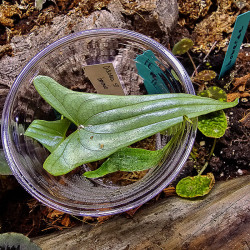
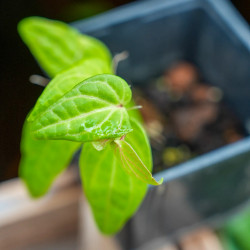
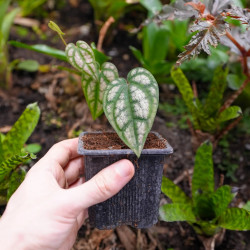
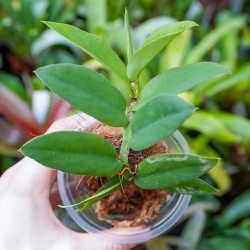
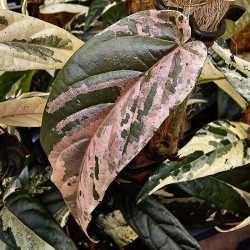
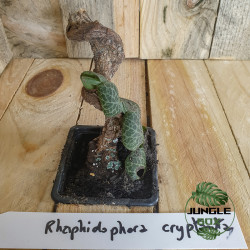
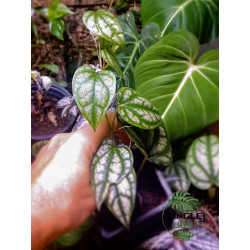
Marcgravia sp. “Colombia” is a tropical climbing plant with distinctive shingling foliage, ideal for humid terrariums, paludariums and natural bioactive displays.

Security policy


Satisfaction guaranteed or your money back
 Free shipping on orders over €59
Delivery throughout Europe in 48 hours.
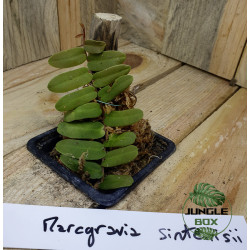
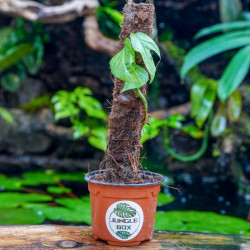
Marcgravia sp. “Colombia” is a tropical climbing and epiphytic plant highly sought after for humid tropical terrariums. Its juvenile stems develop small leaves that naturally press flat against vertical surfaces, creating a characteristic shingling effect that looks especially attractive on cork bark, roots and terrarium backgrounds.
Its creeping to climbing habit, wild appearance and ability to gradually colonise natural décor make it an excellent choice for premium terrariums, paludariums and tropical vivariums.
Marcgraviaceae
Marcgravia
Marcgravia sp. “Colombia” – unidentified species
This form is sold under the geographical name “Colombia”. The genus Marcgravia is widely distributed throughout the Neotropics, especially in Central and South America, and Colombia supports a particularly rich diversity of Marcgraviaceae.
In their natural habitat, Marcgravia species mainly grow in humid tropical forests, where juvenile shoots climb tree trunks and other supports in order to gradually reach brighter areas.
The juvenile foliage consists of small leaves regularly arranged along the stems. Under high humidity and on a suitable support, the leaves tend to lie flat against the surface on which the plant is climbing.
This characteristic growth pattern, commonly known as shingling, creates a very natural effect reminiscent of epiphytic plants growing on tree trunks in tropical forests.
Marcgravia sp. “Colombia” has a creeping to climbing growth habit. Its stems produce adventitious roots that gradually attach to humid supports such as cork bark, branches, planted panels or natural terrarium backgrounds.
The plant can be regularly pruned to control its growth and maintain a compact appearance.
Marcgravia sp. “Colombia” prefers warm, very humid tropical conditions combined with bright indirect light. High humidity strongly encourages both root attachment to the support and the characteristic flat shingling growth.
Avoid intense direct sunlight, which may damage the foliage, as well as prolonged periods of low humidity.
Marcgravia sp. “Colombia” is particularly well suited to humid tropical and bioactive terrariums. It can be used to cover a background, cork panel, root or vertical branch.
Use a light, rich and very well-draining tropical substrate composed, for example, of coco fibre, fine bark, sphagnum moss, perlite or volcanic rock.
The roots appreciate consistent moisture while still requiring good oxygenation. Part of the plant can also be installed directly against a support covered with moist sphagnum moss.
Keep the substrate and climbing supports regularly moist using soft or low-limescale water. Marcgravia species respond particularly well to regular misting in terrariums.
Avoid stagnant water and maintain sufficient airflow to reduce the risk of rot.
Marcgravia sp. “Colombia” appreciates very high humidity, ideally between 75% and 95%.
High humidity is especially useful during establishment, as it encourages adventitious root formation and helps the stems attach to their support.
Ideal growing temperature: approximately 20°C to 27°C.
Avoid prolonged temperatures below 16°C as well as high temperatures combined with low humidity.
Moderate growth. Once properly acclimated and attached to its support, the plant gradually produces new stems capable of colonising vertical surfaces.
Growth can be guided and controlled through regular pruning in order to maintain a dense and structured appearance.
The plant is supplied in the format indicated in the product specifications. Stem length, number of leaves and foliage colour may vary depending on the individual plant, season and shipment.
Trim overly long stems to encourage branching and maintain compact growth. The cuttings can be repositioned against a moist surface to create new planted areas.
Maintain high humidity while ensuring regular ventilation inside the terrarium.
Apply a very weakly dosed fertiliser for tropical plants approximately once a month during the growing period.
In bioactive terrariums, feeding should remain particularly light in order to avoid mineral salt accumulation in the substrate.
Propagation is relatively easy from stem cuttings. Take a section with several nodes and place it on moist sphagnum moss or directly against a humid support.
High humidity encourages new root formation and helps the cutting gradually attach itself to the support.
Available information regarding the toxicity of Marcgravia species remains limited. As a precaution, ingestion should be avoided and compatibility should be checked with any animal species housed in the terrarium.
Marcgravia sp. “Colombia” is especially valuable for creating highly natural and densely planted tropical displays. Its ability to grow flat against supports allows it to gradually transform backgrounds, roots and cork bark into living green surfaces.
Its compact format and epiphytic appearance make it an excellent plant for dart frog terrariums, paludariums and bioactive vivariums designed to recreate a highly realistic tropical forest environment.
Install several stems of Marcgravia sp. “Colombia” directly against a cork panel or a root kept slightly moist. Temporarily secure the stems to the support until adventitious roots take over.
Bright indirect light, high humidity and good ventilation will help produce compact growth with leaves lying neatly against the décor.

Specific References
You might also like
Marcgravia sp. “Colombia” is a tropical climbing plant with distinctive shingling foliage, ideal for humid terrariums, paludariums and natural bioactive displays.