- New


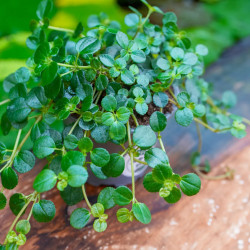
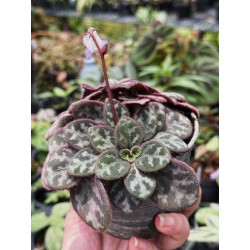
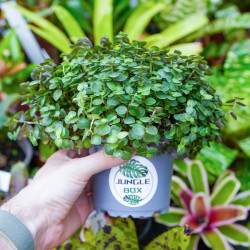
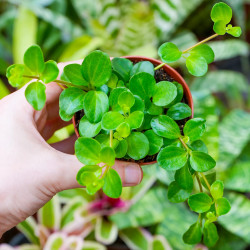
Primulina sinovietnamica is a compact botanical lithophytic Gesneriad native to Guangxi and also recorded in Vietnam. Adapted to humid limestone habitats, it is ideal for tropical terrariums, rocky displays, emerged paludarium areas and naturalistic setups.

Security policy


Satisfaction guaranteed or your money back
 Free shipping on orders over €59
Delivery throughout Europe in 48 hours.
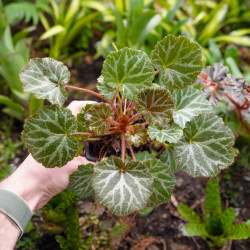
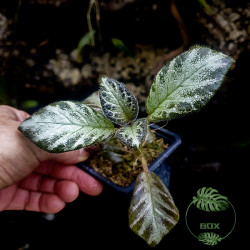
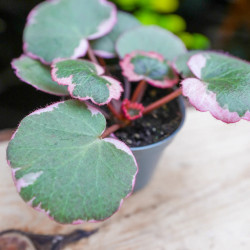
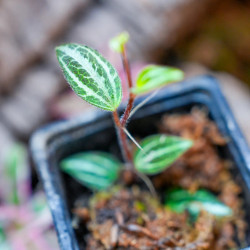
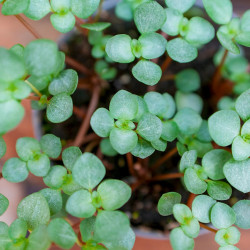
Primulina sinovietnamica is a compact botanical Gesneriad particularly well suited to humid tropical terrariums and naturalistic forest-floor displays. It forms a neat rosette of green leaves, usually slightly velvety with clearly visible venation.
Naturally adapted to humid limestone habitats, this species is particularly suitable for rocky terrarium layouts, mineral backgrounds and highly free-draining substrates.
Gesneriaceae
Primulina
Primulina sinovietnamica W.H.Wu & Qiang Zhang
Primulina sinovietnamica is an accepted botanical species described in 2012.
The species was described from populations in Guangxi, southern China, and has also been recorded in Vietnam. It mainly occurs in humid subtropical habitats, often associated with limestone rocks.
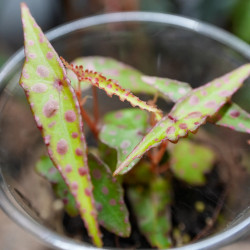
The plant forms a rosette of oval to elongated green leaves that are lightly textured and generally covered with fine hairs.
Its foliage remains relatively low and compact, making it easy to use in the foreground or within rocky terrarium sections.
Primulina sinovietnamica has a compact rosette-forming growth habit and remains relatively small.
Over time, the plant may produce additional shoots and gradually form an attractive clump.
This Primulina is primarily lithophytic, naturally growing on or between rocks, particularly in humid limestone environments.
It therefore appreciates regular moisture while requiring excellent drainage around the roots.
Primulina sinovietnamica can be planted in a small substrate pocket between rocks, in a crevice or on a mineral background that retains slight moisture.
Avoid keeping the roots permanently waterlogged.
Use a very light, free-draining and slightly organic mix containing fine volcanic rock, perlite, fine bark, coco fibre and a small amount of sphagnum moss.
A mineral-rich and well-aerated growing medium is particularly suitable for this species.
Keep the substrate consistently lightly moist while allowing excess water to drain quickly.
Avoid both prolonged drought and permanently saturated conditions.
Humidity of approximately 65% to 85% is well suited to this species.
Higher humidity is beneficial provided adequate airflow is maintained around the foliage.
Ideal growing temperature: approximately 18°C to 25°C.
As a subtropical species, it generally prefers moderate temperatures and may be less tolerant of prolonged excessive heat than lowland tropical plants.
Primulina sinovietnamica prefers soft to medium filtered light.
Avoid harsh direct sunlight or overly intense lighting that may damage the foliage.
Slow to moderate growth. The plant remains compact and gradually develops a fuller rosette.
Mature Primulina sinovietnamica can produce delicate tubular flowers typical of the Gesneriaceae, generally held above the foliage.
Flowering provides additional interest, while the foliage remains attractive throughout the year.
Propagation can be carried out by division, and under suitable conditions also from leaf cuttings or seed.
Remove old or damaged leaves and avoid allowing water to remain stagnant in the centre of the rosette.
Excellent drainage combined with consistent atmospheric humidity is key to successful cultivation.
Use a very weakly dosed tropical plant or Gesneriad fertiliser during active growth.
Feeding should remain light to prevent mineral salt accumulation in the substrate.
Primulina sinovietnamica is still relatively uncommon in cultivation and is especially interesting for naturalistic terrariums and collections of Asian plants.
Its compact habit and natural affinity for limestone habitats make it particularly useful for creating displays different from traditional epiphytic terrariums.
Plant Primulina sinovietnamica in a small mineral substrate pocket between rocks or at the base of a limestone-style background, in a humid but well-drained position.
It combines especially well with mosses, small ferns and other compact forest-floor plants.

Specific References
You might also like
Primulina sinovietnamica is a compact botanical lithophytic Gesneriad native to Guangxi and also recorded in Vietnam. Adapted to humid limestone habitats, it is ideal for tropical terrariums, rocky displays, emerged paludarium areas and naturalistic setups.