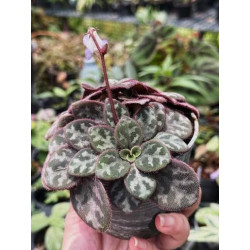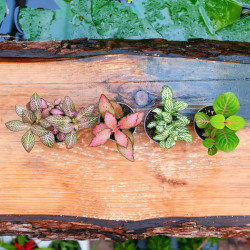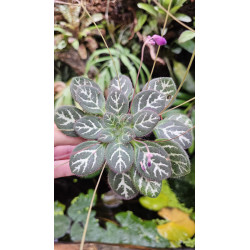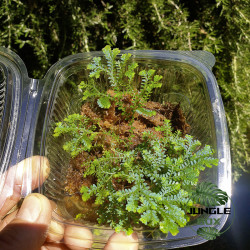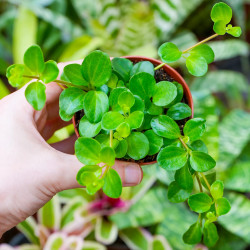
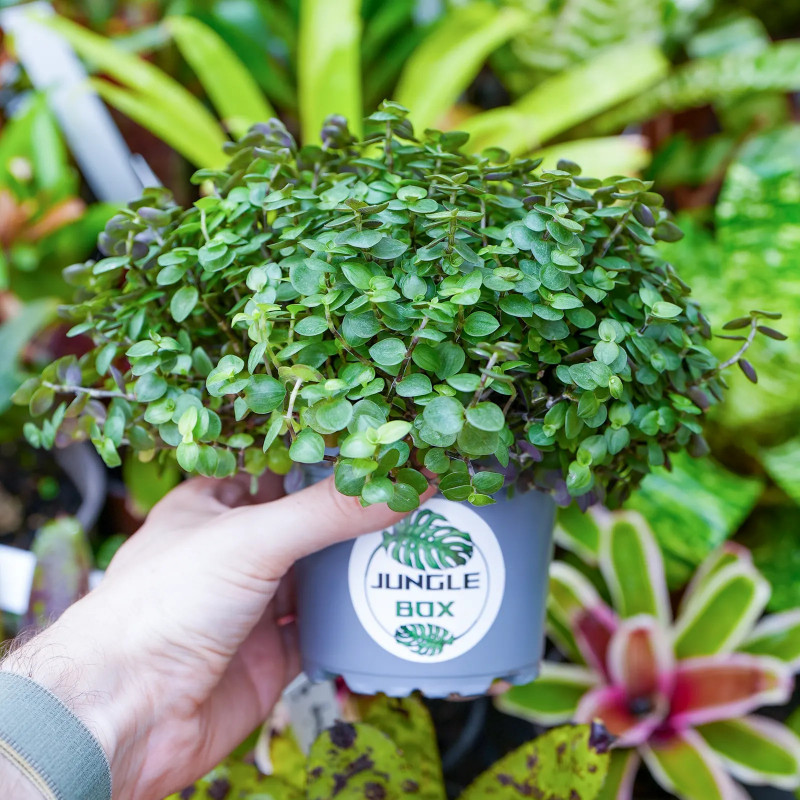
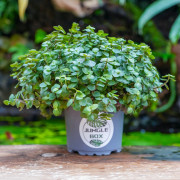
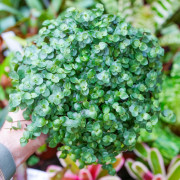
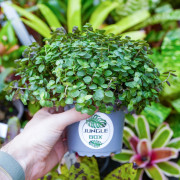
Callisia repens is a fast-growing creeping and trailing plant, ideal as a groundcover for tropical terrariums, paludariums and naturalistic planted displays.

Security policy


Satisfaction guaranteed or your money back
 Free shipping on orders over €59
Delivery throughout Europe in 48 hours.
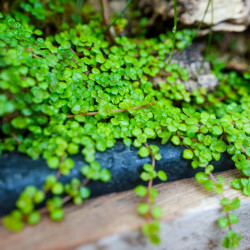
Callisia repens is a small creeping and trailing plant from the Commelinaceae family, appreciated for its rapid growth, miniature foliage and ability to quickly form a dense groundcover. Its slender stems carry numerous small fleshy green leaves that may develop bronze, reddish or purplish tones depending on light intensity and growing conditions. Easy to integrate into naturalistic displays, it is particularly suitable as a groundcover or trailing plant in tropical terrariums, paludariums and indoor cultivation.
Commelinaceae
Callisia
Callisia repens (Jacq.) L.
Callisia repens has a very wide natural distribution extending from the southeastern United States to tropical America. It is native to areas including Texas and Mississippi, Mexico, Central America, numerous Caribbean islands and a large part of South America.
Its natural range includes Belize, Costa Rica, Guatemala, Honduras, Nicaragua, Panama, Cuba, Jamaica, Puerto Rico, Colombia, Venezuela, Ecuador, Peru, Bolivia, Brazil, French Guiana, Paraguay and northern Argentina.
Unlike species strictly associated with constantly humid rainforest, Callisia repens primarily occurs in the seasonally dry tropical biome. It naturally colonises the ground and various supports through its prostrate and creeping stems.
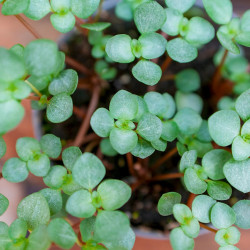
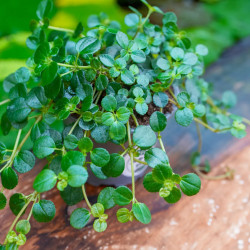
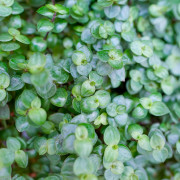
The leaves of Callisia repens are small, oval to slightly pointed, relatively fleshy and arranged along slender creeping stems. They are generally only a few centimetres long, giving the plant its characteristic miniature appearance.
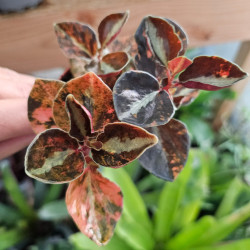
The upper surface is mainly green, while the undersides and parts of the foliage may develop reddish, bronze or purplish tones. Brighter indirect light generally promotes more compact growth and stronger colouration.
Callisia repens may produce small, discreet white flowers. Flowering remains secondary compared with the ornamental value of the foliage but may occur when the plant is grown under favourable conditions.
Callisia repens has a naturally creeping, prostrate and trailing growth habit. Its stems branch quickly and may root at the nodes when they come into contact with a suitable substrate.
This rooting ability allows the plant to rapidly colonise a surface and makes it useful as a groundcover, trailing plant or vegetation for covering roots, branches and cork backgrounds.
Callisia repens is an easy and adaptable plant. It prefers bright indirect to lightly filtered light. Good light encourages short internodes, dense foliage and compact growth.
When light levels are too low, the stems tend to elongate and the plant becomes less dense. Intense direct sunlight behind glass should nevertheless be avoided to reduce the risk of scorching and dehydration.
Callisia repens is particularly useful in terrariums thanks to its small foliage, rapid growth and creeping habit. It can quickly cover the substrate or trail naturally from a branch, root or elevated area.
It does not require extremely high humidity. In very humid terrariums, good ventilation is essential to prevent the stems and leaves from remaining permanently wet.
Use a light, organic and well-draining substrate composed, for example, of coco fibre, potting mix or organic compost, perlite and fine bark.
The mixture should retain slight moisture while allowing excess water to drain quickly. Callisia repens tolerates a range of substrates provided they do not remain permanently saturated.
Water regularly but moderately, allowing the upper layer of the substrate to dry slightly between waterings.
Thanks to its slightly fleshy foliage, Callisia repens tolerates brief periods of mild dryness better than permanently waterlogged conditions. In closed or highly humid terrariums, watering should therefore be reduced.
Callisia repens adapts to a broad range of humidity levels. A relative humidity of approximately 50% to 75% is suitable for cultivation.
It can tolerate higher humidity in a terrarium provided that air circulation is sufficient and the foliage is able to dry between misting cycles.
Ideal growing temperature: 18°C to 28°C. Temperatures around 20°C to 26°C generally promote steady growth.
Avoid prolonged cold temperatures, frost and cold draughts.
Callisia repens has a fast growth rate. Its creeping stems can reach several dozen centimetres and quickly cover a surface when light and temperature are suitable.
This rapid growth makes it easy to establish a lush planted display but also means that regular pruning is recommended in terrariums.
The plant is supplied in the format and pot diameter indicated in the product specifications. Stem length, foliage density and colour may naturally vary depending on the season and current growing conditions.
Regularly trim excessively long stems to maintain a dense and compact appearance. Pinching the growing tips encourages branching and quickly creates a more uniform groundcover.
In terrariums, monitor its development to prevent it from covering smaller or slower-growing plants.
Apply a balanced fertiliser for tropical foliage plants every three to four weeks during the active growing season.
Light fertilisation is generally sufficient because Callisia repens naturally grows vigorously.
Callisia repens is extremely easy to propagate from stem cuttings. Take a section containing several nodes and place it directly on or into a slightly moist substrate.
The stems quickly develop new roots from the nodes, making it easy to increase plant density or establish a new groundcover in a terrarium.
Callisia repens is not intended for consumption. As a precaution, ingestion should be avoided and the plant should be kept out of reach of young children and animals likely to consume the foliage regularly.
Callisia repens is an excellent plant for quickly creating a dense and natural planted effect. Its small foliage, creeping habit and ability to root easily make it a particularly effective groundcover.
Its rapid growth also allows roots, cork pieces and elevated areas to be quickly vegetated while maintaining a scale suitable for small and medium-sized terrariums.
Use Callisia repens in the foreground as a groundcover or place it on an elevated area so that its stems can trail naturally. Bright indirect light will promote dense foliage, short internodes and stronger colouration.
In terrariums, prune it regularly to encourage branching and control its spread. Above all, avoid keeping both the substrate and foliage permanently waterlogged: Callisia repens appreciates humidity but also requires good root oxygenation and sufficient air circulation.

You might also like
Callisia repens is a fast-growing creeping and trailing plant, ideal as a groundcover for tropical terrariums, paludariums and naturalistic planted displays.