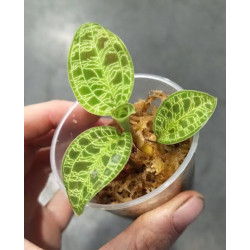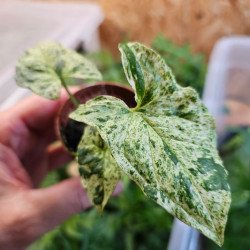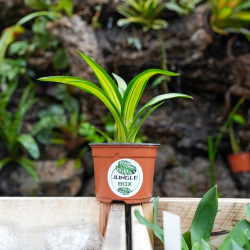
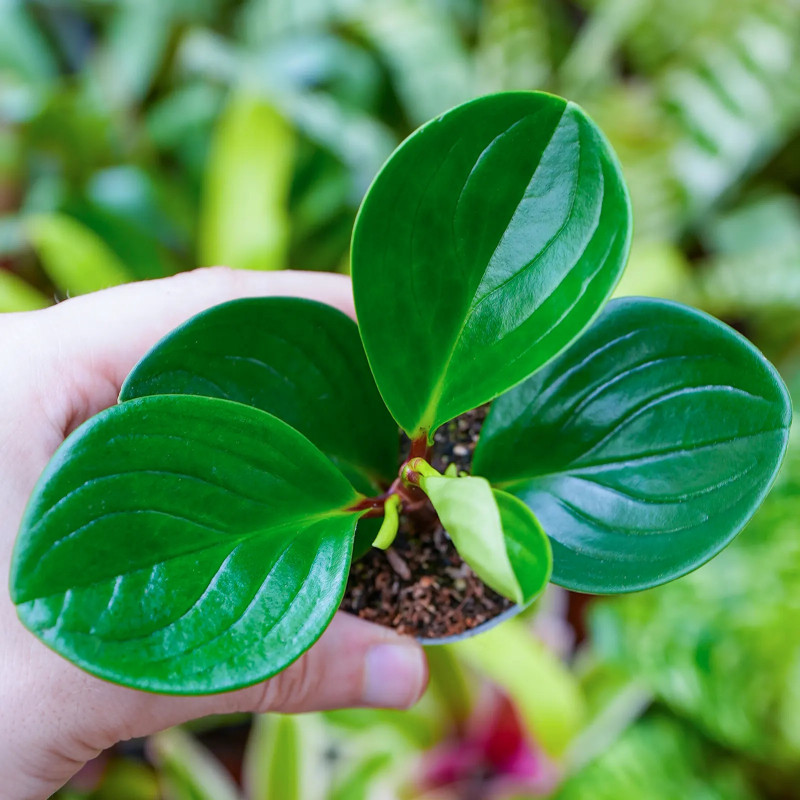
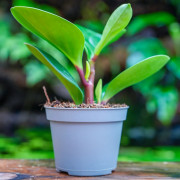
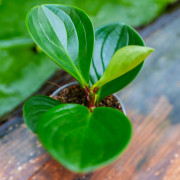
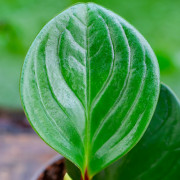
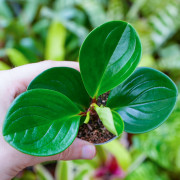
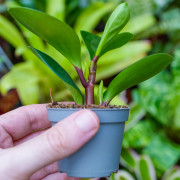
A compact and graphic Peperomia with thick, smooth and glossy foliage. Peperomia obtusifolia adds an almost succulent texture to tropical displays and contrasts beautifully with ferns, Fittonia and Begonia. Easy to grow in humid terrariums or containers, it prefers an airy, lightly moist substrate rather than constantly wet roots.

Security policy


Satisfaction guaranteed or your money back
 Free shipping on orders over €59
Delivery throughout Europe in 48 hours.
Peperomia obtusifolia is a tropical plant from the Piperaceae family, valued for its thick, smooth and glossy foliage as well as its compact and easy-to-manage growth habit.
Naturally distributed from Florida throughout much of tropical America, this species can grow as a terrestrial plant or epiphyte in wet tropical habitats. Its fleshy foliage and moderate growth make it an excellent choice for tropical terrariums, planted displays and container cultivation.
Piperaceae
Peperomia
Peperomia obtusifolia (L.) A.Dietr.
Florida to Tropical America, with a wide native distribution including Mexico, Central America, the Caribbean and much of South America.
Peperomia obtusifolia develops thick, leathery and slightly succulent leaves with a rounded tip and a smooth, glossy surface.
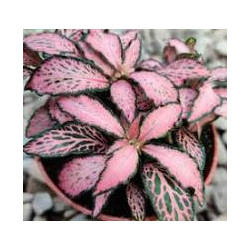
This clean, graphic foliage contrasts particularly well with finer ferns, strongly veined Fittonia or textured Begonia leaves.
The plant gradually forms a compact clump with thick stems that may become slightly trailing or creeping with age.
It can also root along its stems and may grow as an epiphyte under suitable conditions.
Peperomia obtusifolia can be grown successfully in humid tropical terrariums, especially where good airflow is provided.
Its thick foliage allows it to tolerate slightly drier substrate conditions than many conventional terrarium plants, so the roots should not remain constantly waterlogged.
The plant can be grown directly in substrate or positioned against natural wood, cork or another slightly moist support.
When grown epiphytically or semi-epiphytically, good airflow around the roots is particularly important.
Use a light, highly aerated and free-draining substrate.
A mix containing coco humus, fine bark, perlite and coco chips works particularly well, retaining slight moisture without remaining saturated.
Allow the upper layer of substrate to dry slightly between waterings.
Its fleshy foliage stores some moisture, so consistently excessive watering is generally more problematic than short periods of slightly drier substrate.
Humidity of approximately 60% to 80% is well suited to this species.
In very humid terrariums, provide good airflow to prevent stagnant moisture around the stems and substrate.
Ideally maintain temperatures between 18°C and 27°C.
Avoid prolonged low temperatures and cold draughts.
Medium to bright indirect light is ideal.
Good light helps maintain compact growth, while insufficient light may cause elongated stems. Avoid intense direct sunlight through glass.
Growth is generally moderate.
The plant can be pruned to maintain a compact form or encourage additional branching.
Peperomia obtusifolia may produce slender spike-like inflorescences typical of the genus Peperomia.
They remain relatively discreet, with the foliage being the plant’s main ornamental feature.
Propagation is easy from stem cuttings. Sections containing several nodes can be rooted in a light, slightly moist substrate.
Remove old or damaged leaves and trim longer stems whenever a more compact form is desired.
Most importantly, avoid keeping the root zone permanently saturated.
A tropical plant fertiliser used at low concentration during active growth is generally sufficient.
In terrariums, fertilise sparingly to avoid salt accumulation in the substrate.
Peperomia obtusifolia is a highly versatile tropical plant: compact, graphic, easy to integrate and robust enough for both planted terrarium displays and conventional container cultivation.
Its thick, glossy foliage adds a very different texture from ferns, Fittonia, Begonia and bromeliads, making it excellent for creating visual contrast.
In a tropical terrarium, position Peperomia obtusifolia in a bright area where the substrate is not constantly saturated. Its fleshy foliage allows it to tolerate slightly drier root conditions than many typical terrarium plants.
Combine it with finer-leaved species to create a particularly natural contrast of textures.
Specific References
A compact and graphic Peperomia with thick, smooth and glossy foliage. Peperomia obtusifolia adds an almost succulent texture to tropical displays and contrasts beautifully with ferns, Fittonia and Begonia. Easy to grow in humid terrariums or containers, it prefers an airy, lightly moist substrate rather than constantly wet roots.