- New
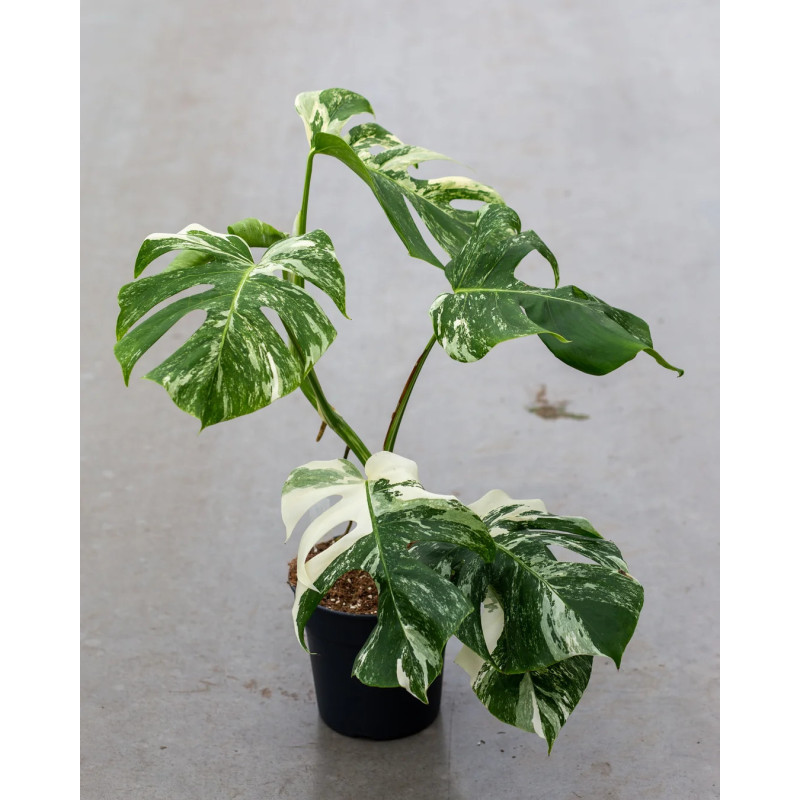
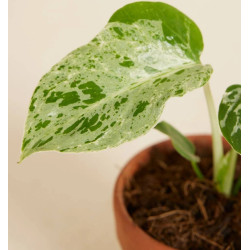
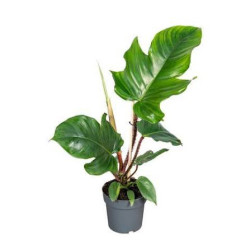
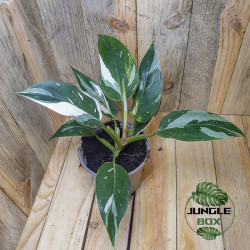
No two leaves ever look the same: Monstera deliciosa 'Variegata' blends deep green, creamy marbling and bold white sectors into a unique pattern on every new growth. As it climbs and matures, its foliage becomes progressively larger, split and fenestrated, turning it into a true centrepiece for any tropical plant collection.

Security policy


Satisfaction guaranteed or your money back
 Free shipping on orders over €59
Delivery throughout Europe in 48 hours.
Monstera deliciosa 'Variegata' is one of the most iconic collector tropical aroids, instantly recognisable by its striking green foliage irregularly variegated with white to cream.
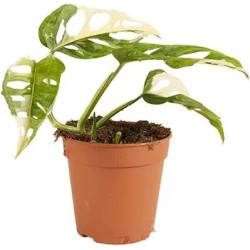
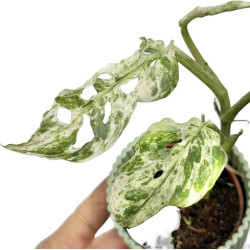
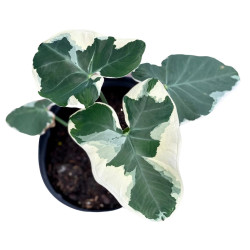
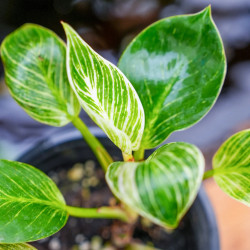
Each leaf develops a different pattern, ranging from fine marbling and speckles to large contrasting pale sectors. As the plant matures and climbs, it gradually develops the large split and fenestrated foliage characteristic of Monstera deliciosa.
Araceae
Monstera
Monstera deliciosa
Monstera deliciosa 'Variegata'
'Variegata' is used here as a horticultural designation for a variegated form of Monstera deliciosa and should not be treated as a formally recognised botanical variety.
Monstera deliciosa is native to humid tropical forests of Central America, particularly from southern Mexico to Guatemala.
In its natural habitat, it grows as a large climbing or hemiepiphytic plant, using trees for support as it grows upwards.
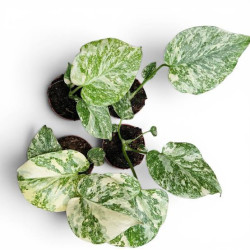
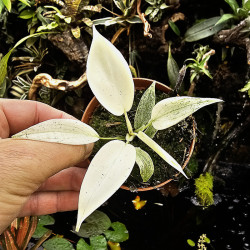
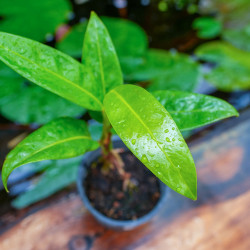
The leaves are thick, glossy and green with irregular white to cream variegation appearing as marbling, speckles or broad pale sectors.
Every leaf is different, making each specimen visually unique.
The white areas contain little or no chlorophyll. This makes the plant exceptionally ornamental but also more dependent on good light than a fully green Monstera.
A reasonable amount of green tissue remains important for vigorous long-term growth.
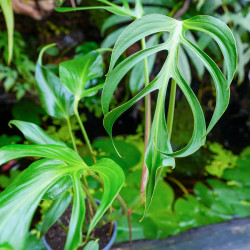
As the plant matures, Monstera deliciosa 'Variegata' gradually develops the characteristic splits and perforations of the species.
Vertical growth, good lighting and warm humid conditions encourage increasingly mature foliage.
Monstera deliciosa 'Variegata' is naturally climbing and develops long stems and numerous aerial roots.
Mature plants can become very large, making this form better suited long term to large tropical displays, greenhouses or indoor climbing cultivation than to small terrariums.
Grow the plant against a natural root, moss pole, cork panel or other stable vertical support.
Aerial roots will gradually attach to the surface, encouraging more natural growth and larger mature leaves.
Use a highly aerated and free-draining aroid mix containing coco chips, bark, perlite, sphagnum moss and light organic material.
The growing medium should retain light moisture while allowing plenty of air around the roots.
Water when the upper layer of the substrate begins to dry slightly.
Avoid permanently saturated roots and prolonged standing water.
Humidity of approximately 60% to 85% is highly suitable.
Higher humidity encourages aerial root and foliage development, provided adequate airflow is maintained.
Ideal growing temperature: approximately 20°C to 28°C.
Avoid prolonged cold conditions and cold draughts.
Monstera deliciosa 'Variegata' prefers bright filtered light.
Good lighting is particularly important for variegated plants because white areas contribute little or nothing to photosynthesis.
Avoid harsh direct sunlight, which can quickly scorch the pale parts of the leaves.
Growth is generally moderate and may be slower than a fully green Monstera deliciosa.
Plants retaining a good proportion of green tissue are generally more vigorous than heavily variegated specimens.
Mature Monstera deliciosa may produce typical aroid inflorescences consisting of a spadix surrounded by a spathe.
In cultivation, this form is primarily valued for its variegated foliage.
Propagation is mainly carried out from stem cuttings containing at least one node and ideally an aerial root.
Variegation present on the stem is important for maintaining variegated growth in new shoots.
Train new growth onto its support and prune when necessary to control the size of the plant.
Remove old or damaged leaves and monitor heavily white areas, which may brown more easily under dry air, harsh lighting or irregular watering.
Use a low-strength tropical plant or aroid fertiliser during active growth.
Avoid excessive feeding, especially in small substrate volumes.
Every new leaf is a surprise: creamy marbling, white splashes and bold contrasting sectors make every specimen unique.
As the plant matures, this striking variegation combines with the dramatic splits and fenestrations of Monstera deliciosa to create a truly spectacular collector plant.
Give your Monstera deliciosa 'Variegata' a vertical support from an early stage. A natural root or slightly humid moss pole encourages aerial root attachment and helps the plant develop larger, more mature foliage.
Like many Araceae, Monstera deliciosa contains calcium oxalate crystals. The sap may be irritating and the plant should not be ingested.

Specific References
You might also like
No two leaves ever look the same: Monstera deliciosa 'Variegata' blends deep green, creamy marbling and bold white sectors into a unique pattern on every new growth. As it climbs and matures, its foliage becomes progressively larger, split and fenestrated, turning it into a true centrepiece for any tropical plant collection.