- New
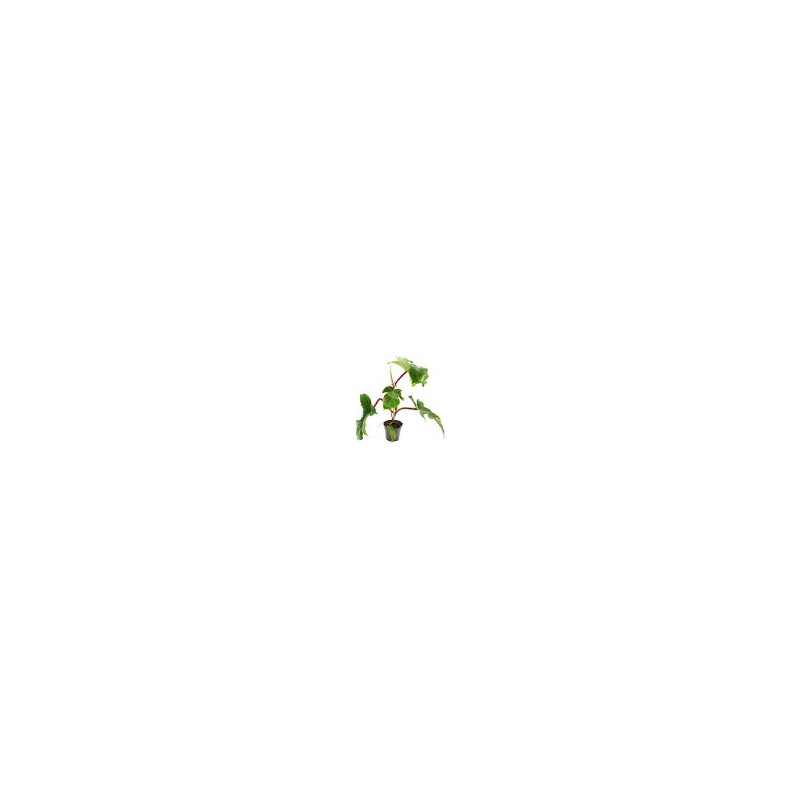
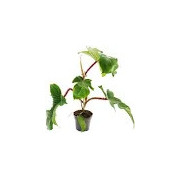
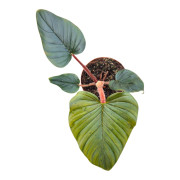
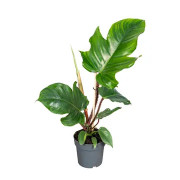
Philodendron squamiferum is a distinctive tropical climbing aroid with reddish hairy petioles and deeply lobed foliage. Supplied in a 12 cm pot, it is ideal for moss poles, large tropical terrariums and emerged paludarium displays.

Security policy


Satisfaction guaranteed or your money back
 Free shipping on orders over €59
Delivery throughout Europe in 48 hours.
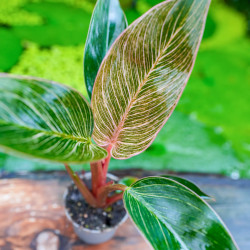
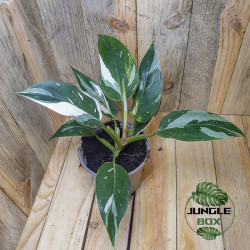
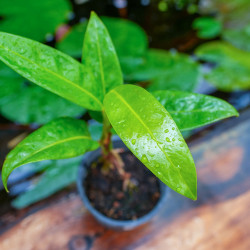
Philodendron squamiferum is a distinctive tropical climbing aroid, easily recognised by its red petioles covered in soft hair-like projections. Its glossy green foliage becomes increasingly deeply lobed and spectacular as the plant matures.
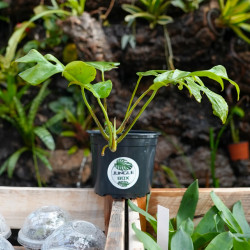
Supplied in a Ø 12 cm pot, this young plant is ideal for establishing on a moss pole, natural root, vertical support or in a large tropical terrarium.
Araceae
Philodendron
Philodendron squamiferum
Ø 12 cm
Philodendron squamiferum originates from humid tropical forests of northern South America, where it grows as a climbing plant in warm and humid conditions.
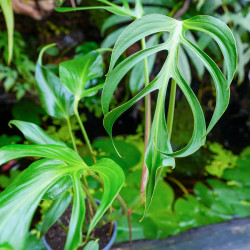
The leaves are deep to glossy green and gradually become deeply lobed as the plant matures. Adult foliage develops a highly graphic shape typical of collector climbing Philodendrons.
The most distinctive feature of Philodendron squamiferum is its reddish petioles covered with numerous soft hair-like or scale-like structures.
This unusual characteristic makes the species easy to recognise and gives it a very different appearance from more common Philodendrons.
Philodendron squamiferum is a climbing plant. Its stems gradually lengthen and produce aerial roots that allow it to attach to a support.
When grown on a moss pole, natural root or humid vertical support, the leaves can progressively increase in size and develop a more mature shape.
Grow the plant against a moss pole, large natural root, cork panel or planted vertical background.
A slightly humid support encourages aerial roots to attach and helps the plant develop a more natural growth habit.
Use a highly aerated and free-draining aroid mix containing coco chips, bark, perlite, sphagnum moss and light organic material.
The substrate should remain lightly moist without staying permanently waterlogged.
Water when the surface of the substrate begins to dry slightly.
Avoid prolonged standing water around the roots, especially when temperatures are lower or growth has slowed.
Humidity of approximately 65% to 85% is highly suitable for this tropical species.
Higher humidity encourages aerial root development and growth, provided adequate airflow is maintained.
Ideal growing temperature: approximately 20°C to 28°C.
Avoid prolonged cold conditions and cold draughts.
Philodendron squamiferum prefers medium to bright filtered light.
Good light encourages shorter internodes, denser foliage and steady growth. Avoid harsh direct sunlight that may scorch the leaves.
Moderate to fast growth under warm, humid conditions with a suitable climbing support.
Vertical growth generally encourages larger and more deeply lobed mature leaves.
Mature Philodendron squamiferum can produce typical aroid inflorescences consisting of a spathe surrounding a spadix.
In indoor and terrarium cultivation, however, the plant is mainly grown for its foliage and characteristic petioles.
Propagation is easily carried out from stem cuttings containing at least one node and ideally an aerial root.
Guide the stems gradually onto their support and remove old or damaged leaves when necessary.
Occasionally cleaning the foliage helps maintain a glossy appearance and supports efficient photosynthesis.
Use a low-strength tropical plant or aroid fertiliser during active growth.
Reduce feeding when growth slows.
Philodendron squamiferum immediately stands out for its reddish, hairy petioles combined with deeply lobed foliage.
It is an excellent vertical plant for adding volume and a strong tropical silhouette to large terrariums, greenhouses and aroid collections.
Give your Philodendron squamiferum a vertical support from the beginning. The earlier its aerial roots can attach, the easier it will develop a natural climbing habit and larger mature foliage.
In a large tropical terrarium, a substantial natural root or planted background makes an excellent climbing structure.
Like many Araceae, Philodendron squamiferum contains calcium oxalate crystals. The sap may be irritating and the plant should not be ingested.

Specific References
You might also like
Philodendron squamiferum is a distinctive tropical climbing aroid with reddish hairy petioles and deeply lobed foliage. Supplied in a 12 cm pot, it is ideal for moss poles, large tropical terrariums and emerged paludarium displays.