- New


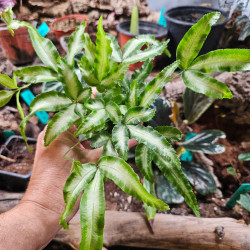
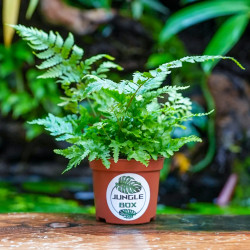
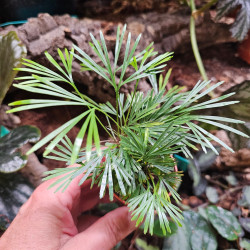
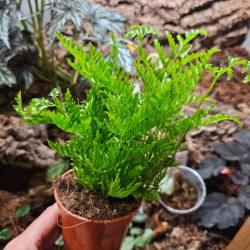
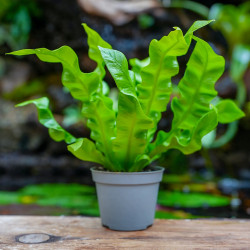
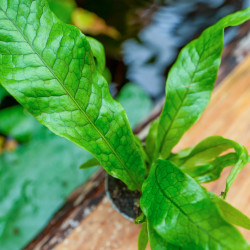
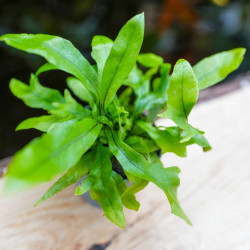
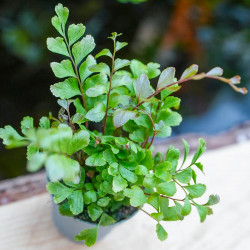
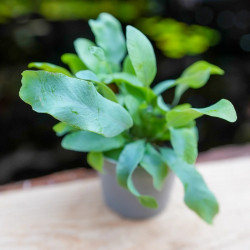
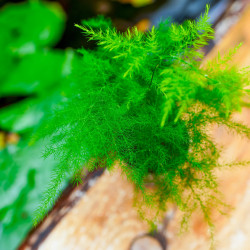
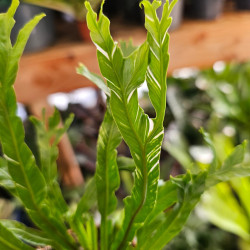
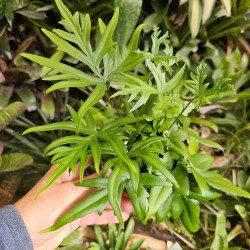
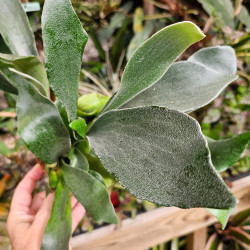
A fern that instantly gives a display the atmosphere of a true tropical forest floor: Pteris ensiformis 'Evergreen' forms a light clump of finely divided, entirely green fronds. Compact, lush and perfectly suited to humid conditions, it adds volume without overwhelming roots, mosses and bromeliads.

Security policy


Satisfaction guaranteed or your money back
 Free shipping on orders over €59
Delivery throughout Europe in 48 hours.
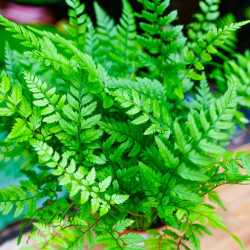
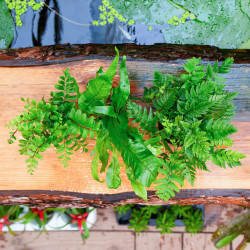
Pteris ensiformis 'Evergreen' is an elegant tropical fern with uniformly green, finely divided foliage and a beautifully light appearance. Unlike variegated forms of Pteris ensiformis, 'Evergreen' maintains an entirely green colour, giving it a particularly natural woodland look.
Its compact, bushy and slightly spreading growth makes it an excellent fern for humid tropical terrariums, emerged paludarium sections and planted forest-floor displays.
Pteridaceae
Pteris
Pteris ensiformis
Pteris ensiformis 'Evergreen'
Terrestrial tropical fern
Pteris ensiformis is widely distributed throughout tropical and subtropical Asia, Malesia, Polynesia and north-eastern Australia.
It naturally occurs in humid gullies, rocky areas, slopes and forest habitats where it receives filtered light and regular moisture.
The fronds are elegant and finely divided, with numerous narrow segments that give the plant a light and delicate appearance.
The 'Evergreen' selection is distinguished by its uniformly green foliage without the white or silver central markings found in variegated cultivars.
Pteris ensiformis 'Evergreen' gradually develops into a compact, bushy and slightly spreading clump.
Under favourable conditions it may reach approximately 30–50 cm tall, while remaining easy to control through occasional pruning.
This fern is particularly well suited to tropical forest-floor displays. Its finely divided foliage creates volume without appearing heavy or overwhelming.
It can be positioned at the base of a root, beside natural backgrounds or towards the rear of a planted terrarium to create a smooth transition between different levels of vegetation.
Use a light, humus-rich and free-draining substrate that retains consistent moisture while allowing good airflow around the roots.
A mixture containing coco humus, perlite, fine bark and sphagnum moss works particularly well.
Keep the substrate consistently lightly moist.
Avoid both prolonged drying and permanently waterlogged conditions. The roots enjoy moisture but remain sensitive to stagnant water.
Humidity of approximately 60% to 85% is particularly suitable.
Humid air encourages soft, healthy fronds, although moderate airflow remains beneficial.
Ideal growing temperature: approximately 18°C to 27°C.
Avoid prolonged exposure to very low temperatures and cold draughts.
Pteris ensiformis 'Evergreen' prefers low to medium light or bright filtered light.
It performs particularly well in slightly shaded areas of a terrarium. Avoid harsh direct sunlight, which may quickly scorch or dry the fronds.
Moderate growth.
Under warm and humid conditions, new fronds regularly emerge from the base, gradually creating a fuller and denser clump.
Like all ferns, Pteris ensiformis does not produce flowers or seeds.
It naturally reproduces through spores produced on fertile fronds. In cultivation, division of an established clump is generally the easiest propagation method.
Propagation can be carried out by dividing mature clumps with several growing points.
Propagation from spores is also possible but requires more time and controlled growing conditions.
Remove old, dry or damaged fronds at the base to maintain a clean appearance and encourage fresh growth.
Light pruning can also be used to control size in smaller terrariums.
Use a highly diluted balanced fertiliser for tropical plants or ferns during active growth.
In bioactive terrariums, feeding should remain minimal.
'Evergreen' relies on texture rather than colour: its entirely green, finely divided fronds instantly create the impression of a real tropical forest floor.
It introduces volume, freshness and delicate texture among bromeliads, Fittonia, mosses and other terrarium plants without dominating the overall layout.
Plant it in a slightly shaded position at the base of a root or towards the rear of a composition. Its fine green foliage looks particularly effective against dark cork or a planted background.
Avoid allowing the fronds to remain permanently pressed against heavily condensed glass, as this may encourage browning.

Specific References
You might also like
A fern that instantly gives a display the atmosphere of a true tropical forest floor: Pteris ensiformis 'Evergreen' forms a light clump of finely divided, entirely green fronds. Compact, lush and perfectly suited to humid conditions, it adds volume without overwhelming roots, mosses and bromeliads.