- New
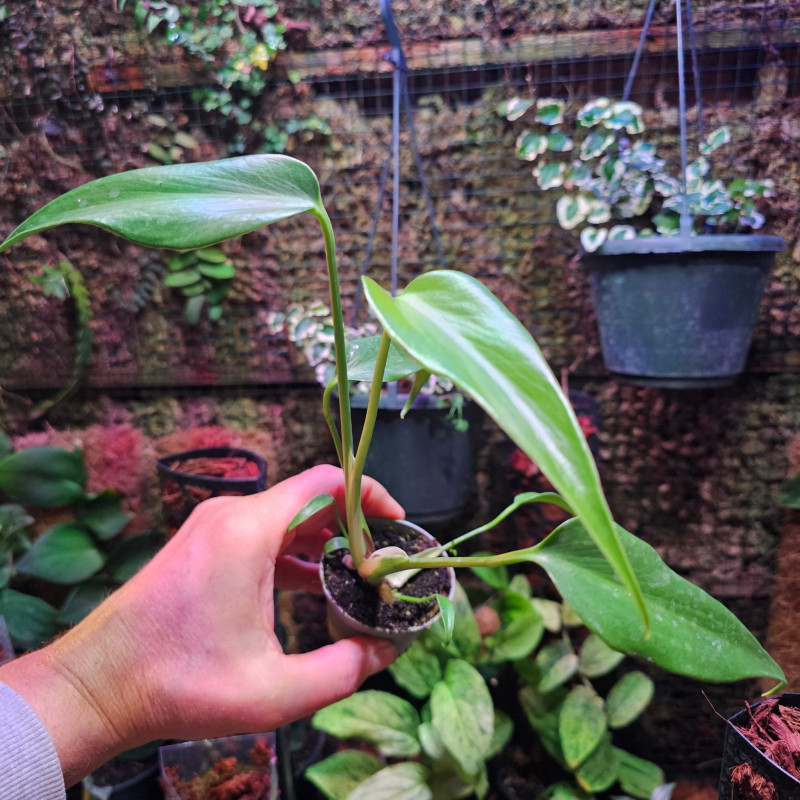
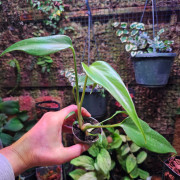
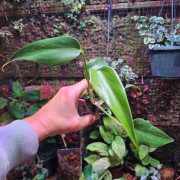
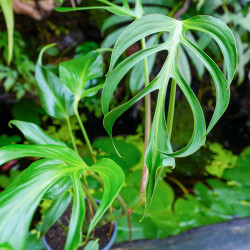
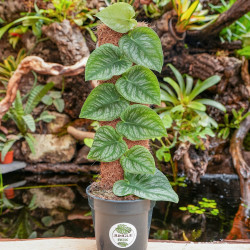
A Monstera that transforms dramatically with age: 'Burle Marx’s Flame' begins with relatively simple juvenile leaves before developing long, narrow divisions that give mature foliage its spectacular flame-like silhouette. Supplied in a 6 cm pot, it is perfect for growing on natural wood or another vertical support and watching the transformation unfold.

Security policy


Satisfaction guaranteed or your money back
 Free shipping on orders over €59
Delivery throughout Europe in 48 hours.
Monstera sp. 'Burle Marx’s Flame' is a spectacular collector aroid prized for the extraordinary transformation of its foliage. Juvenile leaves begin relatively simple and elongated, then gradually become deeply divided as the plant matures, developing long narrow segments that create its distinctive flame-like silhouette. Supplied in a Ø 6 cm pot, this young plant offers the opportunity to watch the full transformation unfold over time.
An active climber that benefits greatly from vertical support, 'Burle Marx’s Flame' is particularly suited to large tropical displays, planted walls and spacious terrariums where it can progressively develop its highly architectural mature foliage.
Araceae
Monstera
Monstera sp. 'Burle Marx’s Flame'
'Burle Marx’s Flame' is a registered Monstera cultivar whose exact species identity has not been conclusively established. It is therefore best presented as Monstera sp. 'Burle Marx’s Flame' rather than assigning it to Monstera deliciosa or another species without botanical confirmation.
This plant originated from the collection of renowned Brazilian landscape architect and botanist Roberto Burle Marx in Rio de Janeiro. Its original wild locality is unknown, and it was introduced into cultivation in the early 1980s.
Ø 6 cm
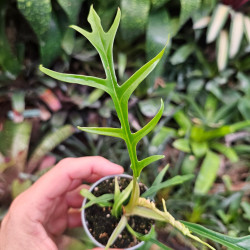
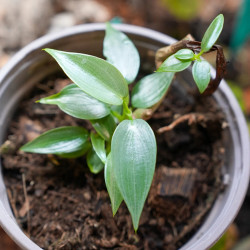
Young plants initially develop relatively simple, entire and elongated leaves. At this stage, their appearance remains very different from the spectacular mature foliage.
With maturity and suitable vertical support, the leaves become deeply pinnatifid. The segments are long, narrow and widely spaced, creating a dramatic flame-like silhouette.
On very mature specimens, occasional perforations may appear close to the midrib, although the deeply divided leaf structure remains the plant’s defining feature.
One of the most remarkable characteristics of 'Burle Marx’s Flame' is the dramatic change between juvenile and mature foliage.
The plant becomes increasingly impressive when its aerial roots can attach to a support and the leaves gain both size and maturity.
Monstera 'Burle Marx’s Flame' is an active climber. Its stems produce aerial roots that allow the plant to attach naturally to trunks, roots and vertical supports.
A suitable support is strongly recommended to encourage the development of large, deeply divided mature leaves.
While juvenile, this Monstera can be planted at the base of a large natural root or planted background.
Over time, it can become a major architectural feature as it climbs the support and develops increasingly divided foliage.
Natural wood, cork trunks, plantable climbing poles or Hygrolon-covered backgrounds are particularly suitable.
A support that retains a small amount of moisture encourages aerial root attachment and supports mature leaf development.
Use a highly aerated and free-draining aroid mix containing coco chips, bark, perlite, sphagnum moss and light organic material.
The substrate should retain gentle moisture while maintaining excellent oxygenation around the roots.
Keep the substrate lightly moist during active growth, allowing the upper layer to begin drying before watering again.
Avoid permanently saturated growing media and stagnant water around the roots.
Humidity of approximately 60% to 85% is particularly suitable.
Humid air encourages aerial root development and larger foliage, provided adequate airflow is maintained.
Ideal growing temperature: approximately 20°C to 28°C.
Avoid prolonged exposure to low temperatures and cold draughts.
Monstera 'Burle Marx’s Flame' prefers bright filtered light.
Generous indirect light promotes compact growth and helps the plant progressively develop its deeply divided mature foliage.
Avoid harsh direct sunlight, especially on tender juvenile leaves.
Moderate to fast growth under warm, bright and humid conditions.
Vertical support and good light levels play a major role in encouraging larger and increasingly mature foliage.
Mature specimens may produce typical aroid inflorescences consisting of a spathe and spadix.
In cultivation, the plant is primarily valued for the dramatic transformation of its foliage.
Propagation is mainly carried out from stem cuttings containing at least one viable node and, ideally, an aerial root.
Remove only old or genuinely damaged foliage and regularly guide new growth towards its support.
Aerial roots can be directed onto the support or into the substrate rather than removed.
Use a balanced low-strength tropical plant or aroid fertiliser during active growth.
Regular moderate feeding is preferable to highly concentrated applications.
Few Monstera offer such a dramatic transformation. A simple juvenile leaf gradually evolves into a blade deeply divided into long green segments, almost like a living flame unfolding around the central vein.
Supplied in a 6 cm pot, this young plant allows you to experience the entire transformation while gradually building a spectacular focal point around natural wood or another vertical support.
Provide a support from an early stage. A slightly moisture-retentive natural root or planted background allows aerial roots to establish quickly and encourages the development of far more impressive mature foliage.
Like other Araceae, Monstera plants contain calcium oxalate crystals. The sap may be irritating and the plant should not be ingested.

Specific References
You might also like
A Monstera that transforms dramatically with age: 'Burle Marx’s Flame' begins with relatively simple juvenile leaves before developing long, narrow divisions that give mature foliage its spectacular flame-like silhouette. Supplied in a 6 cm pot, it is perfect for growing on natural wood or another vertical support and watching the transformation unfold.